


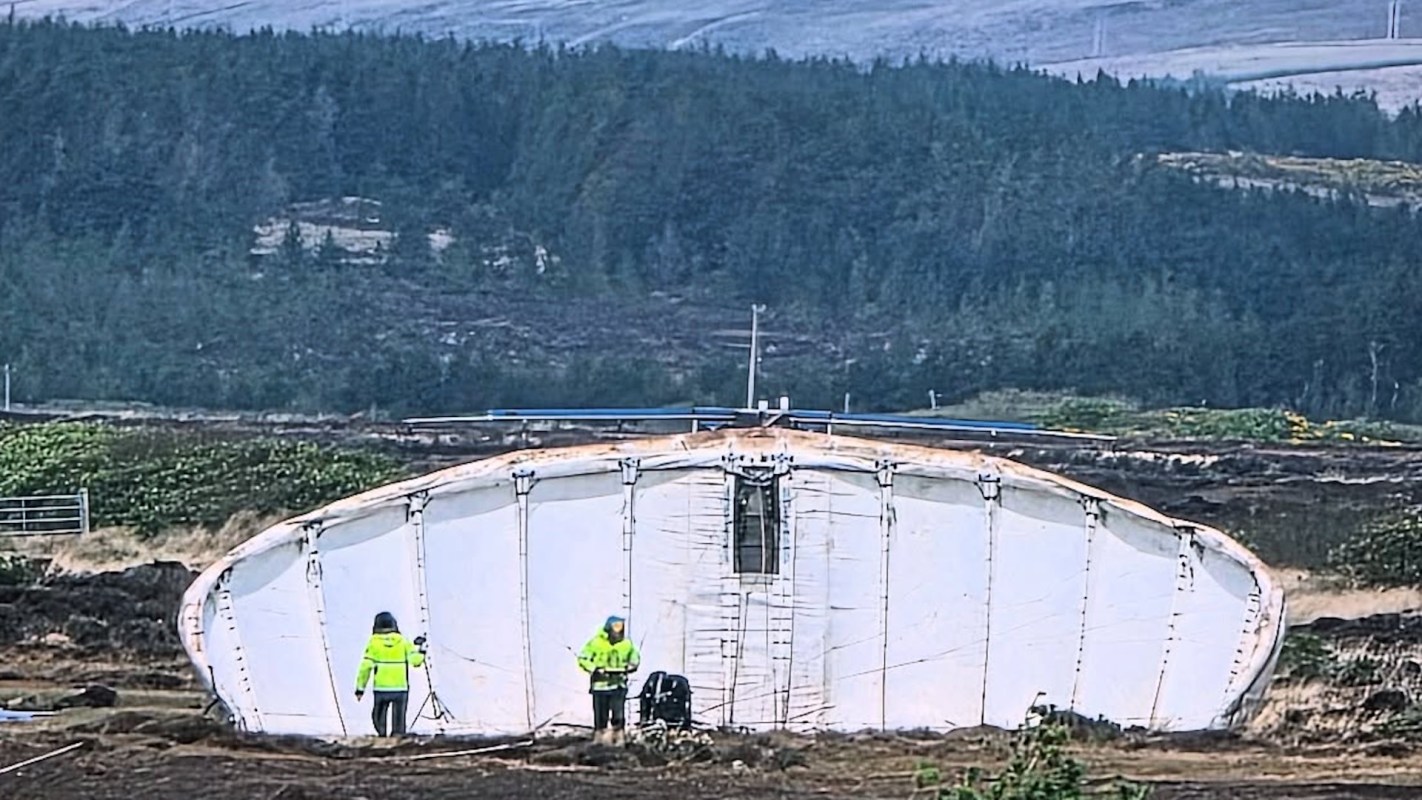
Researchers in Ireland are flying large kites to create renewable electricity, according to an AFP news agency article published by Tech Xplore.
Dutch company Kitepower has been testing its system since September 2023 in Bangor Erris, a remote area on Ireland's western coast.
The innovation works by connecting a 60-square-meter kite to a generator on the ground through a cable. As the kite flies upward to about 400 meters and reels back down to 190 meters repeatedly, it creates enough force to spin the generator and produce electricity.
This yo-yo motion generates about 30 kilowatts of power that gets stored in batteries. The current setup can fully charge a 336-kilowatt-hour battery system, enough electricity to power remote outposts, isolated communities, or temporary work sites.
The kite system solves several challenges traditional wind turbines face. Unlike turbines that need costly foundations built over time, these kites can be deployed within 24 hours. They're also portable, making them ideal for areas where conventional wind farms aren't practical.
"We are witnessing a revolution in wind energy," Andrei Luca, operations head at Kitepower, told AFP. "It took nearly 25 years for wind turbines to evolve from 30 kilowatt prototypes to megawatt scale, and decades to offshore wind farms we see today."
The technology proved itself during Storm Eowyn in January, which caused widespread blackouts across Ireland. While many households lost power, the kite system continued generating electricity throughout the severe weather event.
This breakthrough comes at an important time for Ireland, where wind already supplies about one-third of the nation's electricity. The government aims to produce 20 gigawatts of offshore wind power by 2040. Kite systems could help reach these goals faster while reducing dependence on oil and gas.
Airborne wind systems' flexibility makes them valuable for remote communities and mobile operations. They require minimal infrastructure compared to turbines and leave a smaller footprint on the landscape. As costs decrease and efficiency improves, multiple kites working together could power entire islands.
Mahdi Salari, an airborne wind energy researcher at the University of Cork, told AFP he expects these systems to become commercially viable by the 2030s, changing how we capture wind power in locations where traditional turbines can't reach.
TCD Picks » Quince Spotlight
💡These best-sellers from Quince deliver affordable, sustainable luxury for all




|
Should we be harnessing the ocean to power our homes? Click your choice to see results and speak your mind. |
 Absolutely 👍
Join our free newsletter for weekly updates on the latest innovations improving our lives and shaping our future, and don't miss this cool list of easy ways to help yourself while helping the planet.
Cool Picks





