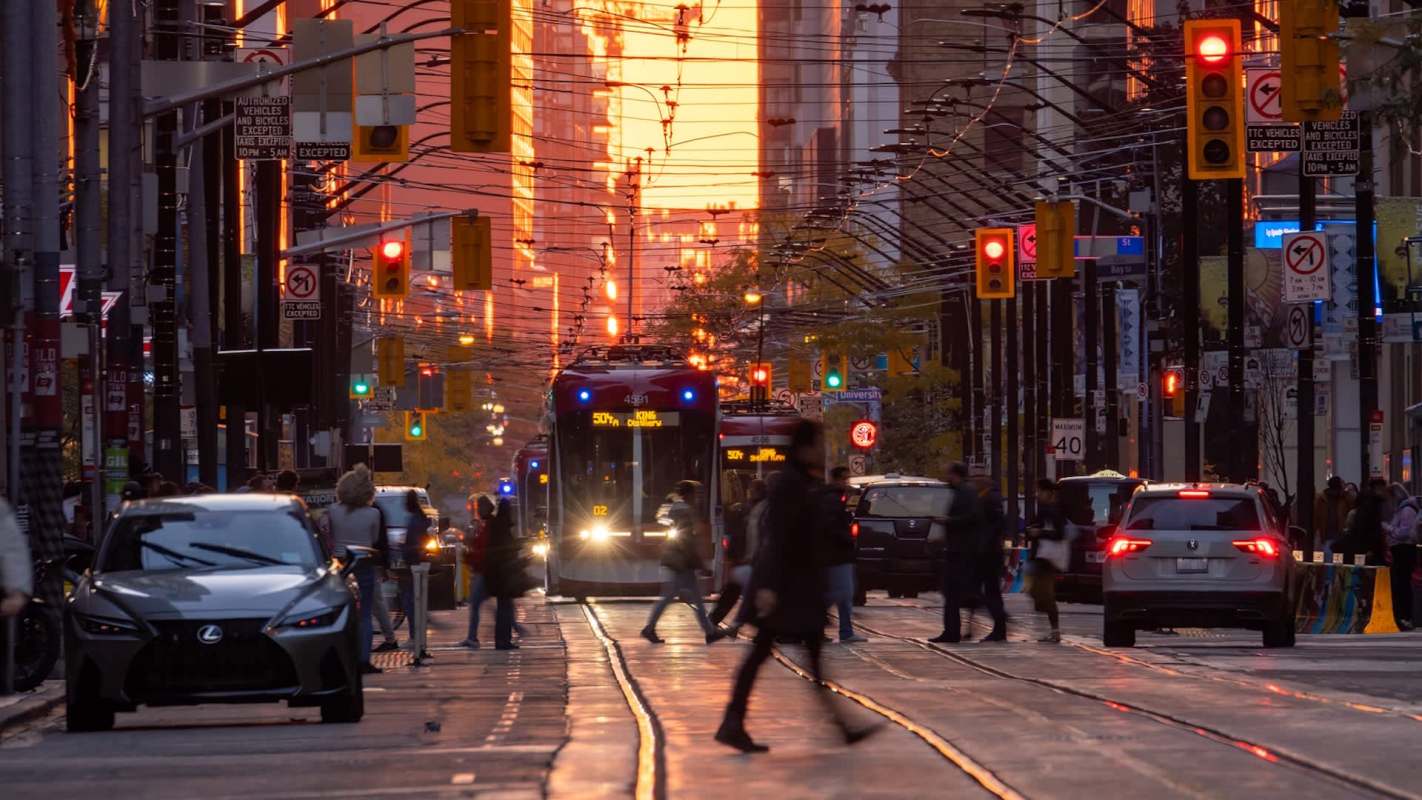
A visitor walking Toronto's King Street West at night posed a question that appeared to strike a nerve with locals visiting the r/Toronto subreddit.
They asked: If sidewalks are packed with people and cars are barely moving, why does the street still belong to vehicles?
The discussion that followed focused on safety after dark, how street space is allocated, and the persistence of car-first thinking on major nightlife strips.
Here's what to know
On a Reddit thread, the poster said they were "genuinely concerned that this street is not car free" after seeing "hundreds of drunk folk packed onto the sidewalks" while "only a few cars sat in traffic taking up so much space."
"It would be so nice if the street could be used for pedestrians," they added. They pointed out that it felt like there was no space to relax and socialize outside the nightlife scene.
Some replies argued the problem is bigger than just one street. A commenter blamed the city's council.
TCD Picks » Quince Spotlight
💡These best-sellers from Quince deliver affordable, sustainable luxury for all




"Because our council is afraid of bold visions and terrified of the car driver lobby," they wrote.
Others said Toronto's room to act is constrained by the province, which can override municipal decisions. Some went even further, saying the car-centric feel extends throughout the continent.
"Because it's the culture of North America, car zooming by drunk people at night," a top-voted comment suggested.
More background
When entertainment districts funnel large crowds onto narrow sidewalks beside moving vehicles, the experience can become louder, more stressful, and less safe for people trying to walk, meet friends, or simply spend time outside.
Fewer cars in dense downtown corridors can mean less idling, less tailpipe pollution, and less noise.
Montreal came up in the discussion as an example of what is possible.
"In Montreal we have a 2km long stretch 100% car free all summer long on Mont Royal Ave.," they shared. "Traffic is barely impacted, driving by the surrounding streets is the same pre/after closures."
That example helped frame the broader point in the thread. Other cities have made room for pedestrians on busy commercial streets, and some people think Toronto should be willing to do the same on King Street West.
What can be done?
If pedestrians vastly outnumber drivers during peak nightlife hours, timed car restrictions, expanded sidewalk space, and pedestrian-only pilot closures could better reflect the reality on the ground.
Toronto could also reduce conflict by moving rideshare pickup zones to nearby side streets, improving late-night transit access, and creating more public space where people can gather without standing in traffic or spilling onto already crowded sidewalks.
An informed local explained how car-dependent suburbs and politicians who cater to them have unfortunately stood in the way of progress since the 1990s. With that in mind, they were skeptical.
"Pedestrianizing King St would make a ton of sense, but is unlikely to happen in Toronto without substantial changes in how the city is governed," they concluded.

Get TCD's free newsletters for easy tips, smart advice, and a chance to earn $5,000 toward home upgrades. To see more stories like this one, change your Google preferences here.