


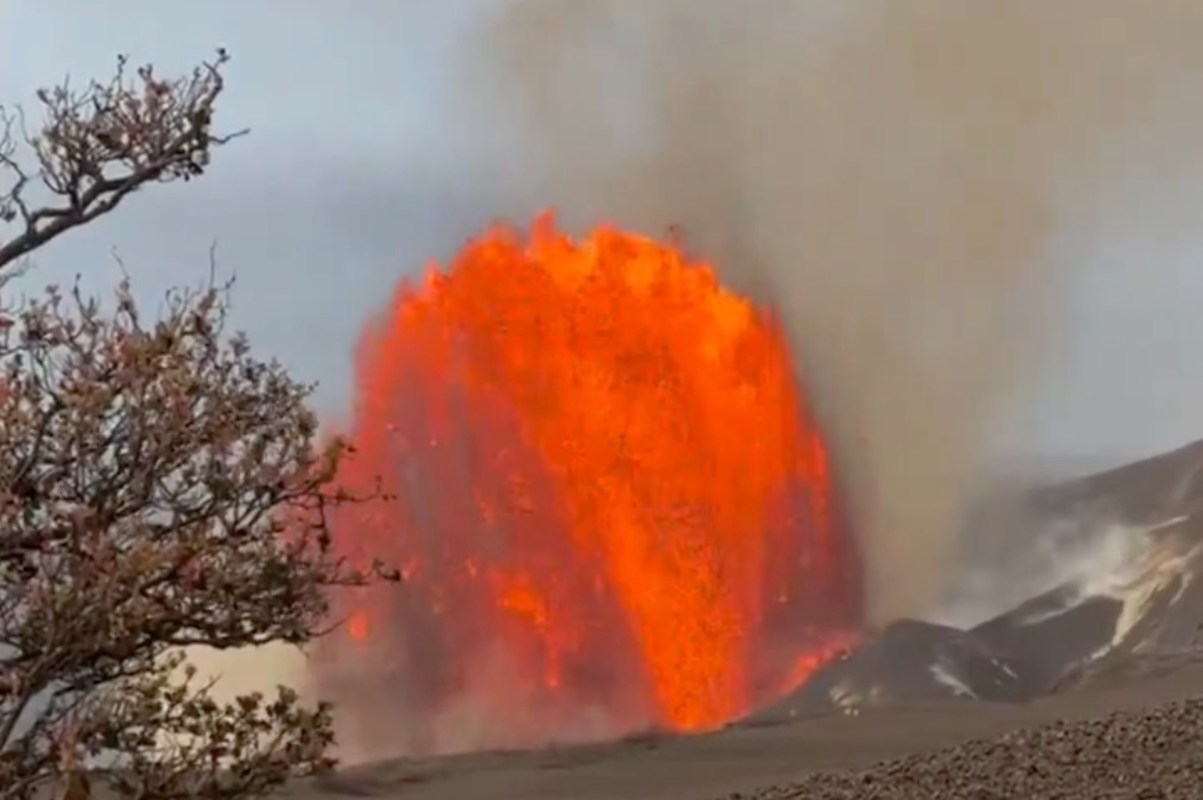
Kīlauea is stirring again, with Hawaiʻi's most closely watched volcano slowly spilling lava from its summit. It's a sign that a larger eruptive phase, known as episode 48, may be just around the corner.
Early Monday morning, slow-moving lava began emerging from Kīlauea's summit within Hawaiʻi Volcanoes National Park, the Geological Survey reported.
The report said precursory lava overflows began at 5:41 p.m. Saturday and that roughly 35 hours later lava fountaining began.
Lava fountaining for episode 48 of the ongoing Halema'uma'u eruption began at 4:40 a.m., with activity focused at the north vent.
Each overflow lasted about five to 10 minutes, with roughly 15 to 30 minutes between bursts before the lava drained back into the main vent.
North vent dome fountaining steadily escalated in vigor and height until it transitioned to episode 48 fountaining. After the north vent became active, the south vent continued overflowing cyclically, but over the next hour its activity diminished to spattering as the north vent fountains grew.
TCD Picks » Quince Spotlight
💡These best-sellers from Quince deliver affordable, sustainable luxury for all




Meanwhile, the north vent lava fountain grew steadily until reaching a maximum height of around 650 feet by about 5:50 a.m.
Over the next several hours the fountain height gradually declined, and it was estimated to be under 300 feet (91 meters) about one hour before the episode ended at 1:37 p.m. Monday.
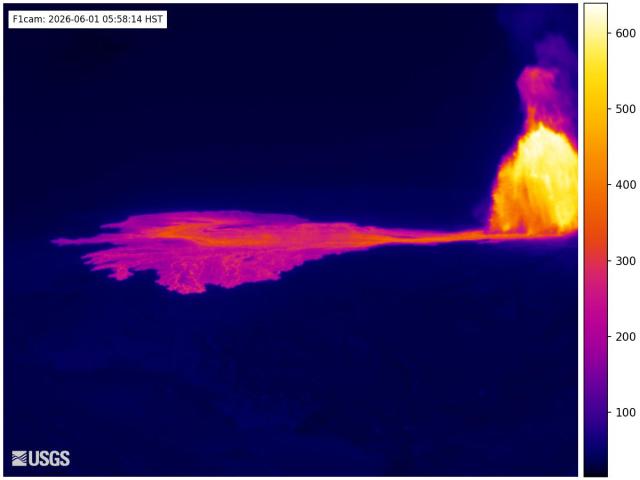
Episode 48 ended abruptly after nine hours of continuous lava fountaining from the north vent. The agency reported that the eruption had paused.
The USGS is closely tracking activity at the summit and sharing regular updates as conditions change. Scientists are watching the south vent, counting overflows, measuring fountain heights, and analyzing the timing of the precursory bursts to better understand what may come next.
At 5:31 a.m. Monday, the National Weather Service issued an ashfall advisory for the southeast and northeast of the Island of Hawai'i, including Hawaiʻi Volcanoes National Park. Falling ash can create breathing concerns; reduce visibility; and cover homes, cars, and roads.

Get TCD's free newsletters for easy tips, smart advice, and a chance to earn $5,000 toward home upgrades. To see more stories like this one, change your Google preferences here.






