


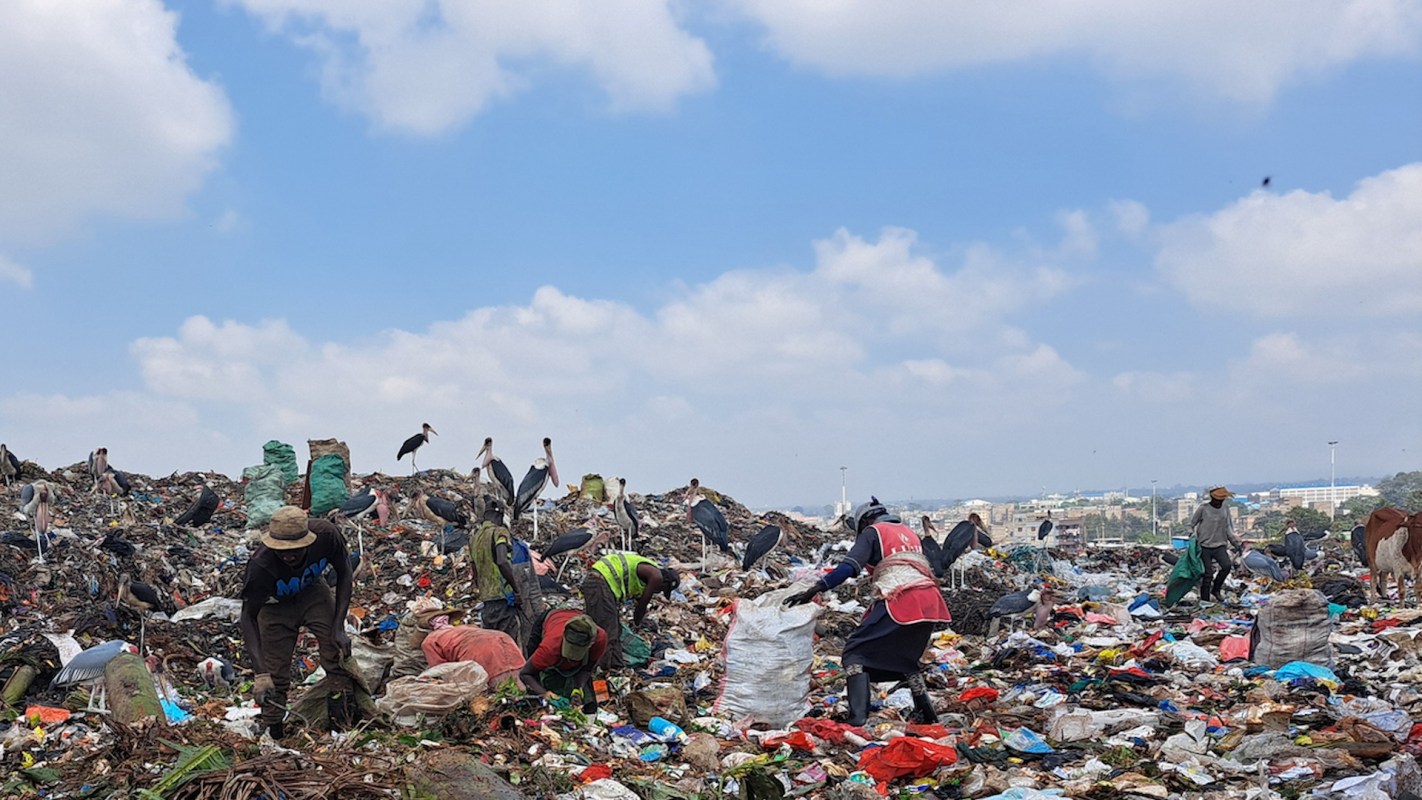
The rapid buildout of artificial intelligence data centers is often framed as a story of innovation, speed, and growth. But for communities already living with the consequences of the world's discarded electronics, it can look more like a warning.
Solomon Njoroge, a former waste picker in Kenya, says the people dealing with that toxic aftermath should have a say in what happens next.
What's happening?
The AI data center surge may sharply intensify the world's already expanding e-waste crisis, as ZDNET reported.
E-waste is already the fastest-growing waste stream on Earth, with yearly volume projected to hit 82 million metric tons (90.4 million tons) by 2030.
A June estimate from United Nations University researchers suggests that replacing AI infrastructure — including chips, servers, storage devices, cables, and networking gear — could create roughly 2.5 million metric tons (2.8 million tons) of waste each year, or about 250 Eiffel Towers' worth of equipment.
Njoroge began picking waste as a child at the Dandora dumpsite outside Nairobi, and he says workers there have experienced asthma, miscarriages, cancer, and respiratory diseases, according to ZDNET.
TCD Picks » Quince Spotlight
💡These best-sellers from Quince deliver affordable, sustainable luxury for all




"Inasmuch as we are working for development or greatness to change the world… [hyperscalers] should also consider that there are people somewhere, suffering from what they are calling greatness," he said.
Why does it matter?
E-waste is far more dangerous than the name might suggest.
Improperly discarded electronics can release hazardous materials. Devices may contain arsenic, lead, cadmium, and mercury, which can enter soil, waterways, ecosystems, and food chains when they are dumped, burned, shredded, or left to decay. Contamination can also spread through air and water.
Golestan (Sally) Radwan, chief digital officer of the U.N. Environment Programme, said: "The basic issue is that the way current AI systems, especially generative AI models, are developed, reward scale, acceleration, and rapid turnover."
What's being done?
The United Nations passed a resolution in December, originally proposed by Kenya, urging sustainable AI development and the sharing of environmental data so the risks can be studied more closely.
Some tech companies are also embracing "circularity," or keeping hardware in use for as long as possible through repair, refurbishment, resale, and recycling.
Microsoft has built Circular Centers to handle decommissioned equipment, while Google said it recovered about 8.8 million hardware components in 2024 that were reused or resold.
New companies are also developing tools to disassemble electronics more safely and recover valuable materials.
Still, Njoroge argues that no solution is complete without the people already doing this work.
"This is green work," Richard Neitzel, professor of environmental health sciences and global public health at the University of Michigan, said, according to ZDNET. "[Waste pickers] are recovering precious materials that otherwise we'd have to go and mine fresh out of the ground."
"Waste pickers are not illegal or informal — they are front-line climate workers," Njoroge said.
And as AI expands, he added, "All we are seeking is a just transition."

Get TCD's free newsletters for easy tips, smart advice, and a chance to earn $5,000 toward home upgrades. To see more stories like this one, change your Google preferences here.







