


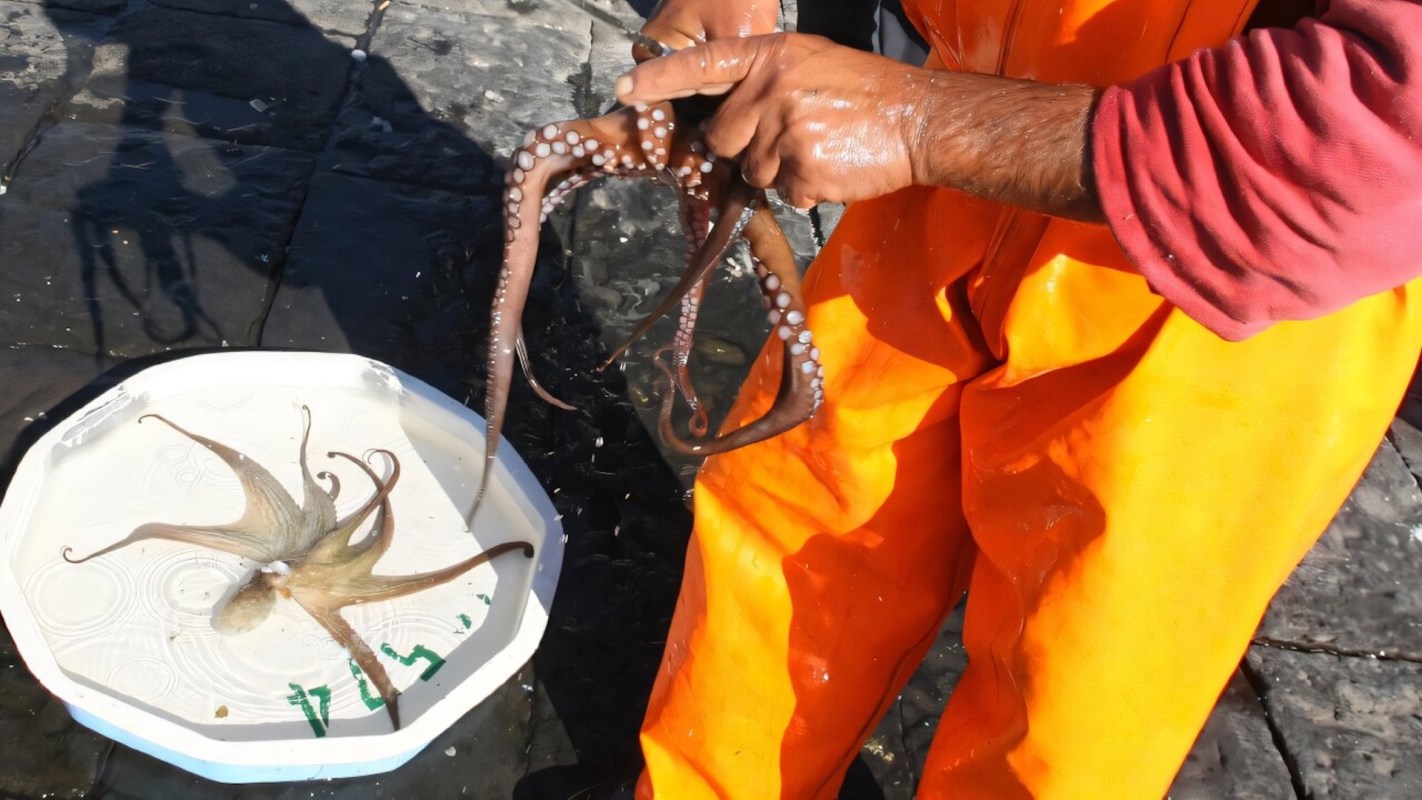
In a new strategy addressing blue crabs in Adriatic fisheries, Italy is releasing thousands of hatchery-raised octopuses into the sea.
Here's what to know
Under a University of Bologna effort called Octo-Blu, about 80,000 common octopuses raised in captivity have been released into the Adriatic, Phys.org reported. Researchers are trying to increase the presence of a local species that naturally preys on crustaceans and could help manage blue crab populations.
Antonio Casalini, an aquaculture technician involved in the project, said the choice was based on the animal's natural behavior.
"We chose the octopus because, in the wild, it is a formidable predator of crustaceans," Casalini originally told AFP.
The blue crab comes from the Atlantic coast of North America. These strong swimmers can reach 2.2 pounds and have blue-tinted claws strong enough to tear through shellfish beds.
AFP reported that the species is thought to have entered the Mediterranean decades ago through ships' ballast water, and officials and fishing groups have linked its population surge to rising water temperatures.
TCD Picks » Quince Spotlight
💡These best-sellers from Quince deliver affordable, sustainable luxury for all




Authorities in Emilia-Romagna, Italy, say the crab has caused nearly 17 million euros in damage since 2022, and Coldiretti estimates losses across Italy at about 200 million euros.
More background
The threat is especially serious in northeastern Italy, a major clam-producing area for Europe.
Describing the damage, fisherman and mussel farmer Davide Sanulli said to AFP, "It eats everything, including young clams lying on the seabed."
When introduced species affect shellfish production, the effects ripple through coastal communities, disrupting local food systems and small businesses tied to fishing and aquaculture.
A successful biological control method could help restore balance without relying entirely on repeated harvesting or costly emergency responses.
What's being done?
At a lab in the port town of Cesenatico, the Octo-Blu team raises young octopuses in white water tanks until they are ready to be taken offshore and released near underwater reefs.
"The idea is to establish a small community close to shore so that it can better combat the spread of the blue crab," said Casalini to AFP.
Researchers have placed artificial shelters made of cement and clay on the seafloor to improve the octopuses' chances of surviving after release. The plan is to build up a nearshore octopus presence that can prey on blue crabs before the invasive species causes even more damage.
The team wants to roughly double the number released by the end of August. Researchers have also acknowledged the concern that common octopuses generally do not inhabit the sandy, warmer lagoon waters where blue crabs often do the most harm.

Get TCD's free newsletters for easy tips, smart advice, and a chance to earn $5,000 toward home upgrades. To see more stories like this one, change your Google preferences here.






