


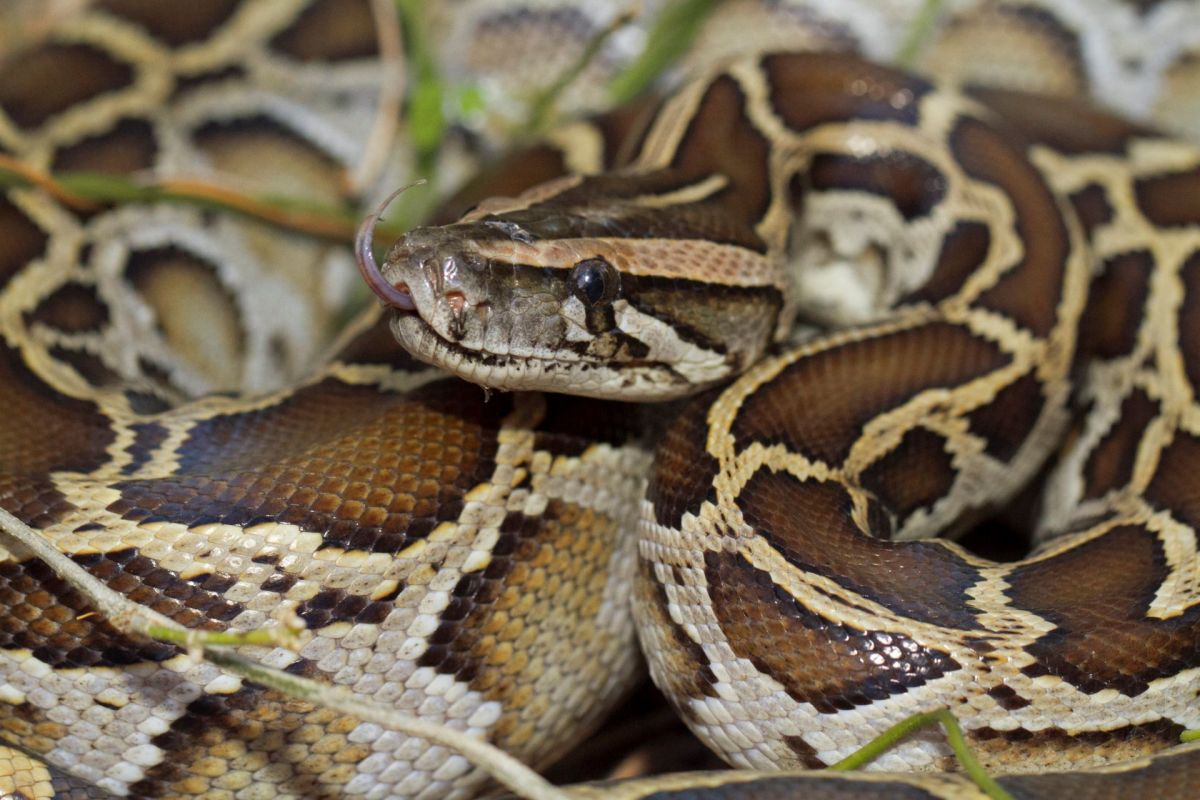
A recent Coast to Canopy episode about Florida's snakes highlighted yet another way non-native Burmese pythons threaten the ecosystem: experts said they may have brought a parasite that is now killing native snakes.
In the episode, hosts and researchers discussed the spread of Raillietiella orientalis, an invasive snake lungworm likely introduced to the United States via Burmese pythons brought in through the pet trade, WFSU Public Media reported. Those pythons escaped or were released, established themselves in the Everglades, and have already become notorious for devastating local mammal populations.
When the conversation turned to pythons, biological monitoring coordinator Kim Sash said, "I'm glad you brought up Burmese pythons," before explaining why the parasite is so concerning.
The lungworm's life cycle helps it move through the food web. Python waste carries eggs, cockroaches consume them, frogs or lizards eat the cockroaches, and native snakes then eat those infected animals.
Sash said that Burmese pythons have lungs that are large enough to handle the parasite's growth, as they are one of the largest snakes worldwide. However, Florida's native snakes are much smaller. As a result, the "pentastomes are actually suffocating these [native] snakes to death."
She added that researchers have lost about 90% of pygmy rattlesnakes in parts of the Everglades because of the outbreak.
TCD Picks » Quince Spotlight
💡These best-sellers from Quince deliver affordable, sustainable luxury for all




The parasite has been found in at least 18 native snake species in Florida and has reached Jacksonville, several Panhandle counties, and Illinois. If a snake becomes infected, there is currently no cure.
This is concerning because native snakes play an important role in keeping ecosystems balanced, including by helping control pests and rodents that contribute to disease spread. When those populations collapse, the ripple effects can extend to farms, neighborhoods, and public lands that depend on healthy food webs to function.
"A lot of the time in these situations, you can just only hope that we have robust enough populations," said FWC Fish and Wildlife Research Institute research associate Pierson Hill, according to WFSU, "that they can adapt and become resilient and just learn to live with the new parasite. That's one of the downfalls of an increasingly fragmented landscape, is that we have very small, fragile populations of even common species left that don't have enough individuals and enough genetic diversity to be able to tolerate these new threats."
"And, so those are the populations you lose first are kind of isolated small populations. And, but yeah, it's kind of a wait and see."
Researchers with the Snakeworm Lungworm Alliance and Monitoring are also asking the public to help track sightings by sending photos through Instagram, email, or iNaturalist.

Get TCD's free newsletters for easy tips, smart advice, and a chance to earn $5,000 toward home upgrades. To see more stories like this one, change your Google preferences here.






