


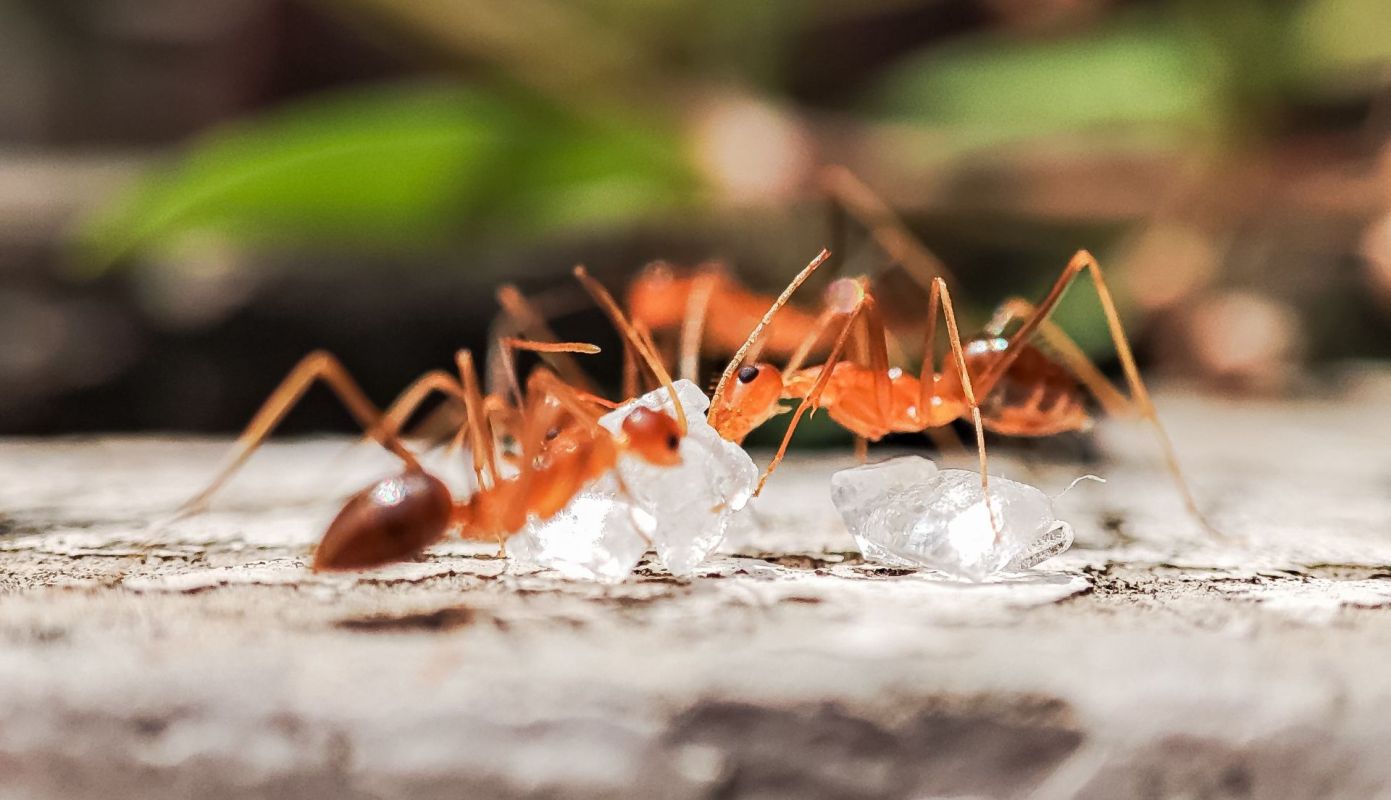
For more than 20 years, Indigenous rangers on Australia's Melville Island worked alongside scientists, government agencies, nonprofits, and private partners to eradicate an invasive fire ant species that had threatened local wildlife. Now, the long-running effort has proven successful, with local officials claiming the invading species has been fully eradicated from the island.
What happened?
According to Mongabay News, the ants were first identified on Melville Island in the early 2000s.
The success of the project marks a major milestone for tropical fire ant eradication. At about 3,790 acres, the project was unusually large for this kind of invasive-ant removal effort.
Ben Hoffmann, principal research scientist at Australia's national research agency, CSIRO, told Mongabay News, "There have been very few tropical fire ant eradications around the world, and when they have been done, they have been incredibly small, from one nest to one hectare [2.47 acres] or so."
However, according to the outlet, the success was not without coordinated effort. More than 40 rangers took part in management and eradication over the years. Tiwi Island Rangers received the Territory Indigenous Natural Resource Management Award in Darwin in 2025 for the achievement.
"We all felt so proud, because all the hard work of all those rangers over twenty-two years paid off. It was an amazing achievement," Stanley Tipungwuti, a ranger on the islands, told Mongabay News.
TCD Picks » Quince Spotlight
💡These best-sellers from Quince deliver affordable, sustainable luxury for all




Why does it matter?
According to rangers and researchers interviewed by Mongabay News, the ants threatened small mammals, nesting birds, and sea turtle hatchlings on the islands.
Tipungwuti said the species can "form huge colonies" and "can do a lot of damage," while also causing bites and allergic reactions in people.
Mongabay News reported that four sea turtle species found on the Tiwi Islands are classed by the Australian government as endangered or vulnerable, and that hawksbill turtles are also listed by the IUCN as critically endangered globally. A destructive and invasive species like the ants wreaks havoc on entire ecosystems when endangered animals exist in a fragile island habitat.
There was no ranger team in the Tiwi Islands when the ants were first found. Support from the Indigenous Rangers Program helped build local capacity, creating a team able to carry out painstaking conservation work over decades.
What's being done?
The eradication campaign centered on finding nests, using small amounts of Amdro insecticide bait, and then returning to sites repeatedly to make sure no colonies were left.
Hoffmann said, as the Mongabay News reported, that some residential yards were checked "up to fifty times."
The bait can harm non-target insects when used broadly, but the Tiwi program limited that risk through targeted application and close site monitoring. Nigel Andrew, an entomologist and chair of science at Southern Cross University, told Mongabay News, "In most cases, removing fire ants allows native insects that were competing or predated on by fire ants to recolonize affected areas over a few years."
The now-15-member ranger team is turning to other invasive animals, including pigs and cats, while continuing surveillance against new incursions. A biosecurity officer with the Tiwi Land Council is also checking incoming freight for invasive species.

Get TCD's free newsletters for easy tips, smart advice, and a chance to earn $5,000 toward home upgrades. To see more stories like this one, change your Google preferences here.






