


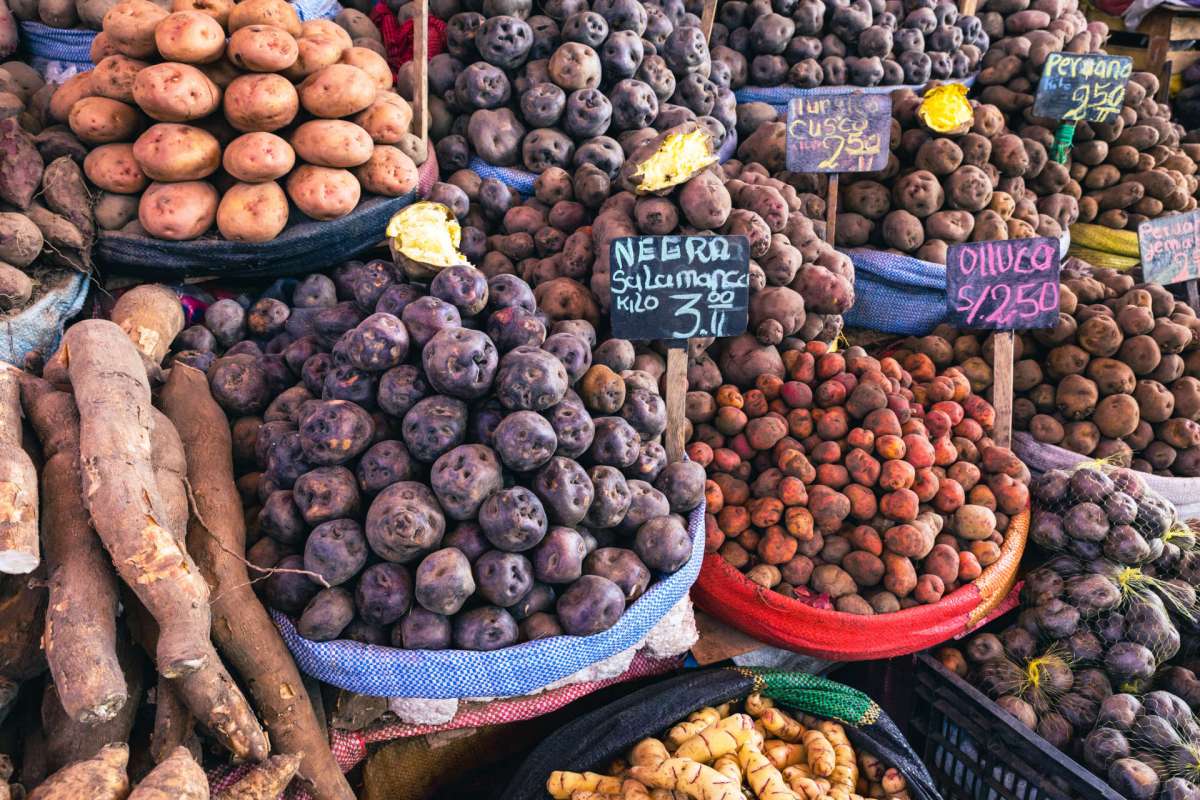
Potatoes have fed civilizations for thousands of years, but they have done more than that.
Scientists have said the crop may have helped shape human biology, giving Indigenous Andean populations a measurable genetic advantage in digesting starch.
That finding adds a compelling twist to the story of one of the world's most widely eaten foods and shows just how closely human health can be tied to traditional diets.
Here's what to know
According to Popular Science, a study published in the journal Nature Communications found that Indigenous Andean populations have the world's highest counts of AMY1 gene copies.
Starch processing begins in the mouth, where salivary amylase starts breaking it down. The AMY1 gene directs production of that enzyme, which means extra copies can help the body handle starch more efficiently.
The researchers examined genomic data from 3,723 people across 85 populations worldwide. Indigenous Andean groups generally showed two to four additional AMY1 copies compared with others, and the timing appears to coincide with potato domestication in the Andes about 10,000 years ago.
TCD Picks » Quince Spotlight
💡These best-sellers from Quince deliver affordable, sustainable luxury for all




The analysis suggested that those added gene copies were associated with roughly a 1.24% survival or reproductive advantage in each generation. Over many generations, even a small edge like that can become strong enough for natural selection to make the trait more common.
"Biologists have long suspected that different groups of humans have evolved genetic adaptations in response to their diets, but there are very few cases where the evidence is this strong," study co-author Omer Gokcumen, an evolutionary biologist at the University at Buffalo, said in a UCLA statement.
More background
The finding links a major food crop to a clear evolutionary adaptation in humans.
About 10,000 years ago, Indigenous communities in the Andes domesticated potatoes and relied on them as a staple. Researchers said that the enduring relationship between people and the crop may still be visible in Andean DNA.
To test whether potato farming was truly driving the genetic difference, scientists compared Indigenous people in Peru with the Maya in Mexico, who share parts of an evolutionary history but did not traditionally rely on potato cultivation. That comparison helped the researchers separate the effects of diet from ancestry alone.
The team also had to rule out another explanation: that the difference emerged because of who survived famine, disease, and violence following European contact. Using DNA sequencing, computer simulations, and statistical tests, the researchers concluded that the adaptation began before colonization.
Modern genetic tools can deepen scientists' understanding of nutrition, digestion, and health, potentially leading to more personalized dietary guidance in the future.
What's being done?
Researchers are continuing to use advanced genetic analysis to study how human populations adapt to changing food systems. That work could help health experts better understand why people respond differently to the same foods.
The findings also challenge the idea that humans are only suited to eat foods from a distant prehistoric past. Instead, the study suggests that our bodies have continued adapting alongside agriculture, cuisine, and cultural traditions.
Traditional plant-rich staples, such as potatoes, beans, grains, and other whole foods, can play an important role in affordable, nourishing meals.
Indigenous agricultural knowledge did more than sustain communities. It may have helped shape human evolution itself.
"There are ideas out there like the paleo diet, which is adapted to the Paleolithic environment and says we're not suited to eat foods that come post-domestication," added study co-author Abigail Bigham in the statement. "But I think this research shows that human populations have responded and evolved to changing food conditions within the last 10,000 years. Our metabolic pathways are not simply a product of that Paleolithic past."

Get TCD's free newsletters for easy tips, smart advice, and a chance to earn $5,000 toward home upgrades. To see more stories like this one, change your Google preferences here.






