


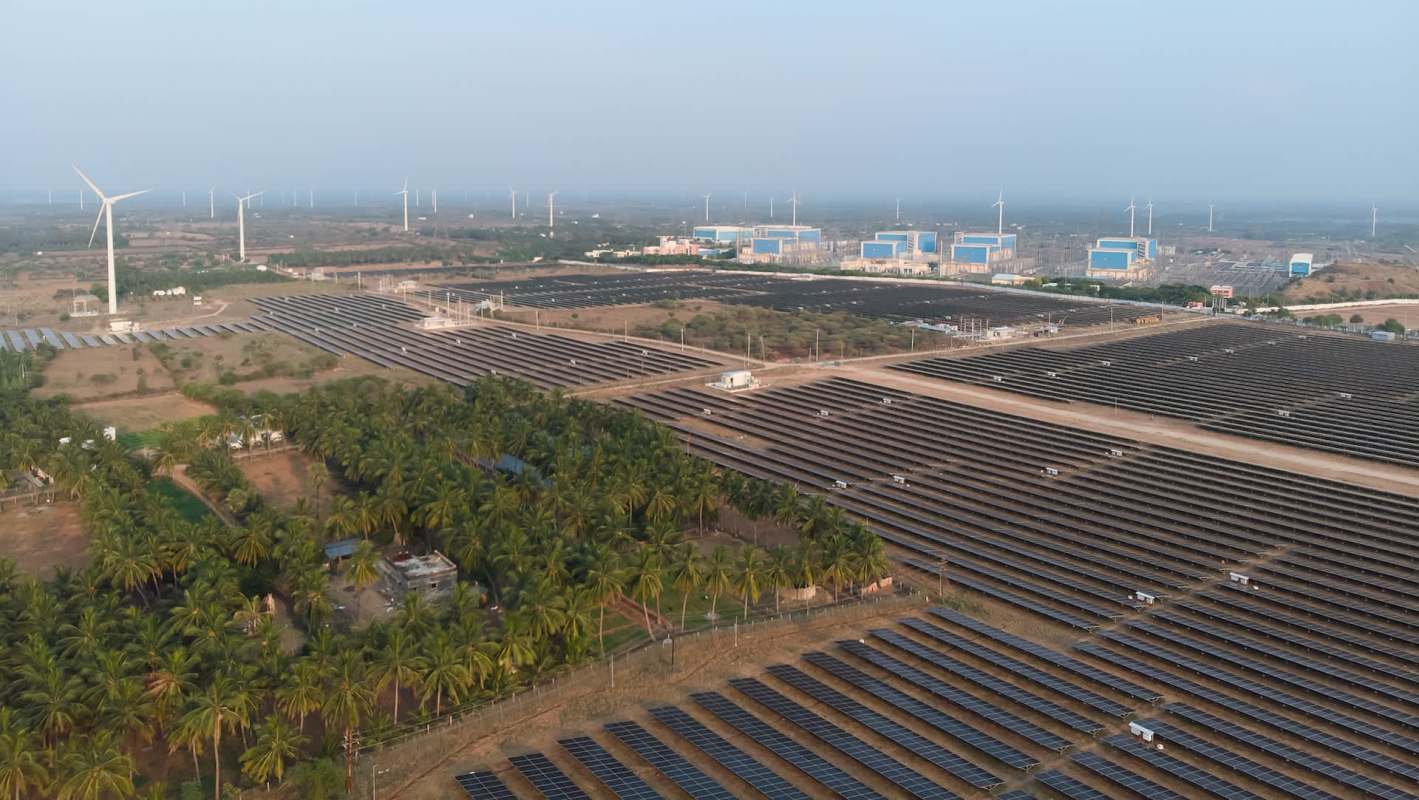
India hit a new milestone in its power transition when clean energy sources supplied the majority of electricity to the national grid during a period of heavy daytime use.
It is the second consecutive year the country reached that level, another sign that renewable generation is taking on a larger role in one of the world's biggest power systems.
What happened?
Data from the Power Ministry's MERIT platform, cited by Prokerala, show that at 11:46 a.m. local time on July 6, India's demand stood at 221.5 gigawatts, with 50.02% of it met by clean sources such as renewables, hydropower, and nuclear power.
Which means that coal, gas, and other conventional generators were supplying less than half the load during that daytime period. It was also the second straight year that India crossed the 50% clean-power mark at a single point in time.
According to Disha Agarwal, a fellow at the Council on Energy, Environment and Water, clean energy has topped 45% of India's total electricity demand on 50 days since May.
Recent weather also helped shape the numbers. Widespread rain cooled extreme summer conditions, and power demand eased to 222.5 GW on July 6 before rising to 230 GW on July 7 — still well below the all-time high of 270.8 GW recorded during a May heat wave.
TCD Picks » Quince Spotlight
💡These best-sellers from Quince deliver affordable, sustainable luxury for all




Why does it matter?
When a country as large as India gets half its electricity from cleaner sources during busy daytime hours, it shows how quickly power systems can shift away from planet-warming fuels when enough capacity comes online.
Cleaner grids can help reduce the air pollution tied to burning coal and gas while also lowering the heat-trapping pollution that intensifies extreme weather. More low-cost renewable generation can also help limit fuel-price volatility that often gets passed on to households and businesses.
As of May 31, India had 542.3 gigawatts of installed generation capacity overall, including 250.8 GW from thermal sources and 282.7 GW from renewables.
The country is still expected to need much more electricity in the years ahead, with the government projecting peak demand could hit 271 GW in 2026.
What's being done?
Sustaining that progress beyond sunny midday hours will require a grid that can carry more clean power into the evening, which points to additional storage, greater system flexibility, and continued growth in both utility-scale and distributed renewable systems so more evening demand can be met without relying as heavily on oil, gas, and coal.
This shift can create a practical opening to cut monthly costs, too. You can pair solar panels with efficient electric appliances to drive your utility costs even lower, especially as cleaner electricity becomes a larger share of the grid. EnergySage can help you go solar with its free tools and save you up to $10,000 in the process by helping you curate competitive bids from local installers.
India's grid milestone does not mean the transition is finished, but it does show that cleaner power is no longer a niche contributor — it is increasingly part of the country's electricity backbone.
"This already signals a lasting change in the supply mix. CEEW research shows that the next frontier will be to scale flexible energy storage, along with large-scale and distributed renewable energy systems, to meet increasing shares of the evening demand with low-cost renewables," Agarwal said.

Get TCD's free newsletters for easy tips, smart advice, and a chance to earn $5,000 toward home upgrades. To see more stories like this one, change your Google preferences here.






