


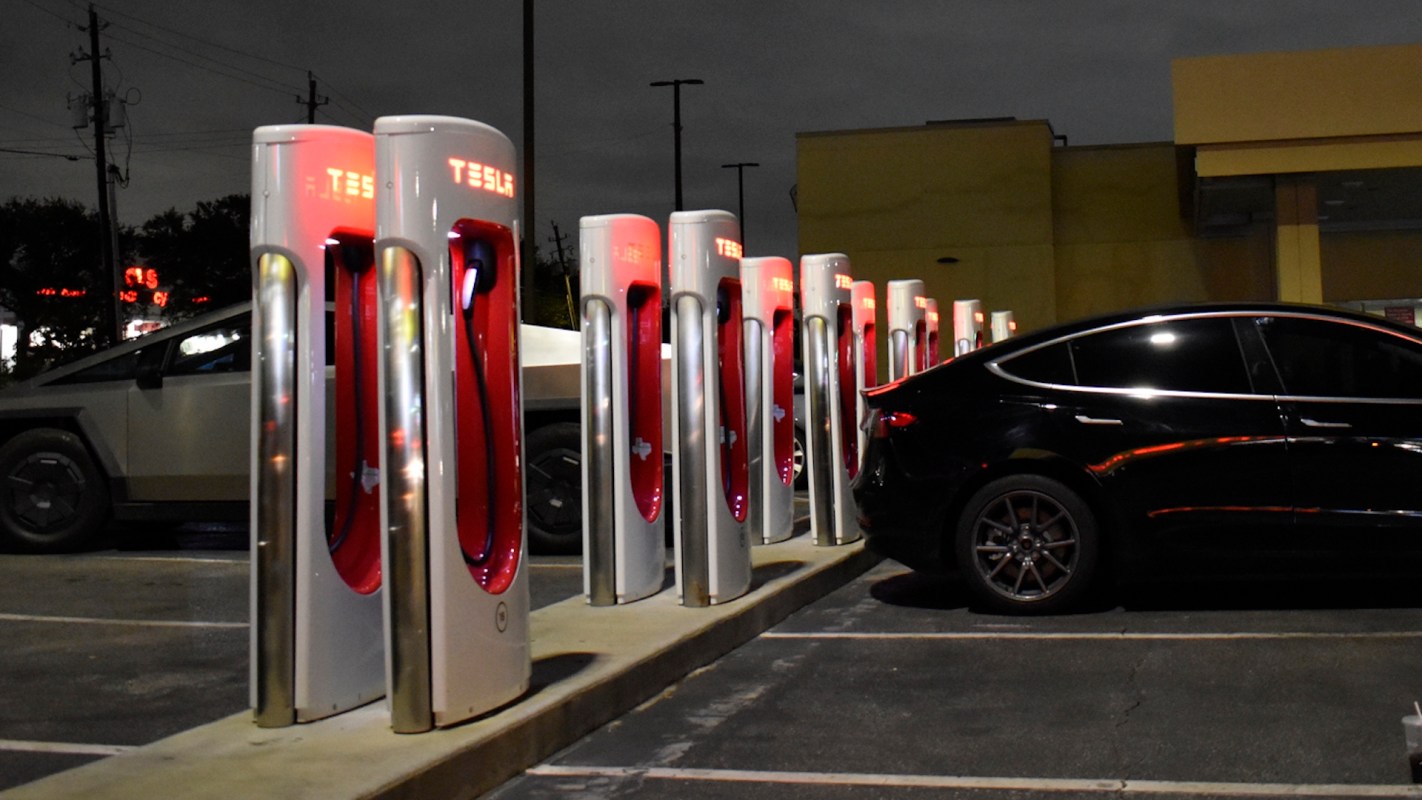
A shooting in the parking lot of an Idaho In-N-Out and Tesla Supercharger location has prompted fresh attention on a niche charging accessory and on a basic safety issue for EV drivers.
As Electrek detailed, drivers are now wondering what happens when a car is plugged in and the driver needs to get away fast, and they are pressing for solutions.
What happened?
The concern resurfaced after the Aug. 1 attack at the newly opened In-N-Out in Twin Falls, Idaho. A Tesla Supercharger is located in the same lot, and three people were killed while several others were injured, among them a Tesla driver who survived during a charging session, the outlet noted.
Because EV connectors remain latched in place while electricity is flowing, leaving is not as simple as pressing the accelerator. Drivers generally must first release the charge port from the car's screen or use the vehicle's manual release.
That is why posts on X turned to EVject after the Aug. 1 attack, as Electrek noted. The $279 device, marketed as an "Escape Connector," fits between the charger and the vehicle and is meant to separate if the car drives off, letting the driver depart without first unplugging in the usual way.
But the online endorsements often skipped the product's history. In a 2024 lawsuit, Tesla argued that the adapter lacked over-temperature protection and could become dangerously hot. EVject later added thermal protections in a revised model, and Tesla dropped the suit, as Electrek reported.
TCD Picks » Quince Spotlight
💡These best-sellers from Quince deliver affordable, sustainable luxury for all




Why is it important?
More broadly, the attack puts the focus on a tradeoff built into fast charging. Locking connectors help keep charging systems safe, yet in a crisis they can cost precious time. That design issue extends beyond Tesla to vehicles and equipment that use NACS, CCS, and J1772.
Even so, a breakaway adapter cannot guarantee an escape, as Electrek wrote. A driver would still need to notice the threat, respond immediately, and have space to get out, so treating the accessory as a complete answer could create more reassurance than it can realistically deliver.
Most charging happens at home, and for many drivers, that remains far cheaper and more convenient than making frequent trips to gas stations.
"90% of EV charging is done at home, while nearly 100% of gasoline is pumped at gas stations," a commenter on Electrek wrote. "So even if a person could get away faster, they'd have to get away 10 times as often."
What's being done?
A more durable answer would likely come from the companies building the cars and the chargers, Electrek suggested. Rather than depending on an aftermarket part, vehicles and charging networks could offer an in-cabin emergency disconnect that cuts power, releases the latch, and lets a driver leave quickly.
Tesla could have an advantage in tackling that problem because it makes both sides of the charging experience. But the broader industry faces the same challenge.
"Every automaker and charging network should be thinking about how a driver safely leaves a stall in an emergency," Electrek opined. "The locking connector exists for good engineering reasons, so the escape path has to be engineered too."

Get TCD's free newsletters for easy tips, smart advice, and a chance to earn $5,000 toward home upgrades. To see more stories like this one, change your Google preferences here.






