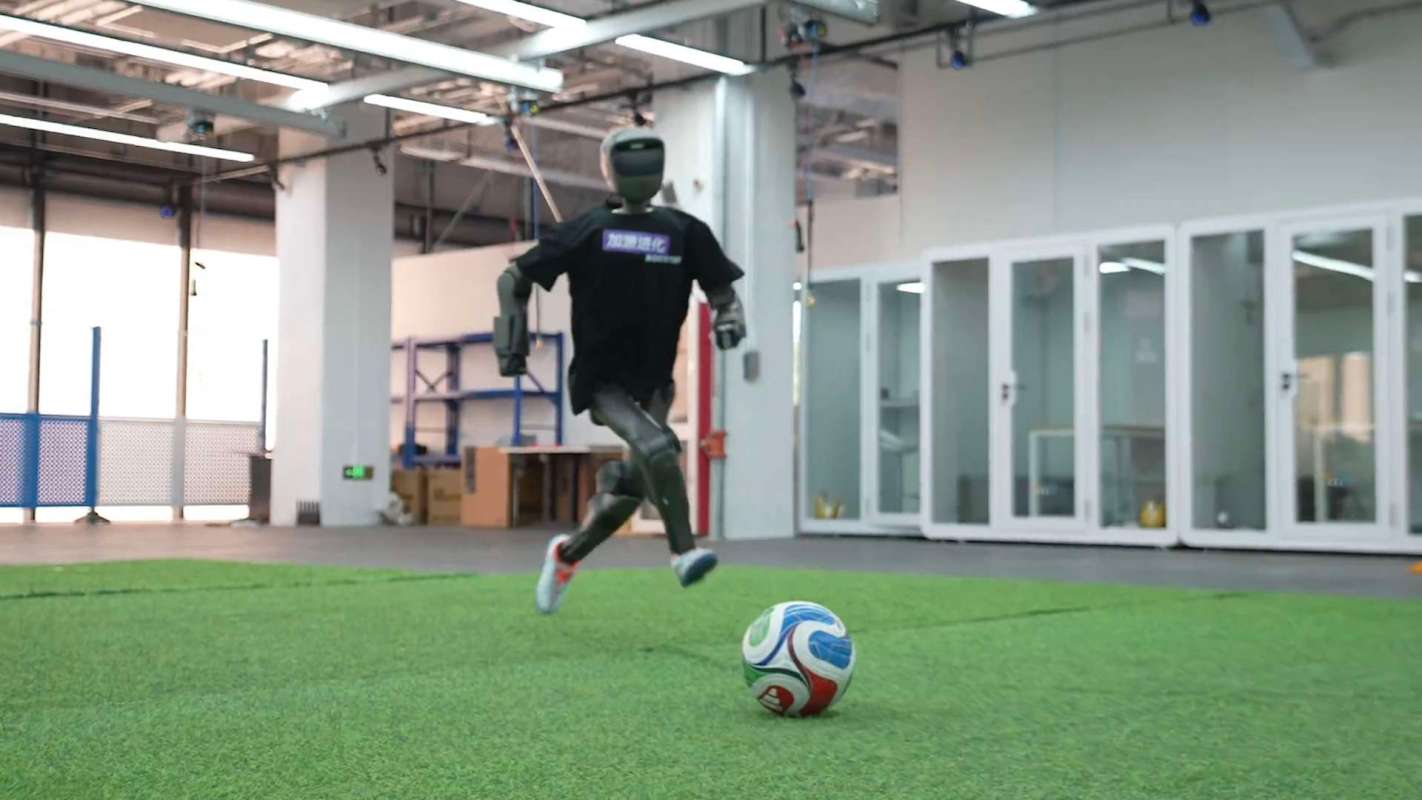
A small humanoid soccer robot is drawing viral attention after one of its penalty kicks blasted a ball so hard it smashed a hole in the wall.
What happened?
According to Futurism, the machine in the video — posted on the social platform X — is the T1, a humanoid robot made by Beijing-based Booster Robotics, and the video shows it taking a series of penalty kicks. One shot goes straight down the middle and slams into the camera; another rockets into the lower corner with enough force to punch a hole in the wall.
While humans prepare for the World Cup,
— Booster Robotics (@boosterobotics) May 29, 2026
robots are training for theirs too! Look for RoboCup! pic.twitter.com/OIiUdhb3Nf
The clip also fits into a broader trend of robotics companies showcasing humanoid machines performing carefully staged skills, whether that means dancing, martial arts, or sports. According to Futurism, a Chinese team won gold at Brazil's 2025 RoboCup competition using Booster T1 robots.
Why does it matter?
It offers a glimpse into how quickly robotics hardware is advancing. If a small humanoid can consistently kick with that much force and control, it points to growing capabilities in motors, balance systems, and machine perception.
The video also highlights an obvious safety issue: a robot that can drive a soccer ball hard enough to damage a wall could injure someone if something goes wrong. That concern is amplified by other recent viral robot mishaps, including clips of bots hitting or colliding with people in public settings.
More broadly, robotics powered by artificial intelligence is closely tied to the energy grid.
TCD Picks » Quince Spotlight
💡These best-sellers from Quince deliver affordable, sustainable luxury for all




These systems can provide real benefits, including helping optimize clean energy use, forecast electricity demand, and improve efficiency in factories and warehouses.
At the same time, AI has notable downsides. It can consume large amounts of electricity and water through data centers and computing infrastructure, create security and misuse risks, and add strain on the grid, which can contribute to higher energy costs if growth is not managed carefully.
What are people saying?
Futurism wrote that the T1 "absolutely leathers a ball into the bottom corner of the goal." It also noted that on another attempt, the robot "massacres the camera."
The outlet also warned that "if a robot is powerful enough to smash walls with the kick of a ball, it's powerful enough to hurt humans." Its conclusion was blunt: "Best to keep them off the pitch, then."

Get TCD's free newsletters for easy tips, smart advice, and a chance to earn $5,000 toward home upgrades. To see more stories like this one, change your Google preferences here.