


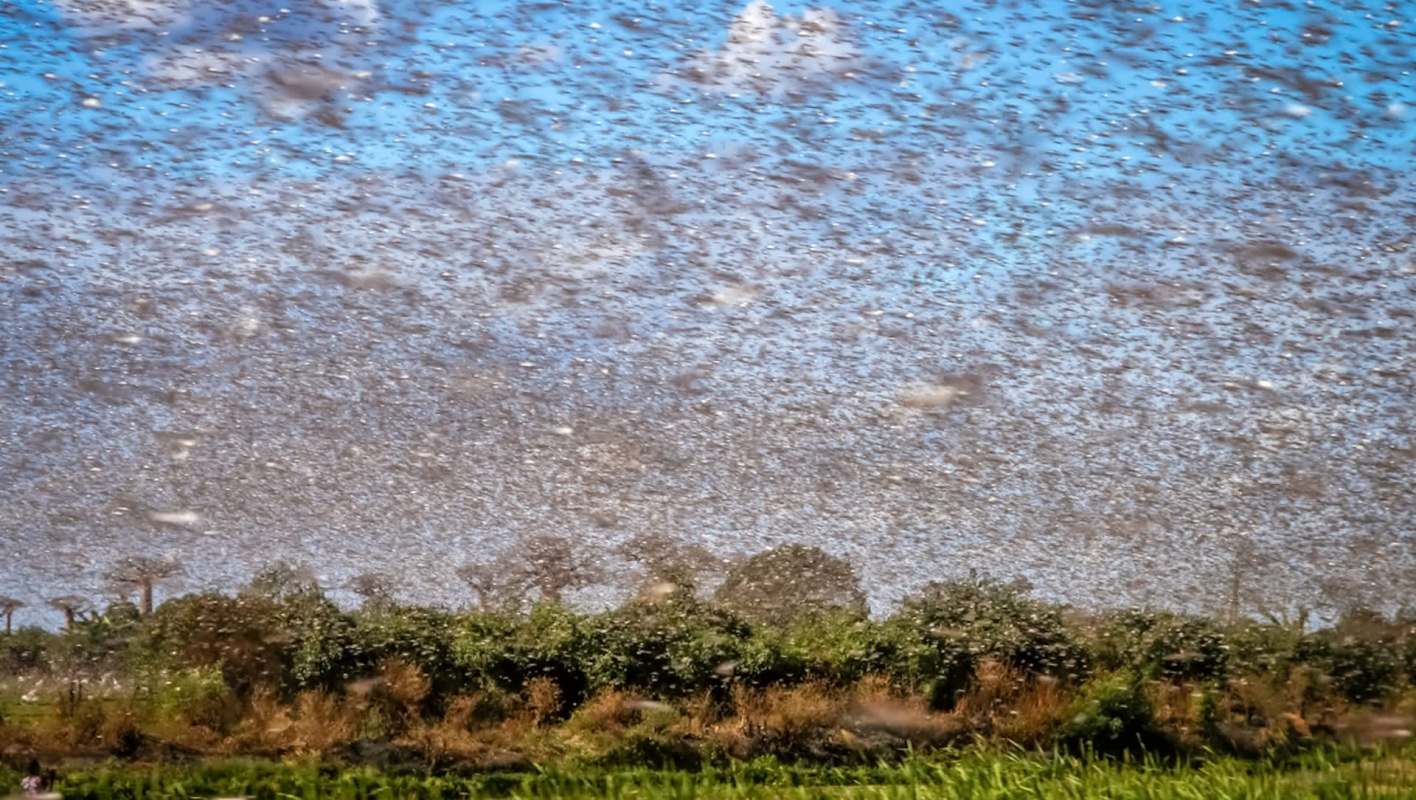
Farmers in Senegal have discovered an unexpected defense against destructive locust swarms: growing crops the insects don't want to eat, according to a study published in Scientific Reports.
A research team from Gaston Berger University and Arizona State University partnered with 100 farmers in the Gossas and Gniby regions. Participants grew millet in paired plots. One group received nitrogen-based fertilizer; the other served as a control.
The outcome was striking. Treated fields had fewer pests, less damage to plants, and harvests that more than doubled.
The strategy works by shifting what crops offer at mealtime. Locusts and their grasshopper relatives need carbohydrate-heavy foods with minimal protein to store energy for reproduction and extended journeys. Adding nitrogen to soil raises protein levels in plants and drops their carbohydrate content. Locusts would rather skip the resulting crops.
This finding could bring relief to farming communities around the globe struggling with swarm infestations.
Across the American West, outbreaks of locusts, grasshoppers, and crickets cost ranchers about $1.2 billion every year. The research suggests that building soil quality instead of relying on pesticides could protect harvests and local ecosystems.
TCD Picks » Quince Spotlight
💡These best-sellers from Quince deliver affordable, sustainable luxury for all




Scientists are now investigating whether compost can produce comparable results, which would make the strategy more affordable for farmers working with tight budgets.
"Locust outbreaks are a highly complex, highly impactful global challenge," Arianne Cease, director of ASU's Global Locust Initiative, told Popular Science. "When these upsurges happen, they dramatically affect people's livelihoods."
Cease offered her perspective on how human activity shapes swarm behavior.
"There's this narrative, largely driven by our religious histories, that locusts are a plague and they arrive when you do bad things," she said. "But, in fact, they're just insects doing their thing — and there are many aspects of how we manage our landscapes or how we are broadly affecting climate that impact the probability that these locusts will form swarms."
|
What's the most you'd pay per month to put solar panels on your roof if there was no down payment?
Click your choice to see results and speak your mind. |
 $200 or more 💰
Get TCD's free newsletters for easy tips to save more, waste less, and make smarter choices — and earn up to $5,000 toward clean upgrades in TCD's exclusive Rewards Club.






