


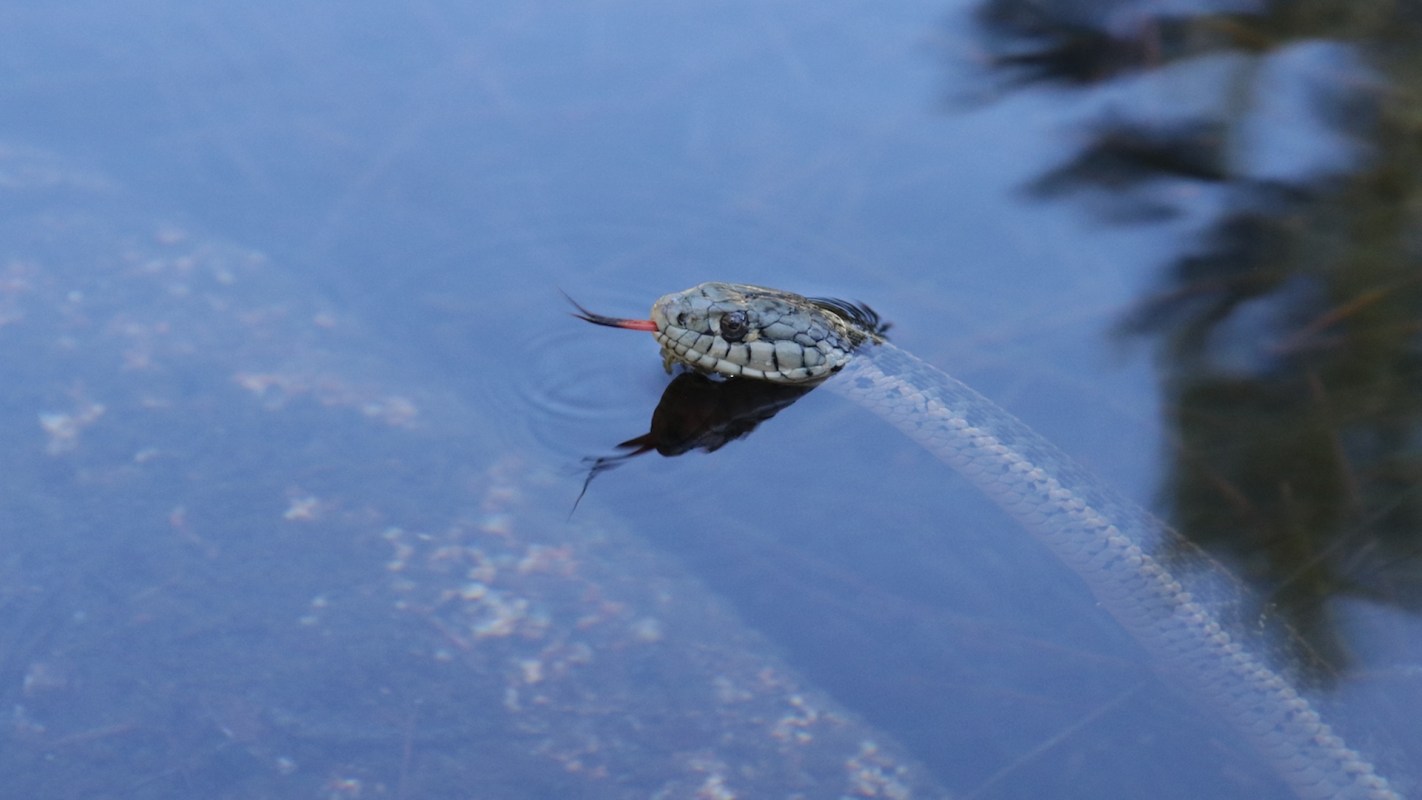
A grainy wildlife video from Ibiza, Spain, is making the stakes of an invasive-species crisis hard to ignore.
The footage appears to show a horseshoe whip snake swimming about 1,500 feet from Ibiza to the islet of Santa Eulària — another sign that the native lizards that locals treasure are running out of places to hide.
The Guardian reported that the video, recorded by a local wildlife ranger in April 2024, captured what researchers say is the first solid proof of what fishermen and tourists had reportedly been seeing: invasive snakes swimming out to nearby islets in search of food and new territory.
Oriol Lapiedra, a biologist at Catalonia's Centre for Ecological Research and Forestry Applications, said there had been "increasing anecdotal evidence" of snakes in the water, but this was the "first proper evidence" of one making the crossing from Ibiza to the islet.
The predator in question, the nonvenomous horseshoe whip snake, is native to mainland Spain — not Ibiza. Experts believe it arrived about two decades ago, likely hidden in imported ancient olive trees, and has since spread across at least 90% of the island.
The horseshoe whip snake has developed a taste for the Ibiza wall lizard, an endemic species now listed as endangered by the International Union for Conservation of Nature. Researchers say 10 islet-specific lizard populations have already disappeared, wiping out millennia of evolution, according to the Guardian.
TCD Picks » Quince Spotlight
💡These best-sellers from Quince deliver affordable, sustainable luxury for all




These lizards keep insect numbers down, including farm pests, and help pollinate flowers and spread seeds. When they disappear, ecosystems grow less resilient.
The lizard is also an Ibiza icon, splashed across souvenirs and woven into the island's identity. Counts on Santa Eulària fell from 72 lizards in 2016 to three in 2023. Meanwhile, the Balearic regional government reported capturing more than 3,500 horseshoe whip snakes last year alone. They have even enlisted a dog to help catch the snakes.
Lapiedra noted a bitter irony: Some of the safest lizard populations are now in Ibiza's urban areas, where snakes are more likely to be run over or killed by people. "The populations are fine" in the largest cities, he said, according to the Guardian.
Researchers and officials are trying to buy time with a captive-breeding "Noah's ark" program in Barcelona.
"Each, or most, of the islets have these unique lineages that are being completely lost to science and to humanity right now," Lapiedra said. "So this is a tragedy — it's like a fire in an old church."

Get TCD's free newsletters for easy tips, smart advice, and a chance to earn $5,000 toward home upgrades. To see more stories like this one, change your Google preferences here.






