


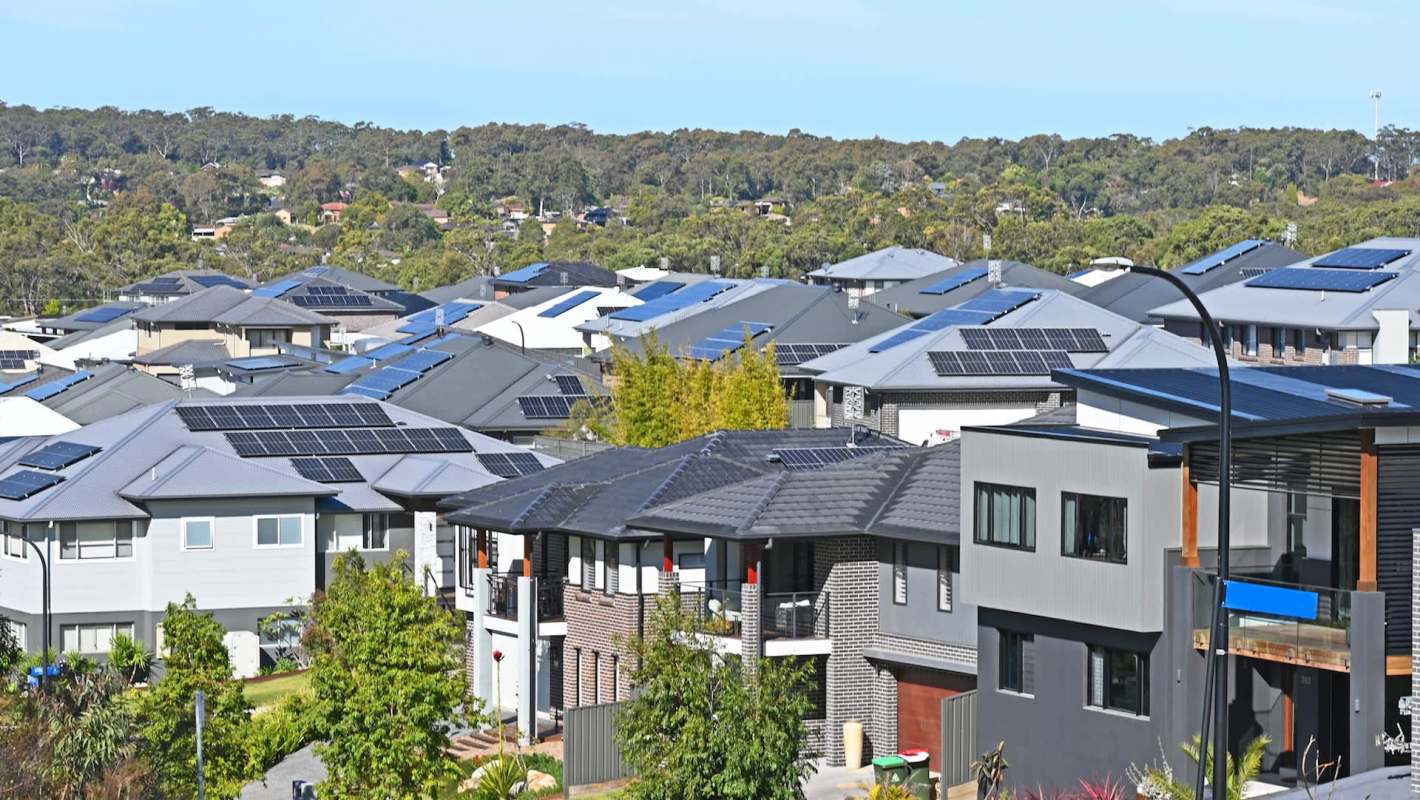
Thousands of homes equipped with solar panels and batteries could offer an alternative to gas-fired power plants, according to a former U.S. energy regulator.
Neil Chatterjee, the chief governmental affairs officer for Palmetto and former chair of the Federal Energy Regulatory Commission, said 16,000 households working together could match the power of a gas peaker plant, potentially helping meet the new reality of the electricity demands of power-hungry data centers.
Here's what to know
Chatterjee discussed the proposal during a company town hall about the U.S. midterm election results, according to a LinkedIn post by Palmetto founder and CEO Christopher Kemper.
Palmetto specializes in helping households afford cleaner and more bill-reducing home upgrades like solar, HVAC, and energy storage, so central to the discussion was energy affordability — along with the opportunity to address concerns about data centers, including their associated costs, grid pressure, and pollution. Chatterjee specifically said "behind-the-meter gas generators" contributed to these impacts.
"You know what can replace those generators?" Kemper asked in his post. "16,000 residential households with a solar system and a battery can provide the same amount of power as a gas peaker plant.
"While a gas peaker plant can take years to build, these systems could be installed in months. Permitting reform, another stated objective for Democrats, would further support this effort."
Kemper said the proposed network would link those residential systems to supply data centers with electricity, without requiring the data center to rely on a purpose-built solar array on its own property.
Moreover, residents could lower their utility bills by using part of their systems' output themselves. That electricity would come from generation left over after households fulfill the portion committed to data centers, with the idea being a financial win-win as well as a win for reducing gas generator noise and air pollution.
Crushed by your bills? See instant solar savings from vetted installers in just a few clicks With energy prices through the roof, there's never been a better time to go solar — and EasyHome can help you find the best prices from the best installers in your area. EasyHome takes the guesswork and headaches out of energy upgrades by showing you estimated savings from a network of vetted local partners. To get started, just enter your ZIP and share a few details about your home — seeing your estimate is really that easy. |

If more data centers are a reality for the country, the thinking is that if a center could be powered by solar and battery storage from the surrounding area, its impact on a community would become much less pronounced — while also providing more direct benefit to area residents that participate in such a program.
More background
Chatterjee cited NBC News exit polling in which 86% of voters reported that power prices and worries about affording utility payments influenced their ballot choices.
Noise and requirements to reduce electricity demand have also drawn opposition from communities surrounding data centers. Those demand reductions are intended to relieve pressure on the grid, adding another concern alongside electricity costs.
Chatterjee's and Kemper's vision calls for AI companies to fund residential solar-and-battery installations in neighborhoods near data centers. For those living nearby, replacing some or all of those generators could also mean less noise.
"The cost to install distributed generation systems in the communities surrounding data centers wouldn't be prohibitive to AI companies; it would provide consumers relief on their electrical bills by using the percentage of their generation not committed to supporting the data center, alleviate grid stress, and eliminate generator-attributable noise pollution," Kemper wrote.
Kemper also said that while the midterm results certainly point toward momentum for solar projects, politicians across the spectrum have taken plans like this seriously in recognizing that they provide more resiliency against increasing energy demands and sometimes-unpredictable fuel supply and cost issues, especially since the permitting and building is typically much faster than alternatives.
"It's a policy direction both Republican and Democratic candidates for statewide office have hovered around, and a topic to watch in the coming years," Kemper wrote.
What's next?
Chatterjee and Kemper presented the residential network as a potential policy direction while acknowledging the value of differentiating Palmetto's operational health from the ever-changing political landscape. Still, Kemper wrote that "we don't want to miss out on policies that can boost us."
Palmetto has set Dec. 31, 2029, as its goal for operating independently of subsidies. "As I've shared here many times, policies are meant to kickstart industries, not sustain them in the long term," Kemper said.
The vision of more solar on rooftops has value for households beyond the direct cost reductions proposed by partnering with data center development, too. Solar and battery configurations could help further manage electricity costs, and combining the two can also provide backup electricity during outages.
As for legislative proposals, Chatterjee cautioned that they must go through negotiations before becoming policy.
"My message is: 'Let's stay calm and see what's introduced.' What's introduced isn't necessarily what will ultimately become law," he said. "Congress will need to take very nuanced approaches to passing something that President Trump will sign in his last two years in office."
Where can I learn more?
Many utilities are already using networks of home batteries to meet peak electricity demand.
• California Powerwall owners sent 601 megawatts to the grid, rivaling a utility power plant.
• California is betting on home batteries to lower power bills and reduce gas-plant reliance.
• PG&E is tapping 21,000 home devices to ease peak demand through a virtual power plant.
• Sunrun and Tesla tapped 140,000 home batteries during a California heat wave, delivering 580 megawatts.
• DTE will tap nearly 100 home batteries in Ann Arbor to test cheaper peak-demand management.

Get TCD's free newsletters for easy tips, smart advice, and a chance to earn $5,000 toward home upgrades. To see more stories like this one, change your Google preferences here.
Cool Picks






