


A night hike can turn up something unusual. But a moment that could help reshape how scientists think about an entire group of animals? That's special.
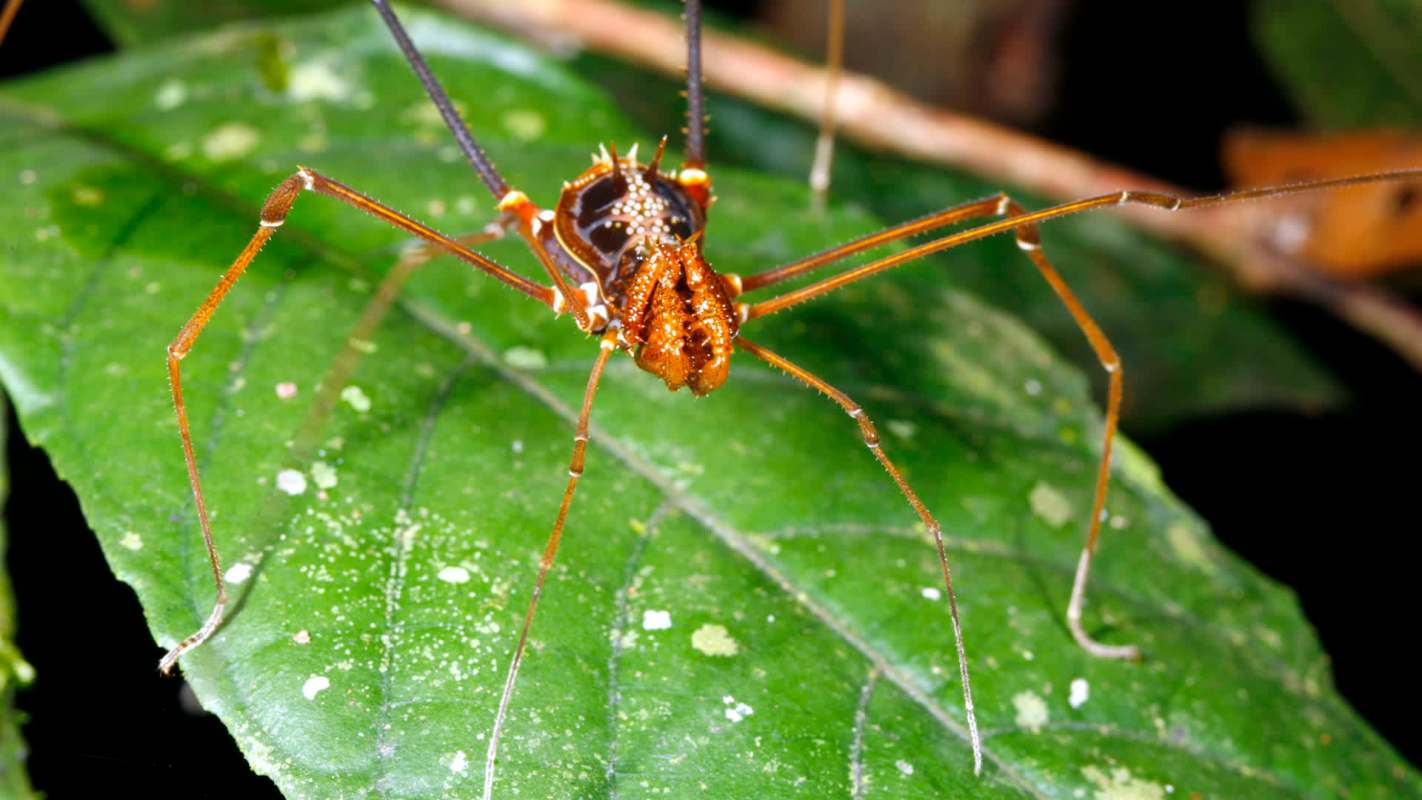
As Smithsonian magazine reported, that was the case in Ecuador's cloud forest, where a naturalist guide spotted a daddy longlegs-like harvestman eating a live frog about its own size.
What happened?
The outlet noted the February 2020 sighting happened during an evening hike in the 7,900-acre Mashpi-Tayra Reserve, home to Mashpi Lodge. Lizardo Proaño was leading travelers through the forest when he noticed the arachnid feeding on the frog, and his colleague, Juan Carlos Narváez, photographed the scene, according to Smithsonian magazine.
As he recalled to the outlet, Proaño had seen harvestmen feeding on worms, caterpillars, and, on one occasion, part of a scorpion's tail, so he did not immediately think the frog encounter was especially notable.
"I didn't know this was something special," Proaño related to Smithsonian magazine. "I thought it was normal because frogs are good prey for everybody."
But when biologist Esteban Calvache later reviewed the images, he realized it was far more significant than it seemed, the outlet reported.
TCD Picks » Quince Spotlight
💡These best-sellers from Quince deliver affordable, sustainable luxury for all




In a study published in April in Ecology and Evolution, Calvache, Proaño, Narváez, and their co-authors reported just 10 documented wild cases worldwide of harvestmen preying on adult frogs. All were from South America.
In several cases, the frogs were still alive, suggesting these long-legged arachnids may not simply be scavengers. They may also be active hunters.
Why does it matter?
The observation complicates how tropical food webs are understood. Arthropods are often treated as prey for vertebrates, not the other way around. But these observations suggest the picture may be more complicated, particularly in tropical forests where harvestmen can be larger and more robust.
Harvestmen also remain understudied. Though they are often mistaken for spiders, Smithsonian magazine notes that harvestmen are their own arachnid group, with about 6,660 described species and a reputation for eating almost anything they can manage.
The encounter happened along a route used for ecotourism, where human presence can reveal behaviors that might otherwise go unnoticed.
Harvestmen are mostly active late at night, with peak activity around midnight and 3 a.m., according to Smithsonian magazine. Thus, researchers think this behavior may be more common than the scientific record indicates.
What's being done?
Scientists are now calling for closer observation of these overlooked arachnids, especially in tropical forests. Future research could help explain how harvestmen capture and subdue slippery adult frogs, and whether males and females hunt differently.
As Smithsonian magazine reported, one of the cases included in the new paper came from iNaturalist, where anyone can upload photos of wildlife. For animals as difficult to study as harvestmen, those snapshots can become scientific evidence.
It's a great demonstration of how citizen science done responsibly can shed a light on new animals, and further our understanding of established ones.
Protected areas such as the Mashpi-Tayra Reserve may also make discoveries like this more likely, since they give scientists, guides, and visitors sustained access to biodiverse habitats that remain intact enough to support complex interactions.
"There are lots of hidden mysteries in the mist," Calvache concluded to Smithsonian magazine.

Get TCD's free newsletters for easy tips, smart advice, and a chance to earn $5,000 toward home upgrades. To see more stories like this one, change your Google preferences here.






