


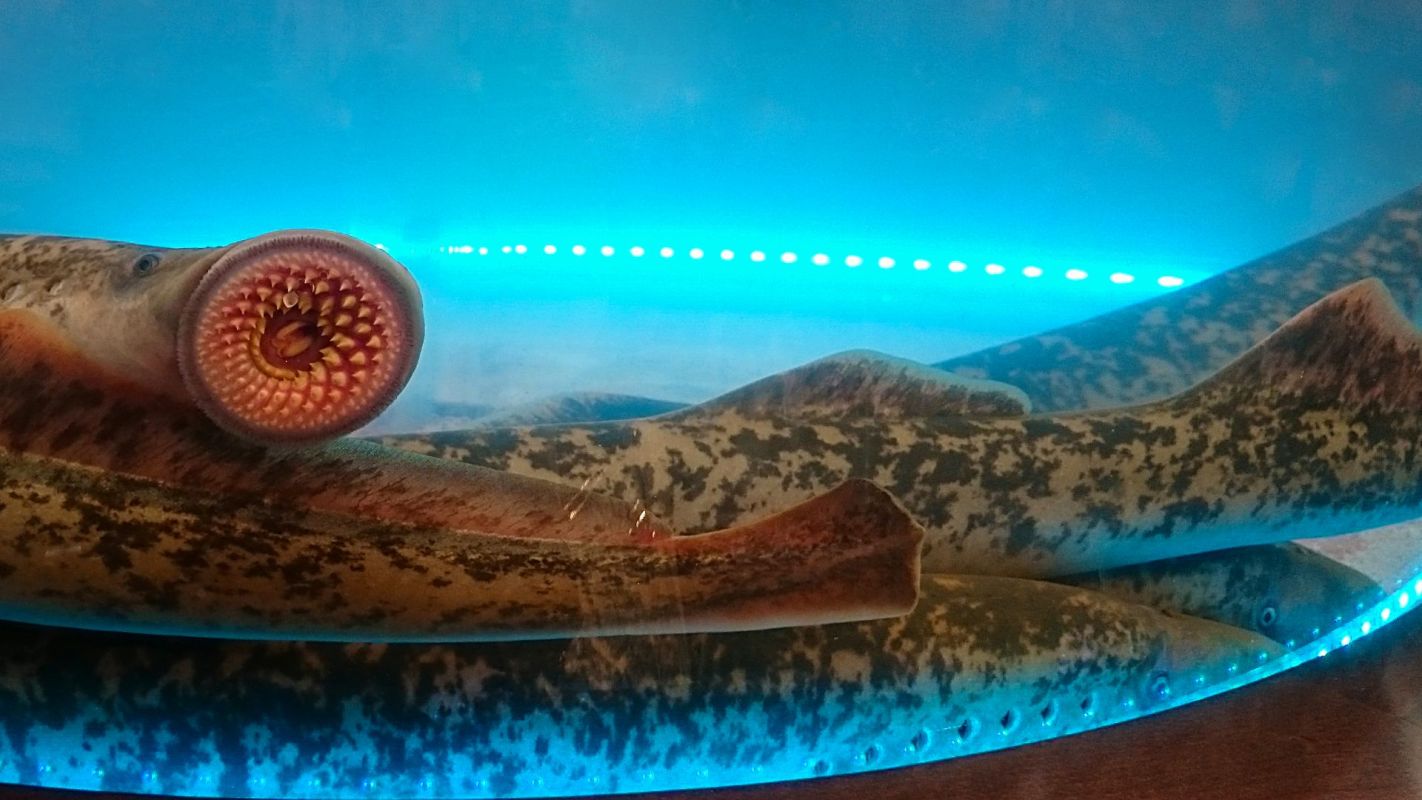
A toothy fish species in the Great Lakes is bringing both parties together in Washington.
As lawmakers consider a major new push to address invasive animals, sea lampreys have become an example of what is at stake for fishers, jobs, and even drinking water.
What's happening?
The parasites, which came from the Atlantic into Lake Ontario in the 1800s and reached the upper Great Lakes in the 1920s, have contributed to sharp declines in trout, salmon, and whitefish, among others.
To make the threat real for lawmakers, the Great Lakes Fishery Commission brought live sea lampreys to Capitol Hill, CNN reported.
Greg McClinchey, the Great Lakes Fishery Commission's policy and legislative affairs director, told CNN, "I have never had an issue that unifies like this."
And considering the impact lampreys have had on the Great Lakes economies, it makes sense that politicians are united to fight them. During the Covid-19 pandemic alone, lamprey cost those economies nearly $2 billion.
TCD Picks » Quince Spotlight
💡These best-sellers from Quince deliver affordable, sustainable luxury for all




Now, the discussion in Congress now reaches beyond lampreys. The bipartisan Save Great Lakes Fish Act of 2025 would provide a half billion dollars over 10 years to pursue ways to control other invasive species, like zebra and quagga mussels, that have spread across the lakes and disrupted the aquatic food web.
While the legislation is not yet law, its support from both sides of the aisle makes its passage more likely.
Why does it matter?
The Great Lakes themselves provide locals with tens of thousands of jobs. That means invasive species pose a threat not just to wildlife, but to local economies and the communities tied to them.
By the GLFC's estimate, if lamprey control measures ceased, they could bring down the Great Lakes' fish stocks and the multibillion-dollar fishing industry in as little as five years.
Beyond their impact on the fishing industry, invasive species like lampreys can also threaten food systems and recreation.

Get TCD's free newsletters for easy tips, smart advice, and a chance to earn $5,000 toward home upgrades. To see more stories like this one, change your Google preferences here.






