


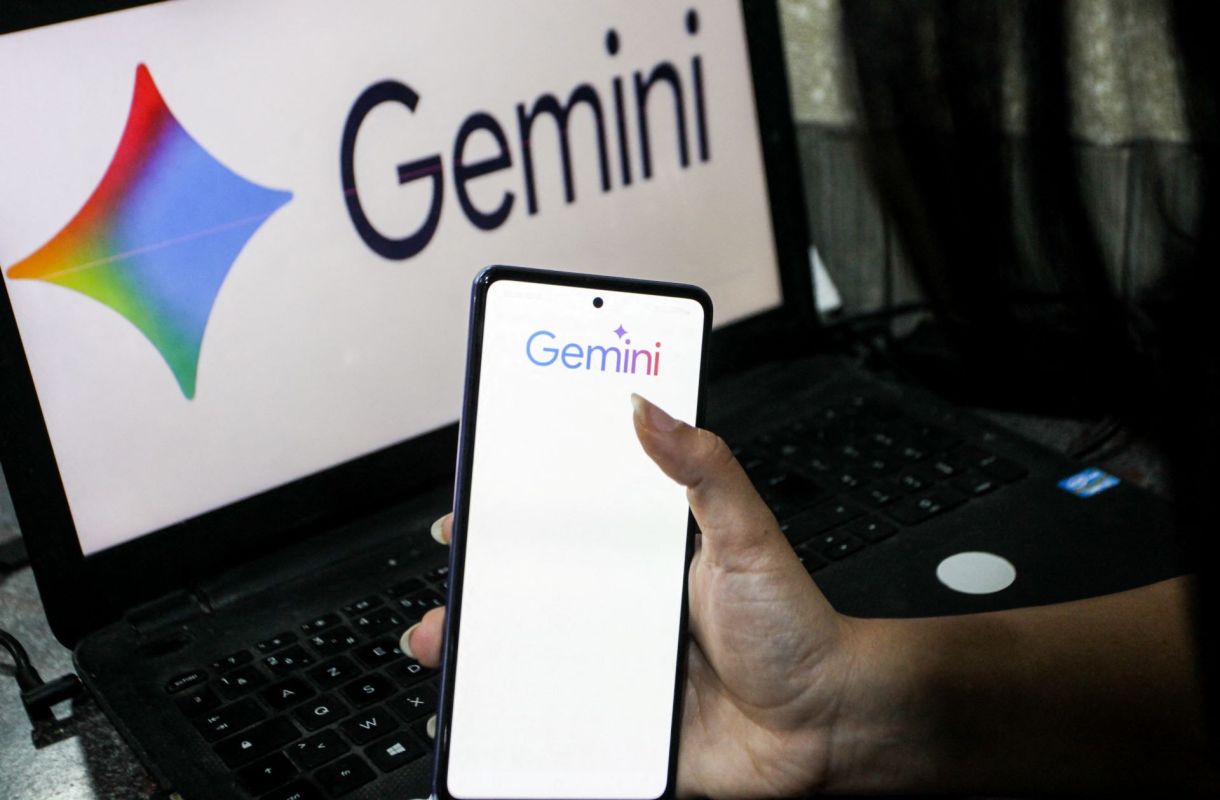
Google Gemini is preparing to give users more control over whether AI-generated content carries a visible watermark, making it harder for people to identify synthetic media at a glance.
Here's what to know
An announcement from Gemini's official Twitter account, cited by Gizmodo, said users will be able to "decide if your image, video, and music creations made with Gemini will have visible watermarks."
That would make visible labeling an option users can switch on or off, most likely with monetary incentives, rather than something automatically applied. The update raises new questions about how generative AI content will be identified as these tools become more common online.
User feedback appears to have played a role in the shift. Android Authority reported that Google vice president Josh Woodward asked Gemini users which additions they wanted most, and, as Gizmodo reported, removing visible watermarks from Nano Banana-made images ranked among the top 10 requests.
Google says other protections will still be used, including C2PA content credential metadata, which can carry provenance details with a file, and SynthID — the company's invisible watermarking system for AI-generated images, video, and audio.
Still, those protections have limits and each safeguard can be defeated in its own way. Metadata may be stripped out, especially after files are posted to social platforms, and visible watermarks can be concealed by cropping or covering them. Ars Technica reported that SynthID can survive edits and compression, though the outlet found an image became "uselessly blurry by the time that happens" when testing how far it could be pushed.
TCD Picks » Quince Spotlight
💡These best-sellers from Quince deliver affordable, sustainable luxury for all




Why is this important?
Generative AI tools are becoming increasingly capable of producing realistic media that can spread quickly across social networks, group chats, and search results — regardless of their accuracy or truth.
When visible labels disappear, users are left clueless as to whether what they are seeing was created by a person or a machine. Google has also acknowledged that invisible watermarking is not a perfect solution. Gizmodo noted that SynthID is not designed to withstand every adversarial attack, and commercial services already claim they can bypass it.
One Medium author cited in the report said it took "weeks, 123k image pairs, 200 plain Gemini images and a very specific understanding of spread-spectrum encoding" to create changes that sometimes fooled decoders.
AI has the potential to improve lives in meaningful ways with accelerated research and optimized power systems that support cleaner energy. At the same time, training and running large AI models can require enormous amounts of electricity and water, adding pressure to the grid and, in some cases, contributing to higher utility costs, security concerns, and the misuse of realistic synthetic content.
What's being done?
Companies and regulators are relying on a mix of technical tools, disclosure rules, and platform policies to limit the harms associated with AI-generated media and keep transparency a priority.
Woodward said the watermark-removal feature will roll out, "except in countries where it's required by law to keep them."
Always fact-check sources and be vigilant of where you are getting your information as AI content continues to flood the web with fewer and fewer regulations.

Get TCD's free newsletters for easy tips, smart advice, and a chance to earn $5,000 toward home upgrades. To see more stories like this one, change your Google preferences here.






