


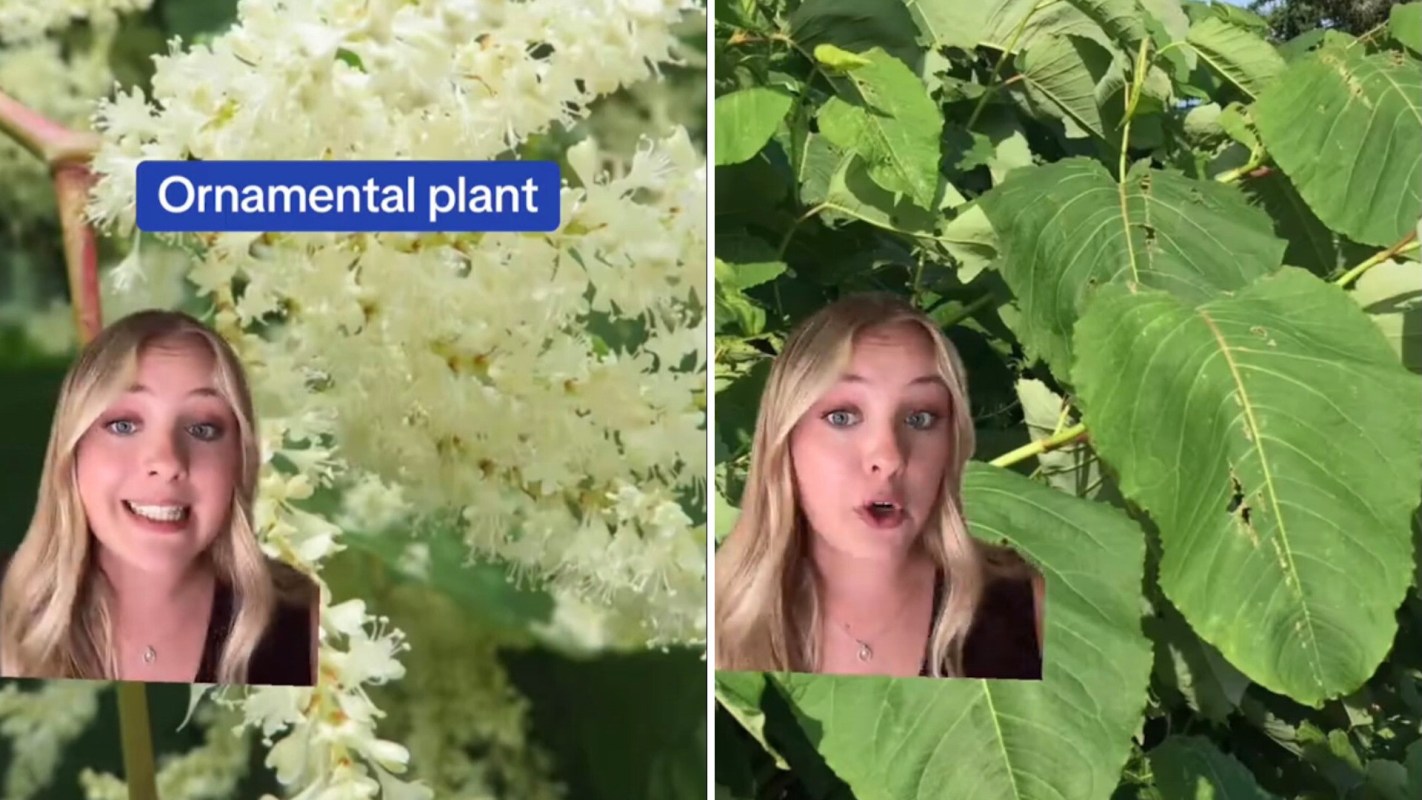
The Canadian city of Edmonton, Alberta, has recorded its first confirmed case of giant knotweed, a plant widely regarded as one of the world's most feared invasive species.
A PSA shared by the Daily Hive (@dailyhiveedmonton) on TikTok is showing residents exactly what the plant looks like.
What happened?
In the video caption, Daily Hive Edmonton wrote, "This large invasive plant species has been found in Edmonton for the first time." The video host, Olga (@olga.bergmans), said "DNA testing" had confirmed it was giant knotweed.
@dailyhiveedmonton This large invasive plant species has been found in Edmonton for the first time🌱🎙️-@olga🌟 #edmonton #plant #invasiveplants #news ♬ News, news, seriousness, tension(1077866) - Lyrebirds music
Olga noted "it can grow up to 20 feet tall, crowd out native plants, and damage sidewalks, roads, and foundations," adding that "officials believe it was introduced as an ornamental plant and say it must be eradicated."
The Daily Hive urged Edmonton residents to report any giant knotweed they see to the free EDDMapS app.
Around the world, knotweed is considered one of the most destructive invasive plants, and its underground rhizomes help it spread in ways that are difficult to control once it becomes established.
TCD Picks » Quince Spotlight
💡These best-sellers from Quince deliver affordable, sustainable luxury for all




Wherever it takes hold, the plant can create expensive problems by crowding out other vegetation, pushing into cracks and weak points around built environments, and raising concerns about property damage and cleanup costs.
Why does it matter?
For homeowners, renters, park users, and city crews, knotweed can mean more maintenance, more monitoring, and fewer straightforward options if it spreads into yards, alleys, river valleys, or public green spaces.
When invasive species take over, native plants lose ground, local ecosystems become less diverse, and cities may have to divert time and money from other improvements simply to contain the damage.
The earlier people can identify a harmful species, the better the chances of avoiding years of costly control efforts and environmental disruption. Once a harmful species arrives, prevention becomes much harder.
If you think you have spotted knotweed, the best course of action is usually to document it and report it to the appropriate local or provincial authority rather than trying to handle it casually on your own.

Get TCD's free newsletters for easy tips, smart advice, and a chance to earn $5,000 toward home upgrades. To see more stories like this one, change your Google preferences here.






