


When people think about carbon pollution, they will most likely picture vehicle tailpipes.
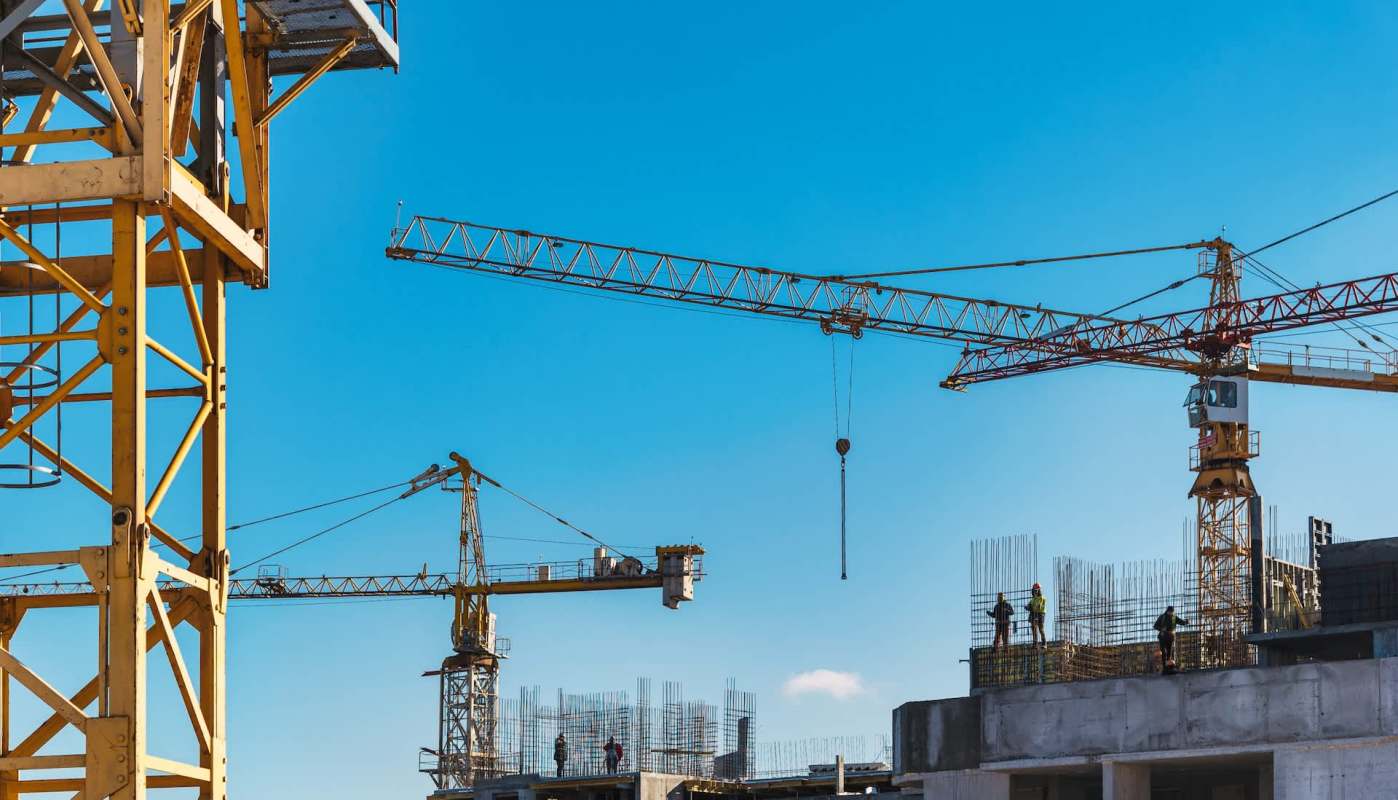
But cement, which is made by firing clay, limestone, and other materials in a kiln, is a significant source, accounting for around 8% of global planet-warming emissions. In fact, according to the Princeton Student Climate Initiative, cited by Energy Capital Ventures, for every pound of concrete created, 0.93 pounds of carbon dioxide are released.
However, the construction industry is taking steps to reduce its carbon footprint, and a study published in the journal Scientific Reports reveals there may be a better way to do it.
One way the construction industry has tried to reduce pollution is by replacing traditional cement with geocrete. Geocrete is a geopolymer concrete that utilizes materials such as slag, metakaolin, and fly ash, activated by alkaline solutions.
Using this method, a durable polymer network is created that is less reliant on traditional concrete. Additionally, this method enhances sustainability by contributing to the circular economy through the repurposing of byproducts.
Researchers investigated the kind of impact that adding paper mill sludge ash to geocrete materials would have. The team discovered that the addition of PMSA not only enhanced the performance but also its environmental friendliness.
To assess how PMSA would impact geocrete, researchers partially substituted it for metakaolin. The scientists tested four replacement levels — 5%, 10%, 15%, and 20%.
For each replacement level, researchers measured the mechanical properties of the geocrete via flexural and compressive strength tests. Durability was also examined through a range of processes. To see how the internal structure held up, the team used X-ray diffraction and scanning electron microscopy.
The experiments found that while lower PMSA additions improved the performance of the geocrete, higher substitutions reduced the composite's strength. Durability improved across the board, though, and the 10% replacement level saw peaks in compressive and flexural strength.
As the study stated, "The G2 and G6 mix exhibited superior durability. … The findings suggest that incorporating 10% PMSA in geocrete formulations provides a viable, low-carbon alternative to cement concrete."
TCD Picks » Quince Spotlight
💡These best-sellers from Quince deliver affordable, sustainable luxury for all




|
Which of these savings plans for rooftop solar panels would be most appealing for you?
Click your choice to see results and earn rewards to spend on home upgrades. |
 Save $1,000 this year 💸
 This study demonstrated that blending 10% PMSA into geocrete could have a variety of applications in construction, including use in pavements, buildings, and infrastructure. This method could also be more cost-effective, as it reduces the amount of high-grade raw materials needed and lowers paper mills' waste-disposal costs.
Most importantly, it could significantly reduce pollution generated by the construction industry, thereby decreasing pollution-related illnesses in communities.
More research will be required to determine how this geocrete blend will hold up in real-world conditions. After that, the product will need to move to field trials to determine its suitability for use.

Get TCD's free newsletters for easy tips to save more, waste less, and make smarter choices — and earn up to $5,000 toward clean upgrades in TCD's exclusive Rewards Club.
Cool Picks





