


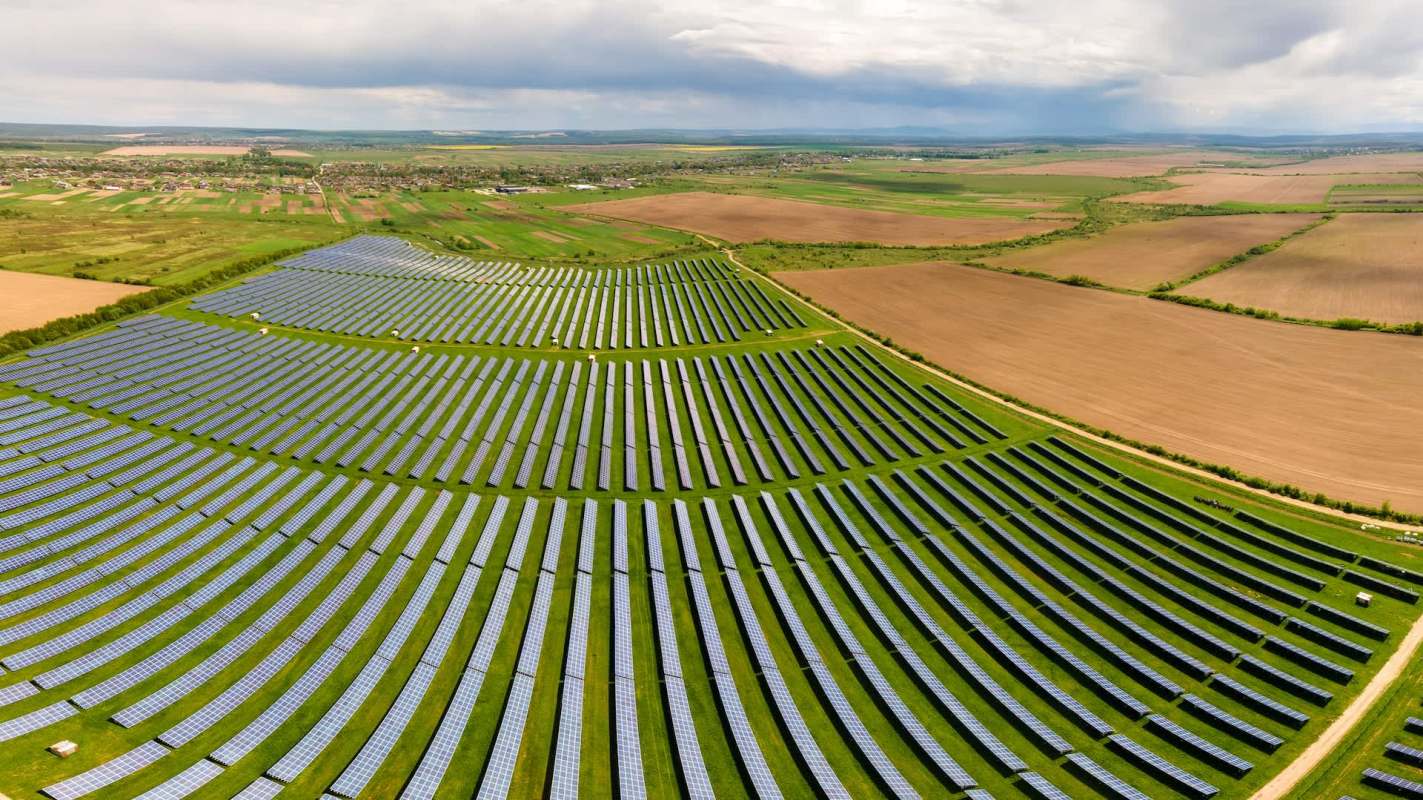
The Chinese solar firm GCL, which has an international footprint, recently launched a major agrivoltaics project in Germany, providing 146,000 of its 550-watt high-efficiency bifacial modules for the 76-megawatt system.
As CleanTechnica reported, the company utilizes advanced technologies, such as bifacial and tunable solar panels, which absorb sunlight on both sides to increase their energy output. These panels also offer light transmittance of 15-40%, allowing for a balance between crop growth needs and solar generation.
Mounting the solar arrays nine feet above the ground allows them to be tilted throughout the day to capture the maximum amount of sunlight and permits crop growth or animal grazing beneath the structures to make the best use of the land. GCL estimated the land-use efficiency for the project is 80%.
The company is also recognized for its management platform, which leverages artificial intelligence to integrate weather data, crop sensors, and inverter analytics, controlling module tilt and irrigation schedules to optimize crop growth and energy production.
All these cutting-edge technologies were employed at the Tützpatz agrivoltaic project in Mecklenburg-Vorpommern to form the country's largest agrivoltaic setup, covering roughly 230 acres, according to CleanTechnica.
Despite China's heavy investment in the solar industry, which is one of the main reasons for its dominance in the global solar supply chain, GCL's financing for the project came from a 10-year power purchase agreement with Deutsche Telekom's Power and Air Condition Solution Management branch, a subsidiary that acts as the internal energy supplier. Since the company owns multiple stages of its production and supply chain, it's able to cut solar module costs by 8-12%.
GCL has also launched pilot agrivoltaics projects in China to demonstrate the success of its technologies. For example, according to CleanTechnica, the company reported that "the 310 MW Zhundong project … improved alfalfa yields beneath panels by 20% while cutting irrigation demand by 15%."
It added that in Anhui's Jinzhai pilot upgrade, adjustable mounts increased camellia oilseed yields by 30% and boosted solar efficiency by 8%, showing that agrivoltaics allows agriculture and solar generation to coexist and thrive.
GCL has further plans to develop next-gen solar technology by combining perovskite and silicon in tandem cells, which will allow more light to pass through and add flexibility to agrivoltaic systems. It is also looking to launch other gigawatt-scale agrivoltaics projects around China, including in the southwest and northwest, according to a news release.
|
Should the government provide incentives to buy EVs?
Click your choice to see results and speak your mind. |
 Absolutely 💯
💰Get TCD's free newsletters for easy tips to save more, waste less, and make smarter choices — and earn up to $5,000 toward clean upgrades in TCD's exclusive Rewards Club.
TCD Picks » Quince Spotlight
💡These best-sellers from Quince deliver affordable, sustainable luxury for all




Cool Picks





