


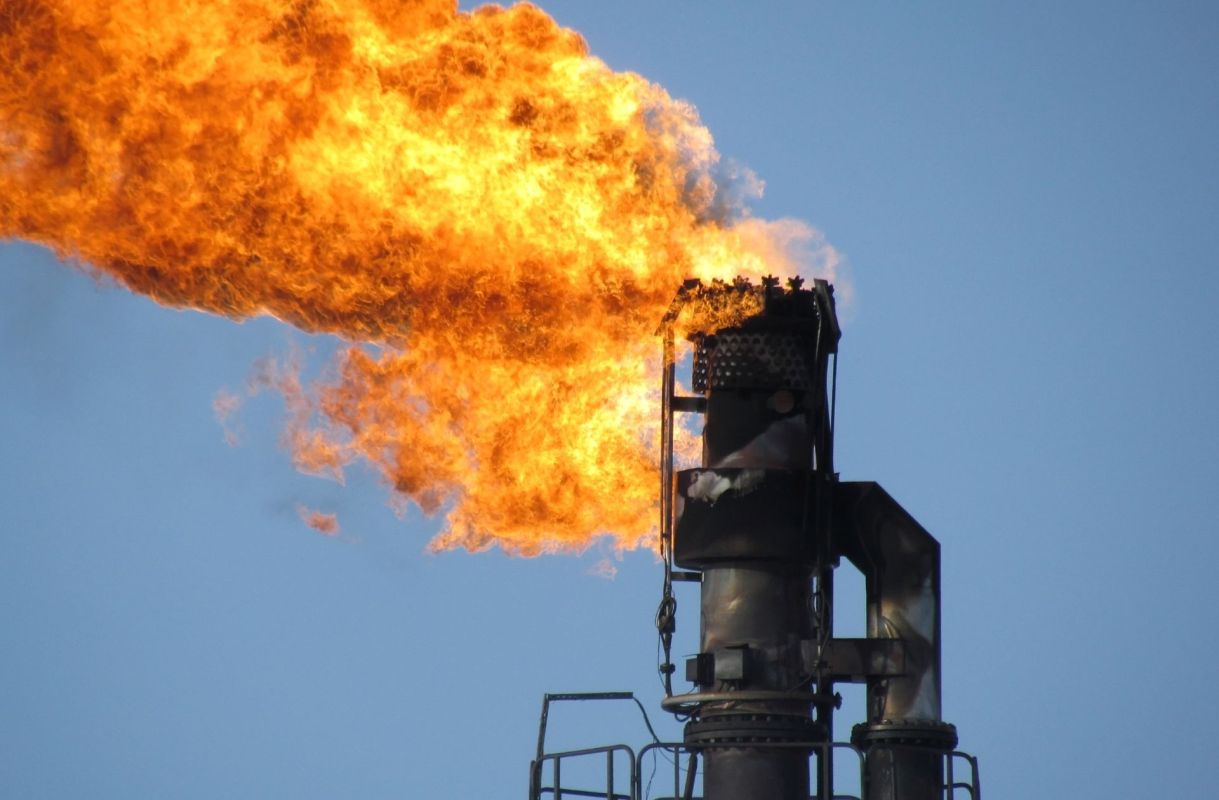
The World Bank says oil producers are burning off the gases that rise with oil when drilling instead of capturing it, worsening a problem that wastes fuel, adds climate pollution, and fouls the air for nearby communities.
Global gas flaring rose again, marking a third consecutive year of increases and suggesting many oil producers are still burning usable gas instead of capturing it.
What happened?
Gas flaring occurs when oil producers burn the gas that rises alongside crude during extraction. The massive flames, often seen towering above oil fields, can burn for years and release a mix of carbon pollution and hazardous air contaminants.
According to The Examination, the World Bank found that 167 billion cubic meters of gas were flared worldwide last year. The outlet noted that the amount roughly matches Africa's total natural gas consumption and was 16% above 2012 levels.
That means flaring has increased for three years in a row, even after long-standing industry promises to reduce it.
"We are moving in the wrong direction, and the scale of natural resource waste and economic loss is staggering," the World Bank wrote in its report.
TCD Picks » Quince Spotlight
💡These best-sellers from Quince deliver affordable, sustainable luxury for all




Most of the flaring came from nine countries: Russia, Iran, Iraq, Venezuela, Mexico, Libya, Algeria, Nigeria, and the United States.
The Examination said progress is possible, noting the U.S. did reduce flaring last year — a drop aided by a new pipeline that allowed for increased transfer of natural gas across the country — larger increases in countries such as Russia, Mexico, and Iran outweighed that progress.
Why does it matter?
The harms are not limited to the climate. Flaring also releases soot and gases including sulfur dioxide and nitrogen oxides, pollutants associated with respiratory illness and other major health risks, the outlet noted.
Studies referenced in the report connected flaring to serious respiratory diseases as well as concerning impacts on young children and newborns.
The broader fossil fuel system also harms people far beyond oil fields. Coal and natural gas power plants contribute to air and water pollution associated with asthma, heart disease, cancer, and premature death, while also keeping energy costs high for households that remain tied to volatile fuel markets instead of increasingly abundant sources like wind and sunlight.
Industry lobbying has also slowed cleaner, cheaper energy solutions that could better protect families and lower utility bills.
The World Bank estimated that the added flaring between 2024 and 2025 produced carbon pollution comparable to putting 5 million more gasoline-powered cars on the road.
The report said solutions already exist, including collecting the gas for sale or pumping it back underground, but investment and regulation have lagged.
What are people saying?
Health of Mother Earth Foundation director Nnimmo Bassey told The Examination communities in Nigeria are experiencing the consequences of the increased flaring firsthand.
"These flares are massive furnaces, where the flames are lifting up several meters in the air, and burning with terrific noise and terrific heat," Bassey told the outlet. "It's very traumatic for the people. It's a disaster."
The Examination highlighted UC Irvine environmental and occupational health professor Jill Johnston, who warned that rising flaring likely means rising health risks.
"As there's more flaring, there's likely going to be increased risk," she said. "It's not good news."
The World Bank warned that "the time for incremental progress has passed."

Get TCD's free newsletters for easy tips, smart advice, and a chance to earn $5,000 toward home upgrades. To see more stories like this one, change your Google preferences here.






