


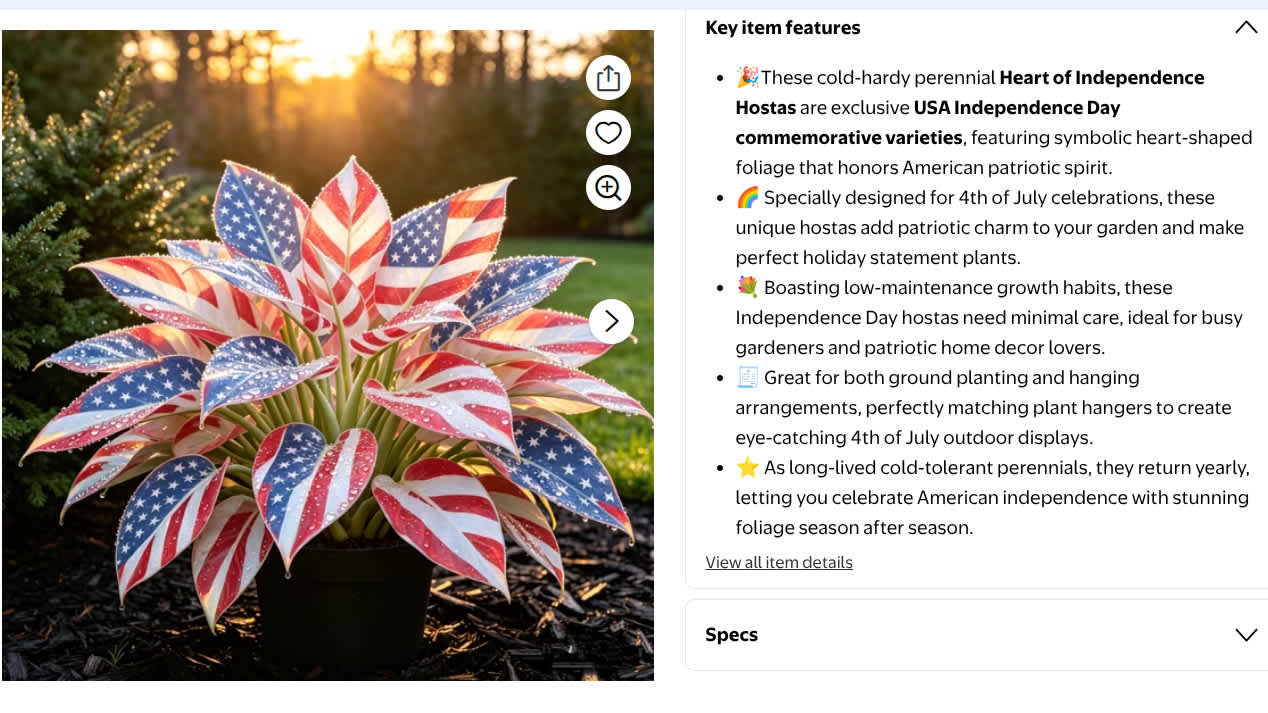
A frustrated gardener is finding plenty of support online after calling out obviously fake hosta listings popping up on major retail sites.
What's happening?
In a popular post on Reddit's r/gardening forum, one user shared an image of an impossible-looking hosta patterned like an American flag that they chalked up to artificial intelligence.
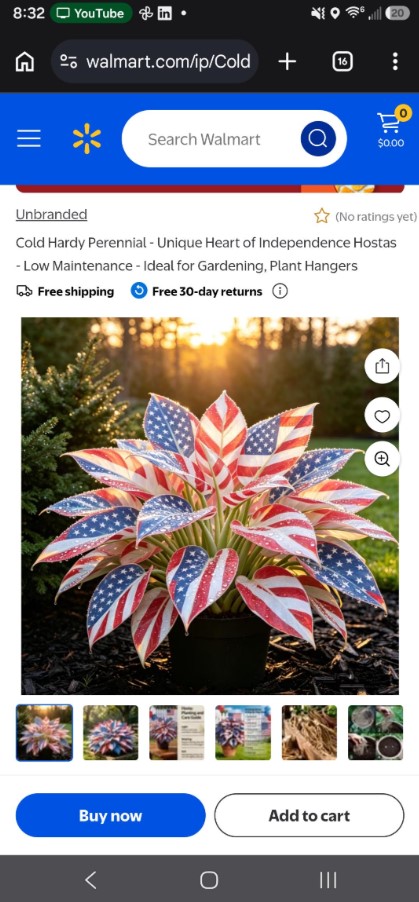
"Half of me says this AI nonsense on sites like Walmart and Amazon is absolutely unacceptable, the other half says if you're buying it, it's natural selection," they assessed.
The thread quickly drew thousands of upvotes and hundreds of comments from gardeners who said they've seen similar listings for "rainbow," "black," and other fantasy hostas.
"Hardy - because if it shows up looking like that it will never die since it's plastic," a commenter wryly pointed out.
Some commenters said the problem is especially common on massive online marketplaces that allow third-party sellers. One user pointed out that the item in question did not appear to be sold directly by Walmart, but by an outside seller using the platform.
TCD Picks » Quince Spotlight
💡These best-sellers from Quince deliver affordable, sustainable luxury for all




Others shared firsthand examples of the phenomenon.
"I had a customer show me this picture at my nursery the other day.. not even kidding," a user wrote in a post alongside an outrageous rainbow colored hosta.
Why does it matter?
Commenters emphasized that not everyone who comes across these listings will realize the images aren't real.
Several people said older adults, people with memory issues, and other vulnerable shoppers may be especially likely to believe they're buying legitimate bulbs or seeds.
Scam listings can waste money, create frustration, and erode trust in online shopping platforms. They can also push legitimate growers and nurseries beneath a flood of deceptive AI-generated slop, just like musicians.
"It preys on people who are vulnerable like the elderly and people who are mentally unwell, and it's disgusting and can not be tolerated," a user opined. "No one deserves to be scammed."
These products also seem like a wasteful use of AI, which requires a heavy amount of water and energy to concoct these make-believe products.
While the tech holds potential in optimizing clean energy systems or improving weather forecasting, turning all that computing power into duping customers isn't ideal. Considering the toll the data centers that power AI can have on local communities and the grid, that's a bad trade.
What can I do?
Gardeners in the thread suggested a few practical ways to avoid getting duped. First, be skeptical of plants with impossible colors, patterns, or promises, such as staying in bloom year-round. If a listing looks too spectacular to be true, it probably is.
Second, check who is actually selling the product. On major marketplaces, the seller may be a third party rather than the retailer whose site you're browsing. Looking closely at seller ratings, reviews, and return policies can help weed out some of the worst listings.
Finally, many commenters said they report suspicious products when they come across them. That alone won't solve the problem, but it can help flag fraudulent listings.
Buying from local nurseries or established seed and bulb companies remains one of the best ways to avoid AI-enhanced plant scams.

Get TCD's free newsletters for easy tips, smart advice, and a chance to earn $5,000 toward home upgrades. To see more stories like this one, change your Google preferences here.






