


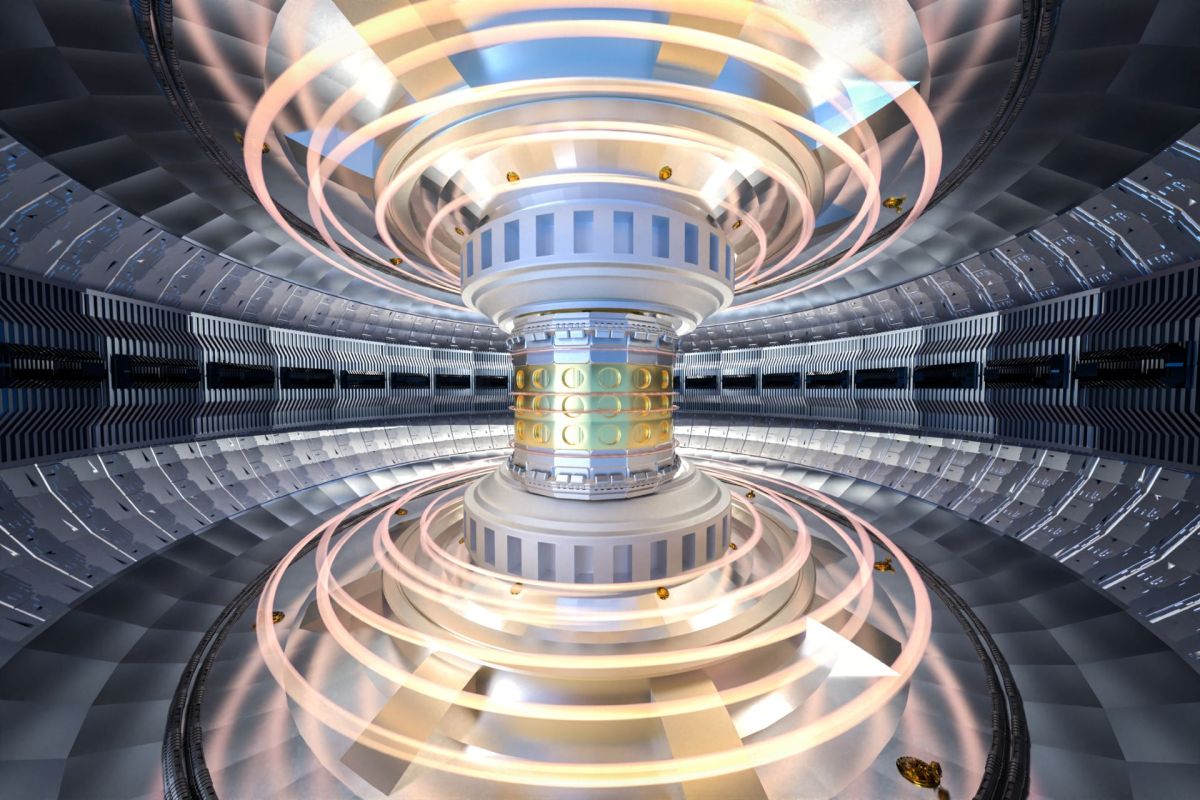
A prototype nuclear fusion power plant in the United Kingdom isn't expected to be completed until 2040, but experts are already working to lower maintenance costs and shorten shutdown times.
It's part of the STEP — Spherical Tokamak for Energy Production — program implemented by U.K. Industrial Fusion Solutions. The goal is to unlock nearly limitless energy without harmful air pollution, long-lasting nuclear waste, or serious accident risks.
But sustaining reactions inside complex, magnetic tokamak chambers with swirling plasma that's hotter than the sun's core — while using less energy than it takes to operate — has been a challenge for fusion scientists around the world.
Magnet maintenance is a sticking point, according to the experts.
"For fusion to become a commercially viable energy source, magnets must not only perform at the highest levels, but also be maintainable over decades of operation," STEP's team said in a press release.
The solution is remountable magnets with "plug-and-socket" connectors that make them easier to remove for upkeep. This is counter to the permanently installed components typical in reactors. The result is faster maintenance and lower costs.
The joints and accompanying clamps have been tested in extreme conditions. Interestingly, the setup's description sounds both anatomical and atomic.
"The system uses a bladder-based clamp: a sealed bladder containing a liquid that expands as it freezes during cool-down, helping to apply an even contact pressure across the electrical interface at cryogenic temperatures," STEP Fusion detailed.
A successful fusion prototype could be transformational for the world's energy supply, which is being strained by rising data center power demand and other factors. In the United States, electricity rates are widely reported to be rising faster than inflation.
Unlike common fission plants, fusion combines atoms instead of splitting them. Both processes require powerful particle collisions, according to the U.S. Department of Energy. Fission has been successfully commercialized, and the World Nuclear Association reported that reactors generate about 9% of the planet's electricity.
TCD Picks » Quince Spotlight
💡These best-sellers from Quince deliver affordable, sustainable luxury for all




|
Which of these savings plans for rooftop solar panels would be most appealing for you?
Click your choice to see results and earn rewards to spend on home upgrades. |
 Save $1,000 this year 💸
 But the energy doesn't come without risks. Waste, security, and high costs are some setbacks cited by the Union of Concerned Scientists and other expert groups. New York financial advisory firm Lazard reported in 2025 that solar and wind are cheaper, faster energy options to deploy at scale.
Solar panel arrays harness the sun's energy instead of replicating its power. They are electricity sources that can be leveraged at home, giving billpayers a way to mitigate rising energy costs.
Still, proponents of nuclear energy think the waste and meltdown risks are manageable and worth it for the abundant, smog-free electricity produced. For reference, hazardous nuclear waste comes in the form of ceramic pellets, not leaking ooze, per the DOE.
As for expenses, fusion experiments such as STEP are reported to cost tens of billions of dollars. It's a pricey undertaking with "no guarantee" for success, as the BBC noted about the U.K. project in 2022.
The remountable magnets are undergoing more testing and patent prep. The experts are confident that their progress is legitimate, "tackling one of the key barriers" to bringing the project closer to fruition.
"What's notable is we've gone from a concept sketch to delivering and shipping a product for testing in one financial year," Aurobindo Siddarth Swaminathan, principal engineer for magnets at STEP, said in the release.

Get TCD's free newsletters for easy tips to save more, waste less, and make smarter choices — and earn up to $5,000 toward clean upgrades in TCD's exclusive Rewards Club.
Cool Picks





