


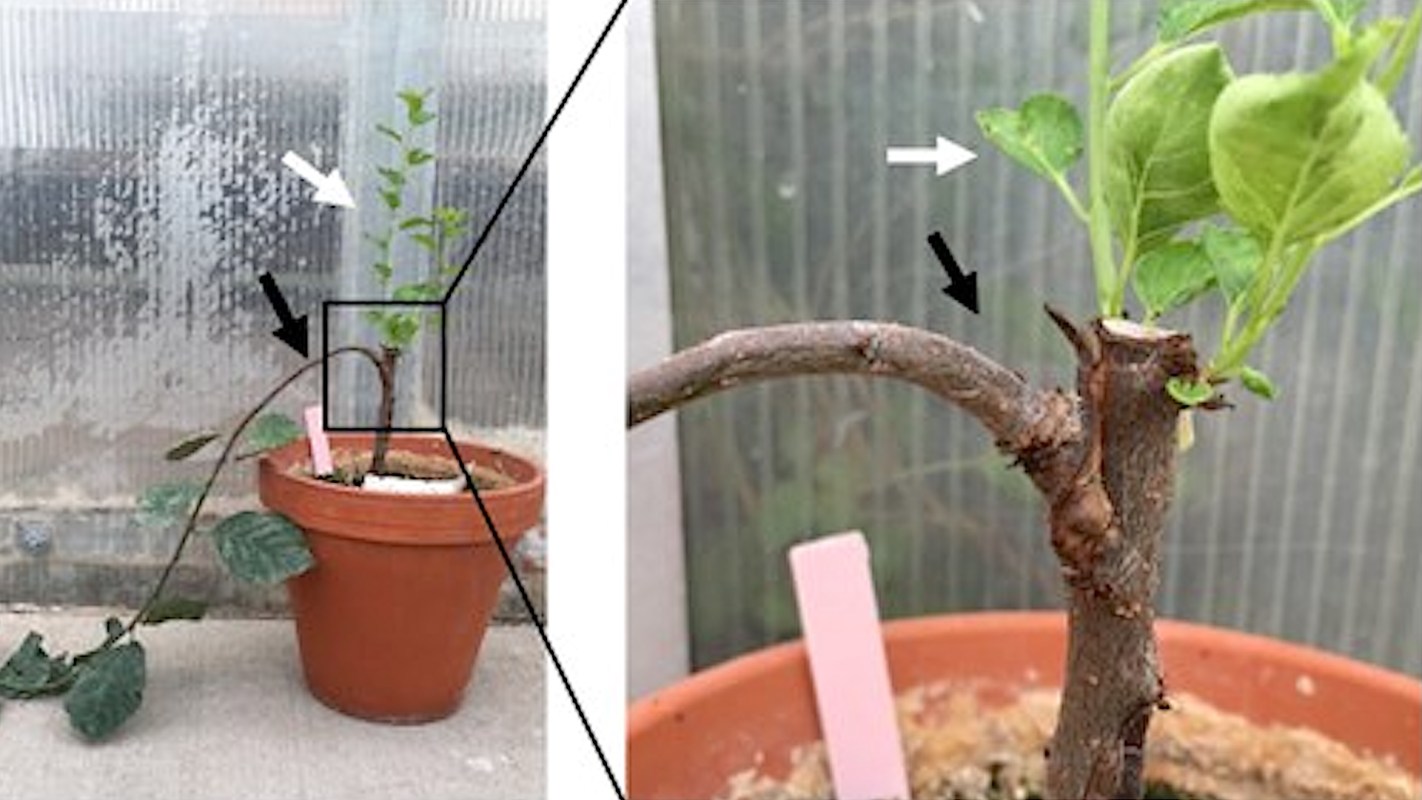
They say the apple doesn't fall far from the tree, but getting it from the orchard to your table is another matter altogether.
That's because "controlling branch orientation is a central challenge in tree fruit production," according to a study in Horticulture Research, an open-access journal of Nanjing Agricultural University, which published a press release of the findings on EurekAlert.
The researchers explained that a tree's structural framework influences light absorption, fruit quality, yield, labor costs, and pesticide use. In fruit production, wider branch angles are considered desirable. However, fruit trees naturally have upright growth patterns.
As such, fruit growers must control canopy structure with frequent pruning, branch bending, or chemical treatments. This is labor-intensive and expensive.
The chemicals, meanwhile, can serve as a source of contamination. In an ironic and concerning twist, the pollinators that support more than one-third of the world's food crops, according to the U.S. Department of Agriculture, are threatened by the chemicals used to protect our crops.
There are ways to control weeds and pests without chemicals, but this is more challenging in large-scale food production, given the complexity of global supply chains.
Fortunately, the team from Michigan State University, the USDA's Agricultural Research Service, and the University of Maryland may have found a way to optimize tree architecture to overcome some of these long-standing obstacles in fruit production.
The key appears to be the aptly named LAZY1, a gravity-related gene that affects growth patterns, according to the study. Limiting LAZY1's expression resulted in European plum trees with wider branch angles, outward and wandering growth patterns, and more open canopies. Importantly, suppressing the LAZY1 gene didn't impact branch strength or fruit formation.
"While some physiological trade-offs still need to be addressed, this approach opens the door to designing trees that are fundamentally easier to train, maintain, and manage throughout their productive lifespan," one of the study's senior authors said in the press release.
In the long term, the researchers believe their work could serve as a foundation to create more efficient and sustainable orchard systems.
TCD Picks » Quince Spotlight
💡These best-sellers from Quince deliver affordable, sustainable luxury for all




|
Which of these savings plans for rooftop solar panels would be most appealing for you?
Click your choice to see results and earn rewards to spend on home upgrades. |
 Save $1,000 this year 💸
Get TCD's free newsletters for easy tips to save more, waste less, and make smarter choices — and earn up to $5,000 toward clean upgrades in TCD's exclusive Rewards Club.
Cool Picks





