


Reddit users on the r/climatechange subreddit are discussing a less obvious consequence of moving away from fossil fuels.
If coal, oil, and gas are no longer shipped in huge volumes, decarbonization could shrink ocean freight and alter the strategic importance of sea power.
What happened?
The conversation began when a user argued that the energy transition changes logistics as well as energy supply.
They said that cutting coal, oil, and gas from the global economy would mean far less fuel cargo crossing the world's oceans, and shared a chart and supporting article from CleanTechnica's Michael Barnard in the thread.
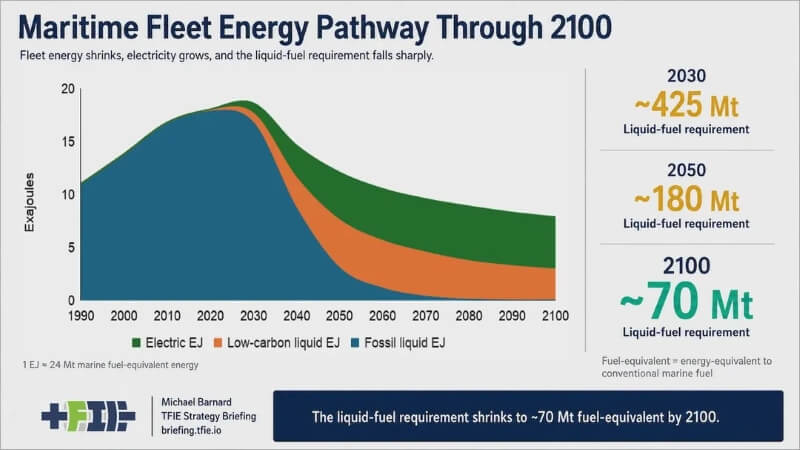
In a follow-up comment, the original poster put the claim in numerical terms.
"Fossil fuels make up about 40% of maritime cargo tonnage but, because coal, oil, and gas are typically long-haul bulk trades, they account for roughly half of total shipping fuel energy use," they wrote.
TCD Picks » Quince Spotlight
💡These best-sellers from Quince deliver affordable, sustainable luxury for all




From there, the thread examined the ripple effect of a world that no longer devotes so much maritime traffic to transporting fuel.
"This point is missed by many and how it will reduce the desire to secure shipping routes," a poster wrote. "These routes are secured for high value time critical transit."
That same user broached a Chinese proposal for electric rail freight service into Europe. That prompted the broader question of whether reduced fossil-fuel use could move some trade off the water and onto overland routes.
Why does it matter?
Taken seriously, that argument reaches beyond power prices or vehicle pollution. Lower demand for shipping fuel cargo could also lessen the perceived need to defend distant maritime routes with military force.
The fossil fuel industry harms people and communities at every stage. Extraction, production, and burning worsen extreme weather disasters that destroy homes, livelihoods, and local economies.
They also drive air and water pollution. A faster phaseout, one that supports workers and communities through the transition, could deliver cleaner air and mitigate the industry's other negative fallout.
What are people saying?
At the center of the thread was the poster's claim that fossil fuels account for around half of shipping fuel energy demand, and the consequences of reducing dependency on them.
The comments envisioned how this could reshape world trade and shipping.
"Not only trains can be electric, but on rails they move a lot faster than boats," a user suggested. "The only issue is increasing dependency on China."
Another commenter countered that it would actually reduce dependency, while others discussed the need to avoid going through Russian and Iranian territory.
One more thought was how dependence on fossil fuels might be propping up their use.
"Wow, using 'hell's fuels' seems to be an out of control, positive-feedback loop," one Redditor remarked. "Who would have guessed?"

Get TCD's free newsletters for easy tips, smart advice, and a chance to earn $5,000 toward home upgrades. To see more stories like this one, change your Google preferences here.






