


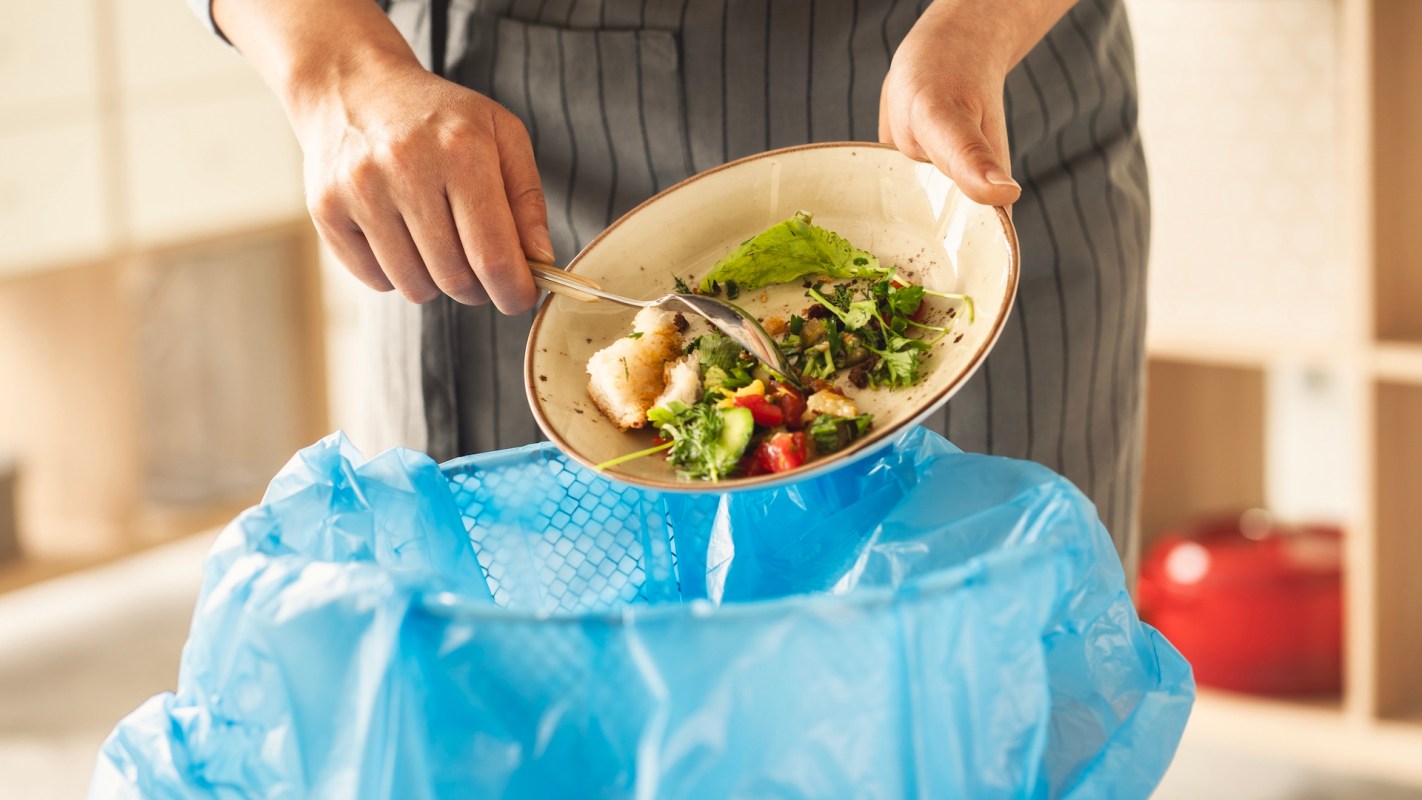
Recycling food scraps instead of sending them to landfills could offer a major climate benefit in the U.S., but new research suggests that gain may come with a serious downside if plastic packaging continues slipping into the compost stream.
A nationwide push to recycle food waste could sharply reduce emissions while also spreading thousands of tons of plastic onto farmland each year.
What's happening?
Researchers publishing in Nature Food looked at what might happen if food waste bans now used in places such as Massachusetts and Vermont were adopted across the U.S.
As WBUR reported, their analysis showed that sending food scraps to recycling systems instead of landfills could shrink food waste's overall climate impact by up to 99%.
The Environmental Protection Agency wants the U.S. to cut food waste in half by 2030. That target reflects the scale of the problem, since about one-third of the food produced in the country is never eaten.
In Massachusetts, businesses that generate more than half a ton of food waste each week must keep it out of disposal sites and incinerators. Edible food goes to recovery programs, while scraps are sent to composting or anaerobic digestion.
TCD Picks » Quince Spotlight
💡These best-sellers from Quince deliver affordable, sustainable luxury for all




Vermont has a broader rule, prohibiting households and companies from putting food scraps and yard waste in the trash.
The study also projected a major plastics drawback: Without better packaging and sorting, contaminated compost under a nationwide ban could spread up to 20,000 tons of plastic onto farmland each year.
Why does it matter?
Food waste in landfills produces methane, a powerful planet-warming gas.
Lead author Katherine Porterfield, a University of Vermont postdoctoral fellow, said, "There are huge climate benefits to diverting food waste away from landfills. And a lot of that benefit is coming from avoiding methane emissions when the food waste breaks down."
Nationwide food-waste recycling would cut landfill nutrient pollution linked to toxic algal blooms, lowering risks to waterways and nearby communities.
Plastic contamination in compost poses another environmental risk.
Porterfield said that even after people and machines remove packaging, "a small amount sneaks through. And if you're talking about very, very large amounts of food waste, that can add up."
Scientists are still working to determine exactly how plastics in agricultural soil may affect food.
As Porterfield noted, "Plastics are everywhere," and they reach soil through air and water, runoff, plastic mulch on farms, and food waste systems.
What's being done?
The study's authors said the findings were not intended as an argument against food waste bans.
Eric Roy, the study's senior author and director of UVM's Casella Center for Circular Economy and Sustainability, said, "The study shows clear benefits to food waste recycling. This is something we need to be doing."
The research points to a need for better sorting systems and improved packaging design.
Roy said, "Packaging is designed to package food, not to be de-packaged," adding that "Conventional plastics tend not to disappear, but to just break into tinier and tinier fragments over time. So there's work to be done."
Laura Orlando, a senior scientist at the nonprofit Just Zero who was not involved in the study, said the findings reveal "a real problem."
She added, "Plastic doesn't belong in compost — full stop."
Orlando said, "An upstream solution is to take plastic out of packaging."

Get TCD's free newsletters for easy tips, smart advice, and a chance to earn $5,000 toward home upgrades. To see more stories like this one, change your Google preferences here.






