


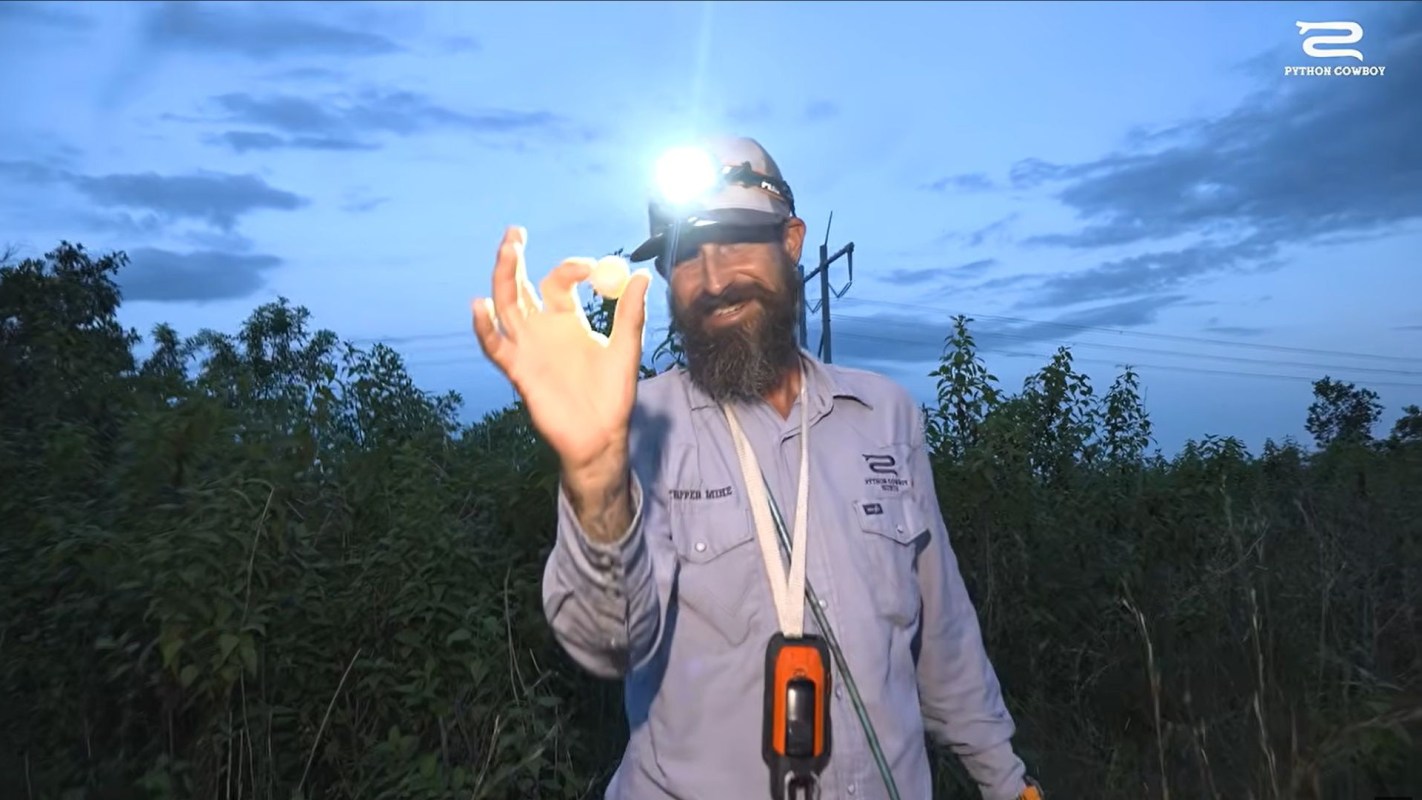
A content creator and Florida python hunter known as Python Cowboy went into the Everglades after dark to test if a thermal camera could pick up a python's heat signature.
The creator was skeptical that a thermal camera would work on a cold-blooded animal, leading him to a simple question: Does a thermal camera really spot invasive pythons better than a headlamp?
Here's what to know
According to Python Cowboy's YouTube video, the nighttime experiment set out to answer a question hundreds of commenters have been asking: Can thermal imaging pick reptiles out from the background well enough to find pythons or iguanas in the wild?
To test that, Python Cowboy compared what the thermal camera showed with what he could detect using a headlamp and a working dog.
The video focuses on snake detection — often the hardest part when a reptile blends into a dark, wet environment crowded with vegetation, water, and shifting heat.
Most tests were on Burmese pythons, though the team also tested whether the same approach could help spot iguanas at night.
TCD Picks » Quince Spotlight
💡These best-sellers from Quince deliver affordable, sustainable luxury for all




The video's description detailed the questions that prompted this experiment: "Many of you asked if thermal imaging can distinguish snakes from the ground and other environmental clutter."
More background
Python hunting is heavily encouraged in Florida, as Burmese pythons are an invasive species in South Florida. Their presence in the Everglades results from human activity, not natural range expansion.
A python can vanish into grass, brush, or water almost immediately, so a heat-sensing camera is valuable only if it can reliably tell the animal apart from warm ground and other clutter in real conditions.
In this case, a thermal camera provided little help.
The video shows snakes and iguanas behind brush, and the reptiles are almost indistinguishable from the surroundings. The issue is that these animals are naturally cold-blooded. A thermal camera can barely distinguish a reptile from its surroundings at night.
In comparison with a dog and a headlamp, the thermal camera is not very useful. The hunting dog could find a snake from far away, without mistakes. That also shows that different tools pick up different signals, and many high-stakes wildlife encounters require the right tools, not the latest technology.
When non-local species are introduced, the local ecosystem can suffer. That contributes in part to the broader story of why wild animals can come into conflict with humans.
What's being done?
The test aimed to see how the technology performs under real hunting conditions rather than in theory.
Putting the camera side by side with a headlamp and a working dog suggests that technology isn't replacing human judgment or animal tracking.
As one commenter put it: "People asking about thermals obviously have no idea how great these dogs are."
Where can I learn more?
Florida's invasive python problem comes with many challenges. The articles here cover python hunts, nest removals, tracking work, and what happens after the snakes are removed.
• During Florida's Python Challenge, hunters found mostly hatchling Burmese pythons, a troubling sign of continued breeding.
• In South Florida, crews documented a female invasive python on a huge egg pile before removing the nest.
• A South Florida tracking project tracked 350 Burmese pythons and found some adults brooding eggs in trees.
• In Florida, workers now turn invasive Everglades pythons into luxury handbags after removal from the wild.
• A Florida biologist tosses a 15-foot Burmese python to alligators, and each tears away a chunk.

Get TCD's free newsletters for easy tips, smart advice, and a chance to earn $5,000 toward home upgrades. To see more stories like this one, change your Google preferences here.
Cool Picks






