


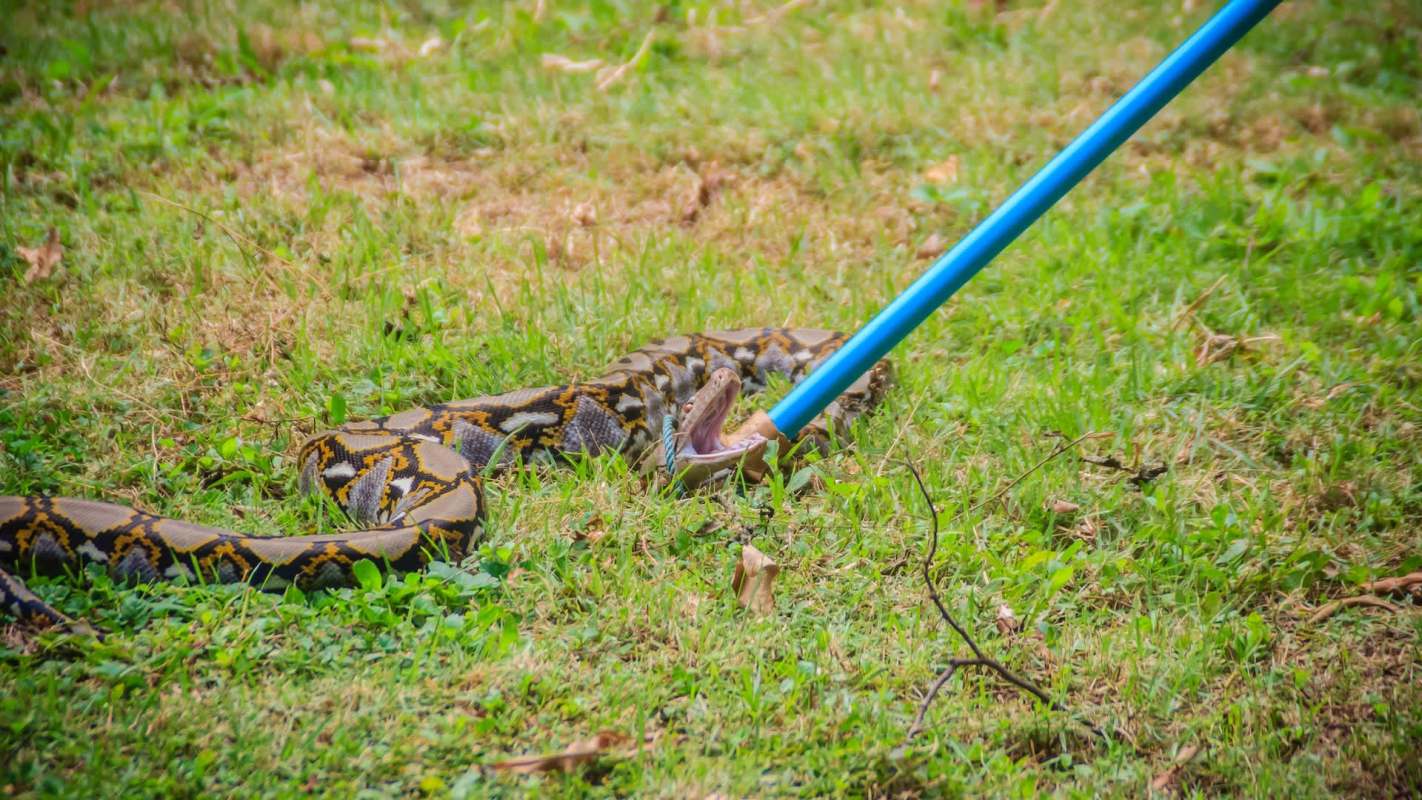
Researchers at the University of Florida are designing an app that could help hunters in South Florida predict the best times and places to find invasive Burmese pythons instead of relying on pure guesswork, potentially improving the odds of locating one of the Everglades' most destructive invaders.
According to the Palm Beach Daily News, the project would combine years of snake-removal records with conditions in the field to improve the odds of finding one of the Everglades' most destructive invaders.
What's happening?
The proposed forecasting app was discussed during a June presentation by the University of Florida's Fort Lauderdale-based Croc Docs Wildlife Research Team. The app is being designed with help from other state agencies.
Rather than simply archiving past captures, the plan is to convert that history into guidance people can use before heading out.
According to Eric Suarez, Croc Doc Research Program Coordinator, the aim is to put those insights in the hands of people outside research crews.
"Members of the public could actually use it to just say 'Hey, I want to go out and find a python today,'" Suarez said, per Palm Beach Daily News. "And you open this app, and it's going to tell you if you go to this spot at this time, you will have a higher chance of finding a python."
TCD Picks » Quince Spotlight
💡These best-sellers from Quince deliver affordable, sustainable luxury for all




The app would be informed by an earlier study that analyzed about two years of data collected across more than 16,000 hours of python hunting.
From that dataset, researchers determined that searches were most productive between 8 p.m. and 2 a.m. during the wet season from May through October, with August yielding the highest number of captures.
The team also reported better chances of finding snakes after a drop in barometric pressure the previous day, and found that watercraft such as airboats can make hunts more efficient.
Why does it matter?
Burmese pythons are a major ecological threat in Florida because they are not native to the state and can devastate local wildlife populations.
The concern is spreading beyond the core Everglades region.
Researchers noted that pythons have been spreading northward into the Lake Okeechobee area, and the Florida Fish and Wildlife Conservation Commission recently confirmed an established population in Charlotte County — the first outside the Greater Everglades.
A tool that reduces wasted trips and helps target likely hotspots could save time, improve response efforts, and make removal programs more effective.
Python hunting often involves long nighttime searches in hot, wet, rugged terrain.
What's being done?
To limit Burmese pythons, Florida already relies on several approaches, among them contracted hunters, eDNA testing, and radio-equipped scout snakes.
If launched, the app would become another data-based option available to the public within that wider control effort.
The state also continues to support removals through the annual 10-day Florida Python Challenge, which ended July 19 with $25,000 in prize money.
Researchers have already identified promising hotspots where removals could be increased, including spots near Big Cypress National Preserve's western edge along the Tamiami Trail and in a Palm Beach County stormwater treatment area.
Anyone who spots an invasive species in Florida can report it to the Florida Fish and Wildlife Conservation Commission by calling 1-888-483-4681, or 1-888-Ive-Got1.
"We have to be innovative when it comes to the management of these species," Suarez said.
As quantitative biologist Alexander Romer put it, "We took everyone's data and based on that we can say these are the best conditions to catch a snake."

Get TCD's free newsletters for easy tips, smart advice, and a chance to earn $5,000 toward home upgrades. To see more stories like this one, change your Google preferences here.






