


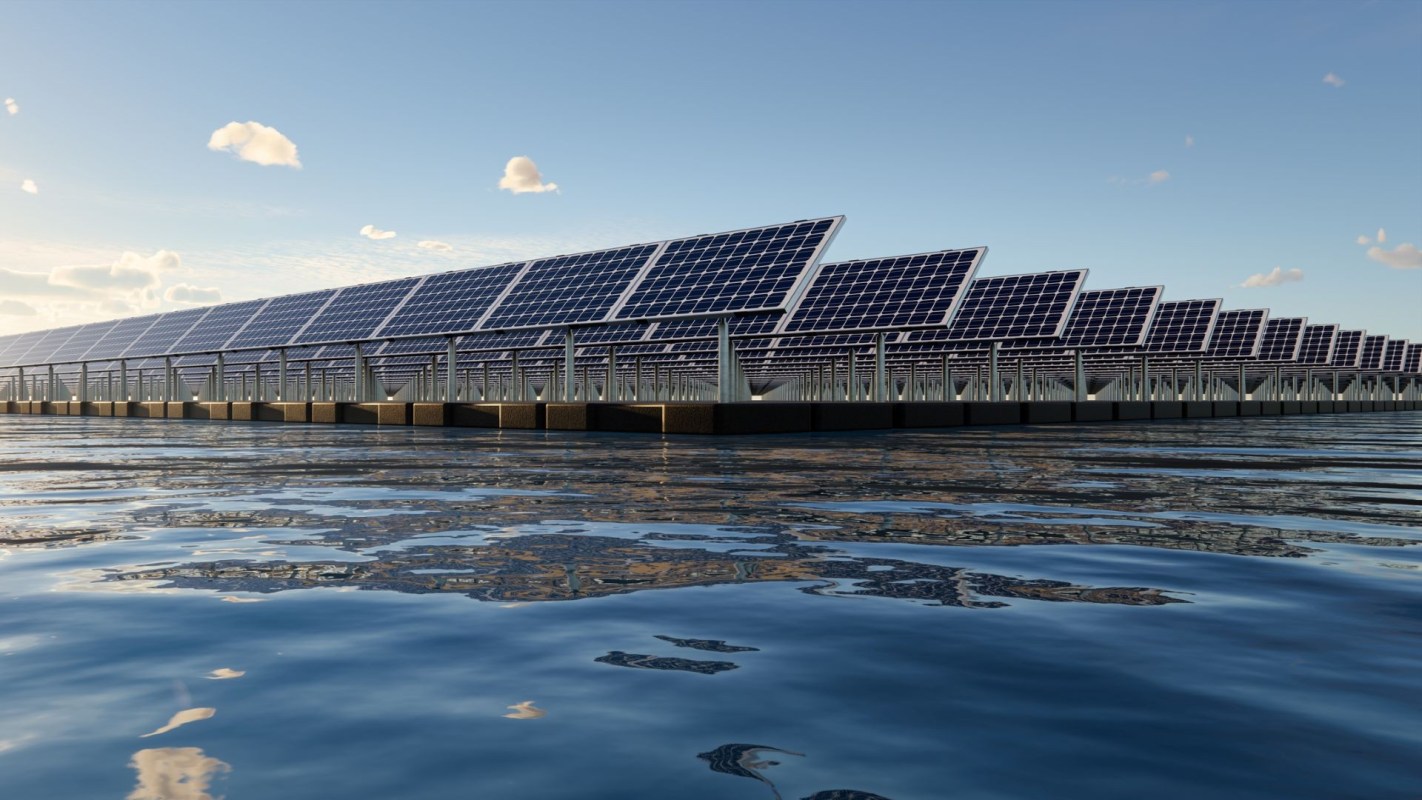
While much of Ohio dealt with violent storms and widespread outages, Lima marked the completion of a different kind of power project in the northwest part of the state, as Solar Power World detailed.
A new floating solar array installed on its drinking water reservoir aims to lower power bills for an essential utility operation while preserving land for other uses.
Here's what to know
Built on the Twin Lake Reservoir, Lima's new 2-megawatt array serves the primary drinking water source for roughly 35,000 people. Solar Power World reported that the installation is expected to reduce lifetime electricity costs by about $10 million and supply power to the nearby water treatment plant, which handles about 14 million gallons a day.
Lima's water treatment plant consumes more electricity than any other city facility.
"This project allows us to take an asset we already have — our reservoir — and use it in a new way to support the critical work happening at our water treatment plant every day," Lima utilities director Michael Caprella said, according to the outlet.
With Lima online, Solar Power World noted Ohio has three floating solar installations, and D3Energy developed each one while ARP Solar constructed them. Those other projects include a 1.5-megawatt array for Del-Co Water in Delaware that was finished in 2024 and a 6-megawatt system in Monroeville that is in development.
TCD Picks » Quince Spotlight
💡These best-sellers from Quince deliver affordable, sustainable luxury for all




More background
Only four acres of Twin Lake Reservoir surface are covered by the 2-megawatt system in Lima. Building the same amount of solar on land would require much more.
"This project shows that clean energy doesn't have to come at the cost of land," explained Stetson Tchividjian, D3Energy managing director, per Solar Power World. "By building on water the city already owns, Lima is generating 2 MW of clean power while preserving nearly 10 acres."
To accommodate changing reservoir conditions, the project uses more than 3,100 bifacial panels set on Ciel & Terre Hydrelio floats, with mooring and anchor systems that adjust as water levels rise and fall.
Power from the array is sent ashore to eight Yaskawa Solectria XGI inverters, the outlet added.
What's being done?
Work on the project stretched across several years, and Lima City Council signed off on it in 2023. Solar Power World also reported that the $5 million installation was backed by $2.4 million in U.S. Department of Energy grants secured with help from former state Sen. Sherrod Brown, along with nearly $1 million in direct-pay tax credits.
City officials said they see the solar array as a long-term investment, not a one-off test.
"This project is a great example of what can happen when leadership carries forward across administrations, and organizations come together around a shared goal," Lima Mayor Sharetta Smith commented, per Solar Power World.

Get TCD's free newsletters for easy tips, smart advice, and a chance to earn $5,000 toward home upgrades. To see more stories like this one, change your Google preferences here.






