


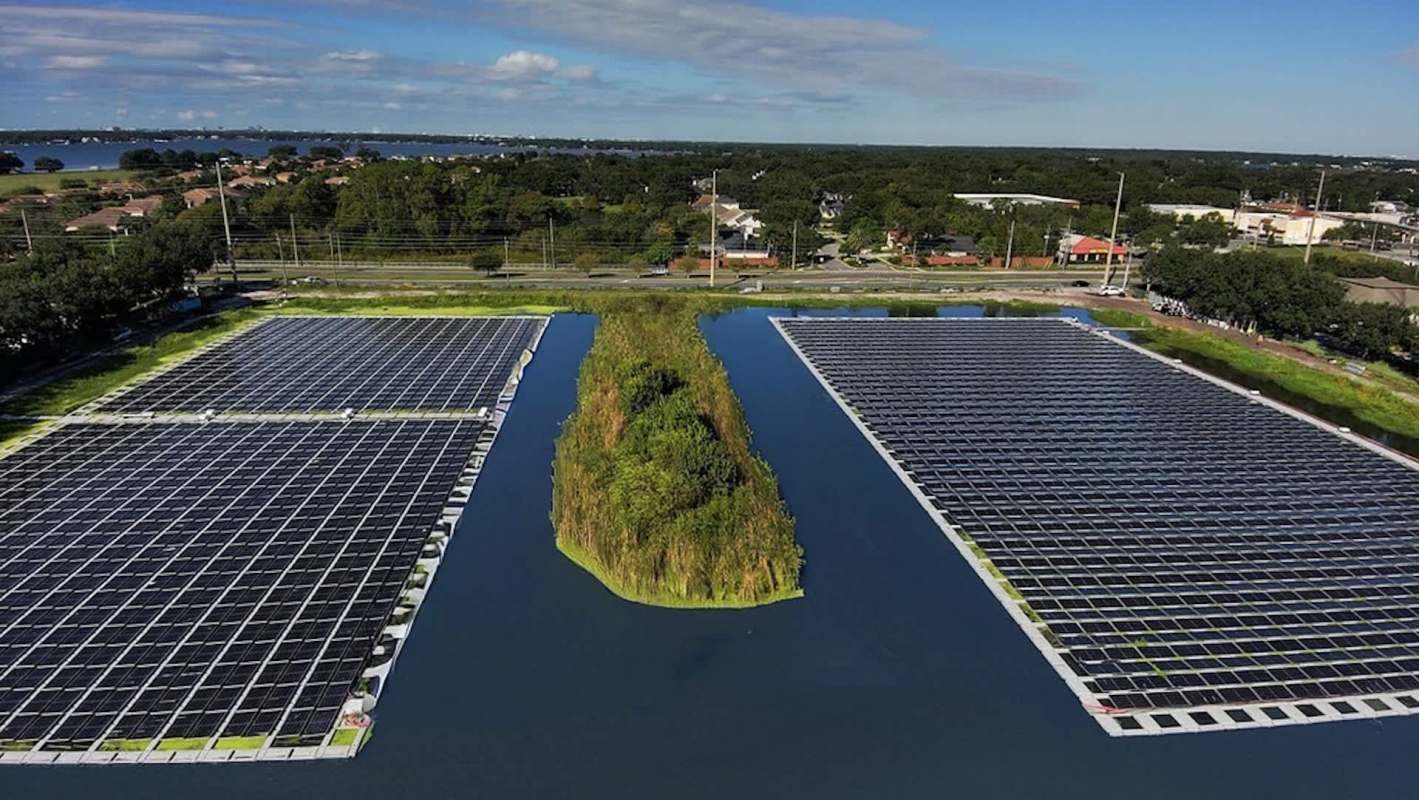
Florida is pursuing an unusual clean energy strategy by putting floating solar panels on stormwater ponds along highway corridors, PV Magazine reported.
One installation in Orlando is already up and running, and the statewide effort could eventually generate enough electricity for more than 200,000 homes.
What happened?
According to PV Magazine, the Florida Department of Transportation and D3Energy have launched the first project under a new master lease that the company says is the first of its kind.
Under that deal, D3Energy alone can develop floating photovoltaic projects on FDOT-managed stormwater ponds across Florida, with state-of-the-art fault protection that prevents any risk for shock.
The program's first system began operating earlier this year on an FDOT pond in Orlando in partnership with the Orlando Utilities Commission.
D3Energy estimates the program could ultimately support more than 1 gigawatt of floating solar statewide, which it says would be enough to power over 200,000 homes.
But even individuals not living in Florida should keep in mind that going solar is one of the best ways to save money on home energy. What makes it easy for anyone in any state to get started is by using EnergySage's free tools to get quick solar installation estimates and compare quotes. EnergySage has trusted and pre-screened local installers to help make a fast, simple transition to solar for any household, even those in less sunny areas.
Florida is a fast-growing state where land is under constant competition for housing, farming, conservation, transportation, and commercial development.
Save $10,000 on solar panels without even sharing your phone number Want to go solar but not sure who to trust? EnergySage has your back with free and transparent quotes from fully vetted providers that can help you save as much as $10k on installation. To get started, just answer a few questions about your home — no phone number required. Within a day or two, EnergySage will email you the best local options for your needs, and their expert advisers can help you compare quotes and pick a winner. |

The company said that potential generation would be on par with what roughly 5,000 acres of ground-mounted solar could produce, without requiring that land.
EnergySage also has an innovative mapping tool that shows the average cost of a home solar panel system on a state-by-state level, as well as details on solar panel incentives for each state. The company's resources can help you get the best price you deserve and access to available financial incentives for switching to solar.
Why does it matter?
Floating solar, also known as floatovoltaics, remains relatively uncommon in the United States, but it may offer a practical answer to one of clean energy's biggest challenges: where to put it.
Since they are using stormwater ponds already used by the highways, Florida is capitalizing on the opportunity by leveraging infrastructure that's already been built, turning it into an electricity source that can be generated close to where people use it.
More From EnergySage
💡Go deep on the latest news and trends shaping the residential solar landscape

Water can help keep solar panels cooler, potentially improving performance, and floating arrays can also reduce evaporation from managed ponds.
At the same time, the systems come with challenges. Developers still have to plan for storm exposure, anchoring, water depth, maintenance access, ecological effects, and higher upfront costs than traditional ground-mounted solar projects.
EnergySage can help you go solar with its free tools, providing unbiased advice and trusted expertise from its experts to give you the best bang for your buck and help you make the right decision about which system best fits your home. With EnergySage's help, the average person can save up to $10,000 on solar purchases and installations. But if you're not ready to spend up front, that's not a problem. With Palmetto's $0-down LightReach solar leasing program, you can lower your utility rate by up to 20% without having to pay in advance.
Adding battery storage to a solar setup is one of the best ways to protect your home during outages, save money on energy, and go off-grid. It can also help you use more of the electricity your panels produce instead of sending it back to the grid at less valuable times. EnergySage's free tools for information about home battery storage options, including competitive installation estimates, are helpful for anyone interested in having a more secure power system for their home's solar energy source.
What are people saying?
With the Orlando site now in operation, D3Energy said it plans to make the approach available to partners throughout the state.
National Renewable Energy Laboratory researchers estimated that federally owned or regulated U.S. reservoirs could, in theory, accommodate 1,042 gigawatts of floating solar, even if only part of that would likely be built.

Get TCD's free newsletters for easy tips, smart advice, and a chance to earn $5,000 toward home upgrades. To see more stories like this one, change your Google preferences here.






