


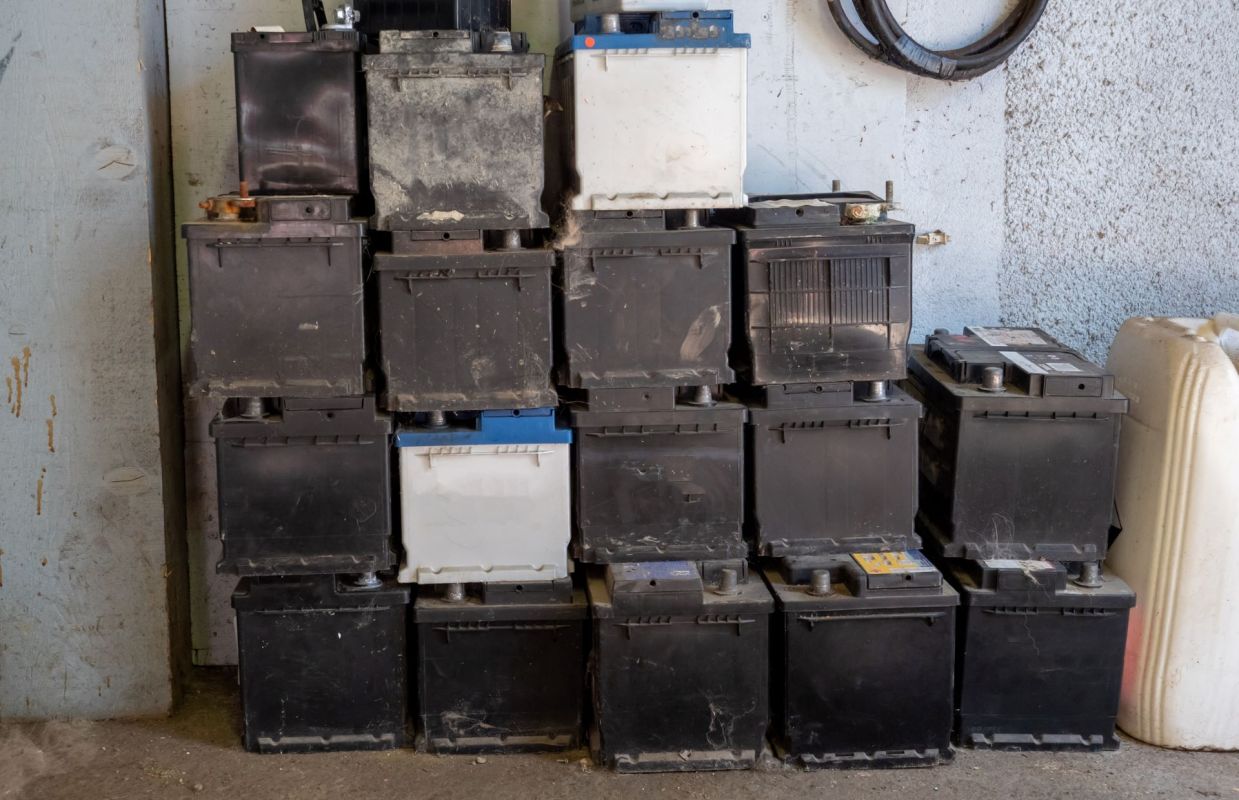
Two well-known Japanese automakers are teaming up to put old fully electric and hybrid vehicle batteries to use powering a car plant in a fascinating circular scenario.
The testing has started on Toyota's Sweep Energy Storage System in Mazda's Hiroshima plant at the company's headquarters, according to a news release.
A diagram shared by Toyota shows renewable solar and thermal power sending energy to the storage unit, which is made up of old packs. From there, a management system helps to control the electricity flow. The assembly line is powered by the renewable sources and from the stored energy in the packs.
The system can handle batteries of various chemical types, states of health, and capacities, maximizing their performances in the final stages of their lifespans, according to Interesting Engineering.
"The system rapidly switches each battery's power flow on and off, even when new batteries are connected to degraded or different capacity batteries," Toyota stated.
Reusing EV batteries is a smart move that leverages the costly materials inside that often require invasive mining to harvest. The packs have plenty of function left, even though they can't reliably power EVs anymore. What's more, Toyota said it can even reclaim packs from wrecked vehicles.
The International Energy Agency reported that 17 million EVs were sold last year, a 25% jump from 2023. Battery recycling is a complicated process, described by the Massachusetts Institute of Technology as "very hard." Efforts by Mercedes-Benz and others to recycle the packs are helping to reuse some of the valuable components, keeping them from landfills, where they can become hazardous, leaching harmful chemicals.
A strong market is emerging for black mass, which is essentially ground-up batteries. Recyclers extract valuable metals from the debris.
Toyota and Mazda aren't alone in extending the packs' lifespans. California's B2U Storage Solutions is using them to store solar energy for grid support, as another example.
While a battery's lifespan includes some dirty stages, it's important to note that the volume of materials harvested to make them is far short of the 16.5 billion tons of dirty fuels mined from Earth each year, according to Sustainability by Numbers. When nonrenewables are burned for energy, they release heat-trapping air pollution that's a bane to our lungs, hearts, and even minds, according to government medical experts and studies.
TCD Picks » Quince Spotlight
💡These best-sellers from Quince deliver affordable, sustainable luxury for all




|
What is your biggest concern with EV batteries?
Click your choice to see results and speak your mind. |
 They're not efficient enough ⚡
 For their part, EVs are a great way to reduce air pollution and save money. Each EV that replaces a gas-burning vehicle prevents thousands of pounds of tailpipe exhaust annually, the U.S. Department of Energy explains.
Now is a great time to make the switch, as tax incentives worth up to $7,500 are set to expire early at the end of September because of policy changes. Many states offer other incentives of their own that will remain. Up to $1,500 in gas and service savings can be reaped regardless of the tax breaks.
In Japan, Sweep was launched by Toyota and JERA in 2022 using old EV packs, according to IE. JERA is Japan's largest power generation company. That system was reported to be capable of powering 1,200 homes for an hour.
"This innovation cuts energy loss, lowers costs, and boosts efficiency," JERA said.

Join our free newsletter for weekly updates on the latest innovations improving our lives and shaping our future, and don't miss this cool list of easy ways to help yourself while helping the planet.
Cool Picks





