


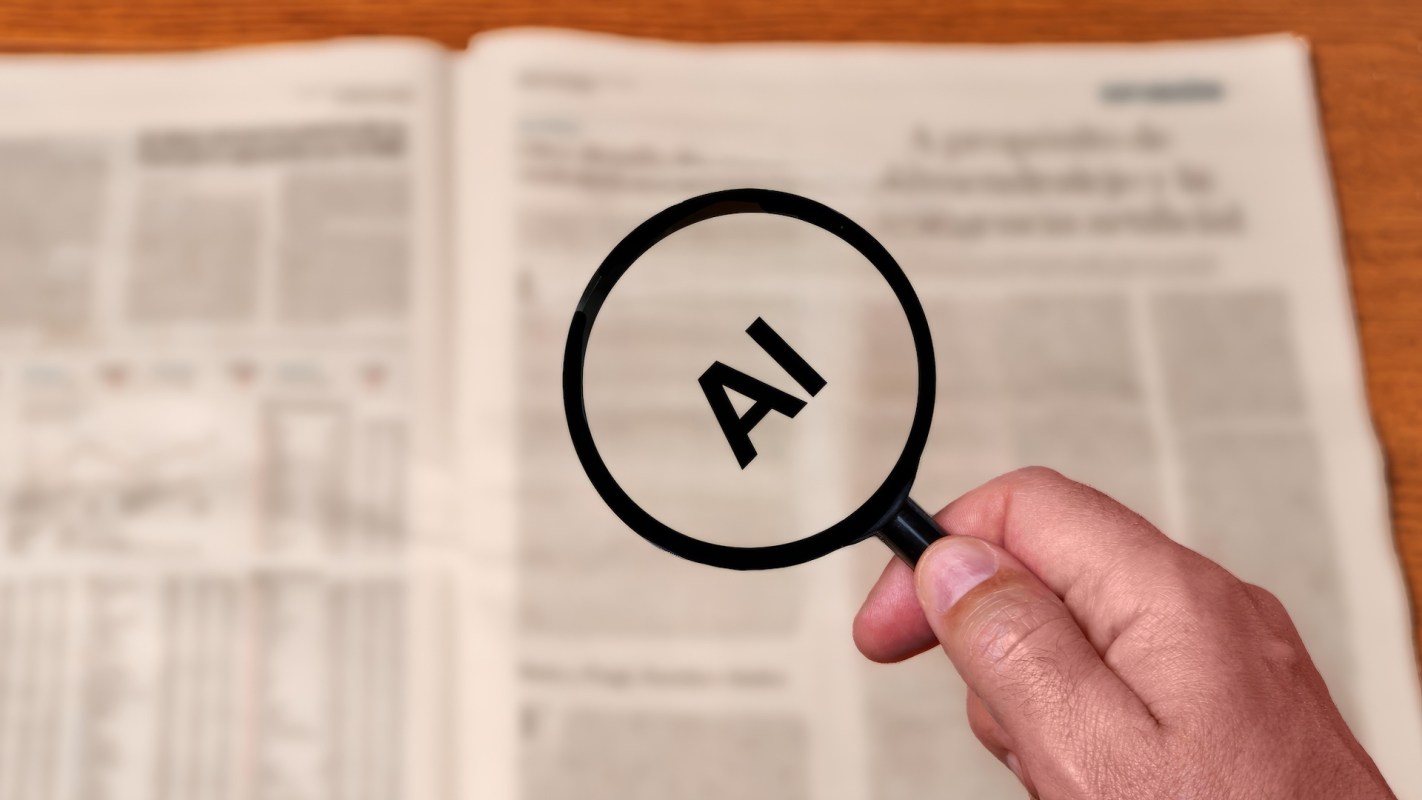
If "Elena Vasquez" or "Marcus Chen" show up in an academic paper, thriller, or expert bio, readers may want to take a closer look. New research suggests those names can serve as fingerprints of AI-generated content rather than proof that a real person exists.
Here's what to know
According to a Samsung and University of Warsaw preprint cited by 404 Media, certain large language models keep inventing the same identities for the same kinds of roles. Those fabricated people are already appearing in scholarly databases and search results.
In the preprint paper, "The Ghost Couple: Correlated LLM Name Priors and Their Haunting of the Web and Academic Publishing," the authors argue that the pattern goes beyond single repeated names. They found what they called "correlated character ensembles," in which invented identities tend to be generated alongside other invented identities.
That pattern helps explain why names such as Elena Vasquez and Marcus Chen keep surfacing across papers, articles, and books. The researchers also said some models repeatedly produce other names, including, as 404 Media reported, Elena Amara Okafor, Aris Thorne, Lena Petrova, and Elara Voss.
Michał Brzozowski, the paper's lead author, said that looking up those names revealed additional supposed experts online who did not actually exist. The study also counted 1,655 "ghost-authored" records on Zenodo, the CERN-run repository that issues real DataCite Digital Object Identifiers, or DOIs.
"The academic record is being quietly haunted," the researchers warned.
TCD Picks » Quince Spotlight
💡These best-sellers from Quince deliver affordable, sustainable luxury for all




More background
Academic search tools and publishing platforms often serve as stand-ins for trust. Once AI-generated papers have real DOIs and appear in places like Google Scholar, Semantic Scholar, or ResearchGate, fake expertise can begin to look authentic.
The problem has already shown up beyond academia. Research Gold had previously listed Elena Vasquez as its founder and lead methodologist before removing the name, and Snopes reported that a false claim tied to the killing of Alex Pretti cited an "executive director Dr. Elena Vasquez" who did not exist, per 404.
What can be done?
Some institutions are already tightening standards. Journals have published AI-generated text, peer review has been affected by AI, and arXiv can ban authors for one year if they are caught submitting AI-generated work, according to 404.
Researchers also think the repeated fake names could become a detection tool. If certain models consistently favor certain names, then a suspicious author list may offer clues that a paper was machine-generated.
Still, Brzozowski cautioned that this signal could weaken as AI-made content spreads across the web and becomes training material for future systems.
Polished formatting, academic-sounding language, and even a DOI are not automatic proof of legitimacy. Author affiliations, publication history, and the ability to verify a journal or institution may help distinguish real scholarship from AI-generated material.
As the paper put it: "Elena Vasquez and Marcus Chen have appeared as volcano experts, astronauts, thriller protagonists, podcast hosts, and academic co-authors across hundreds of independently produced AI-generated documents, never having lived."

Get TCD's free newsletters for easy tips, smart advice, and a chance to earn $5,000 toward home upgrades. To see more stories like this one, change your Google preferences here.






