


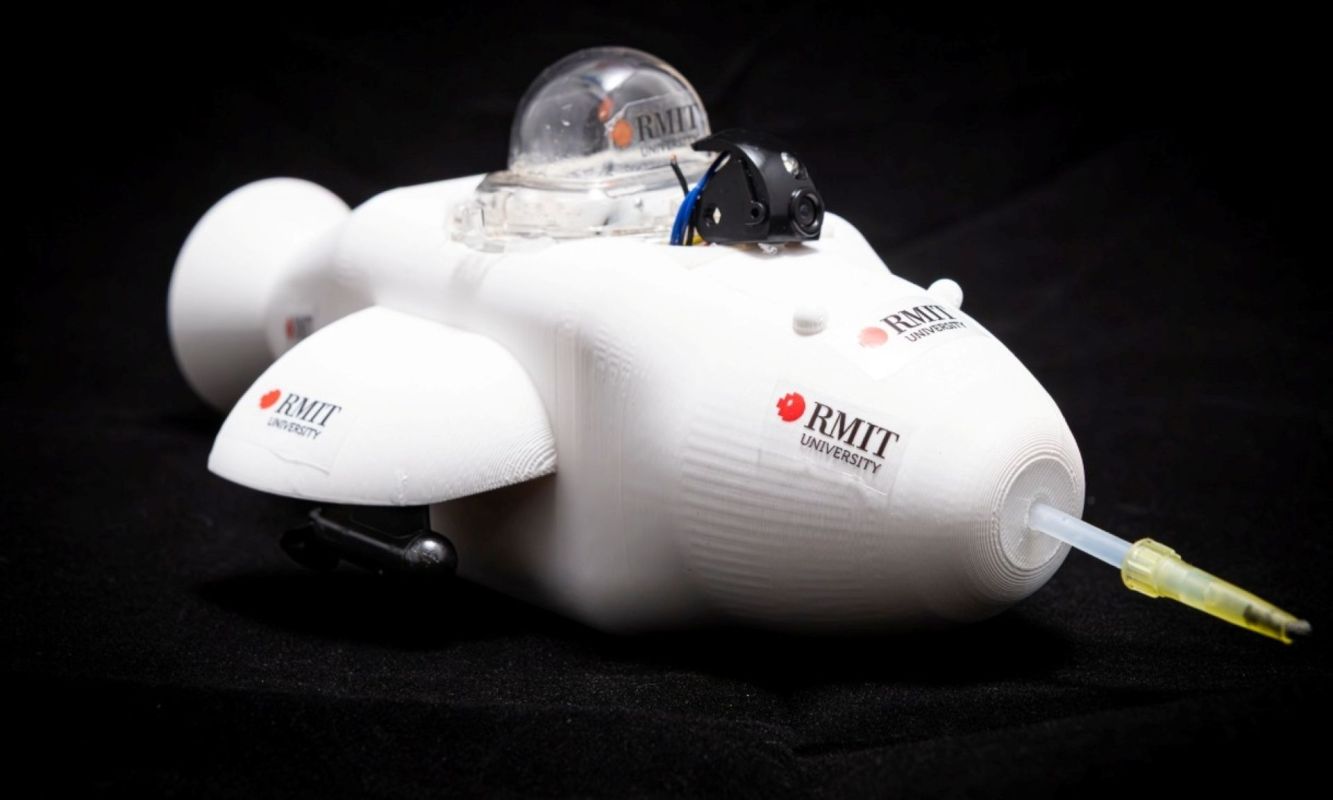
Researchers in Australia are testing a compact robot intended to pull oil back out of contaminated seawater. The concept aims to reduce the environmental harm linked not only to oil spills themselves but also to some of the methods used to clean them up, while keeping the recovered oil from going to waste.
What's happening?
Rather than relying on one large machine, the concept uses a fleet of small ones. RMIT University's "Electronic Dolphin" is a lovable minibot built to remove oil from polluted water without harsh chemical dispersants, and as Jalopnik reported, multiple units would be remotely guided across a spill site.
At the front of the robot is a specially treated filter whose tiny structures repel water and attract oil. An onboard pump then pulls the collected oil into an internal storage cavity, while the surrounding water stays behind.
Conventional spill response can involve chemical treatments that are less environmentally friendly, such as burning oil from the surface, or lower-impact options such as booms and skimmers that may be less efficient. By comparison, the paper cited in the report says the current design is 97% effective at removing an oily contaminant.
Because the robot stores what it collects, the spilled oil could later be reused or repurposed instead of being wasted.
Why does it matter?
Ocean pollution does not stay neatly offshore. It can harm fisheries, disrupt coastal economies, damage tourism, and threaten wildlife that many communities depend on for both their livelihoods and local identity.
TCD Picks » Quince Spotlight
💡These best-sellers from Quince deliver affordable, sustainable luxury for all




Another issue is what some cleanup strategies leave behind. RMIT University noted that certain chemical methods used to break up oil slicks may introduce PFAS contaminants into the water, adding a new environmental risk, or using large mats of human hair that absorb oil well, but not efficiently enough to be significant. So, this dolphin robot is a cleaner and creative solution to address both problems of inefficiency and the risk of introducing different types of pollution into the water.
That makes a system that physically removes oil from the water especially appealing during disaster response. Instead of dispersing the slick or destroying it in place, these bots are designed to take the oil out altogether, which is a far more practical outcome for marine habitats.
Innovative technology inventions like this one are crucial to protecting natural environments, such as developing alternatives for single-use plastic that would pile up in landfills. For instance, a team of researchers at Japan's Riken Center created a new biodegradable plastic made from wood pulp cellulose that breaks down in saltwater.
Taking spilled oil out for recovery, rather than burning it off or leaving part of it dispersed, could reduce waste and improve the efficiency of cleanup efforts.
What's being done?
The project is still in development, and researchers are still working to overcome some constraints. Jalopnik reported that the bot runs for about 15 minutes per charge, and because of its present size, a major spill would require many units cycling through shifts to make a meaningful impact.
To improve that, researchers are working on a larger filter, more storage capacity, and longer battery life. Those upgrades could help move the robot from a promising prototype to something that can be used in real-world emergency situations.
If the technology scales up, it could give responders a way to protect coastlines and marine life without adding more pollution to the mix.
For now, RMIT University's "Electronic Dolphin" remains a small prototype, but it points toward a promising cleanup approach that is 97% effective, avoids harsh chemical dispersants, and preserves spilled oil for reuse instead of simply discarding it.

Get TCD's free newsletters for easy tips, smart advice, and a chance to earn $5,000 toward home upgrades. To see more stories like this one, change your Google preferences here.






