


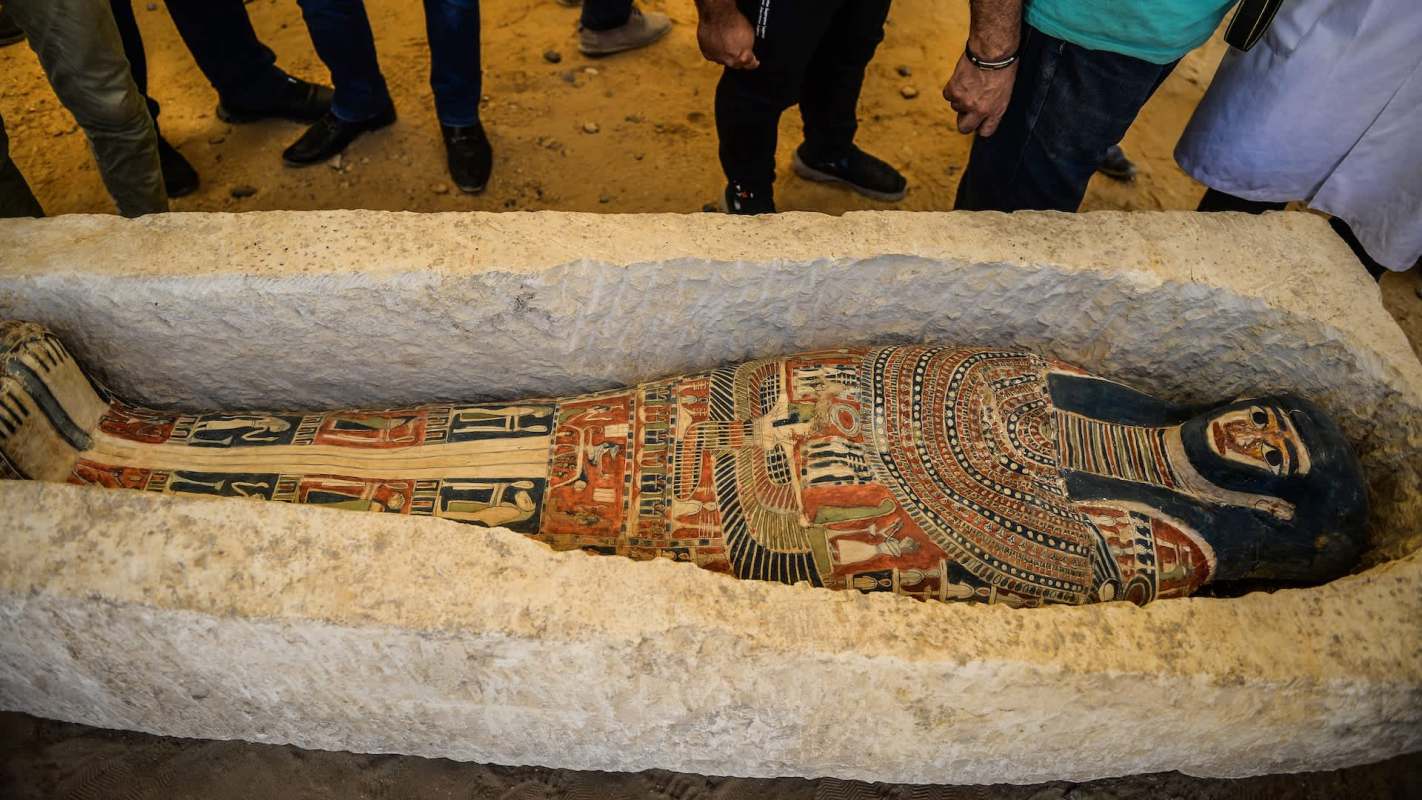
Weapons placed in the tombs of ancient Egyptian princesses may have served a real purpose, not just a ritual one.
According to new research, some of these royal women likely spent years hunting and practicing archery, leaving clear signs of heavy physical activity on their skeletons.
What's happening?
By taking another look at six royal mummies from Dahshur, researchers concluded that several of the women buried there probably handled the bows, arrows, daggers, and maces placed in their tombs, Wyoming News Now reported.
Published in Frontiers in Environmental Archaeology, the study pushes back on the idea that weapons buried with elite women were only symbolic.
Among the six were four sisters from Pharaoh Amenemhat II's family: Princess Ita, Princess Khenmet, Princess Itaweret, and an unidentified woman tentatively identified as Princess Sathathormeryt.
First uncovered in the 1890s, the mummies later disappeared for years and were only found again in 2020 during a curation project.
TCD Picks » Quince Spotlight
💡These best-sellers from Quince deliver affordable, sustainable luxury for all




Lead study author Zeinab Hashesh, a researcher at Beni-Suef University in Egypt, said, "Members of the royal family, especially the women, were active participants in skilled, physically demanding activities such as archery and hunting."
The researchers found pronounced muscle and ligament attachment sites, healed fractures, and other skeletal features consistent with repeated strenuous movement.
Hashesh said Princess Itaweret's skeleton in particular suggests "she was a skilled archer."
Why does it matter?
The findings reshape how historians understand gender roles in ancient Egypt.
Rather than being remembered mainly through their jewelry or burial goods, these women now appear to have lived physically demanding lives that included hunting, weapons training, or both.
That means the bows and arrows once dismissed as decorative or symbolic may instead have been working tools used by royal women with specialized skills.
The study also offers a more personal view of life inside Egypt's royal family.
Several of the individuals had injuries, infections, and signs of nutritional deficiencies, while Princess Itaweret had healed breaks in her ribs and foot.
Hashesh said these injuries were likely tied to "an active lifestyle, whether through hunting, military training, or other demanding activities."
At the same time, the healed injuries point to advanced medical care.
Even 4,000 years ago, access to treatment may have helped elite Egyptians recover from serious trauma that might otherwise have been life-threatening.
What's being done?
Researchers are continuing to study the Dahshur royals in hopes of building a fuller picture of their lives, according to Wyoming News Now.
Although the soft tissue has largely turned to powder and the skulls were lost in the early 1900s, the surviving bones still offer clues about age, health, activity, and family relationships.
The team hopes to go further with future testing, including stable isotope analysis that could reveal more about diet and nutritional stress.
Researchers also want to preserve the remains and create 3D replicas for teaching and virtual exhibitions.
The goal is to move beyond the artifacts alone and understand more about the people who once used them.
"Their objects and jewelry are truly fascinating, breathtaking in their craftsmanship," Hashesh said. "Yet, while archaeologists have long focused on preserving these treasures, the people themselves were often forgotten. Our study seeks to change that."

Get TCD's free newsletters for easy tips, smart advice, and a chance to earn $5,000 toward home upgrades. To see more stories like this one, change your Google preferences here.






