


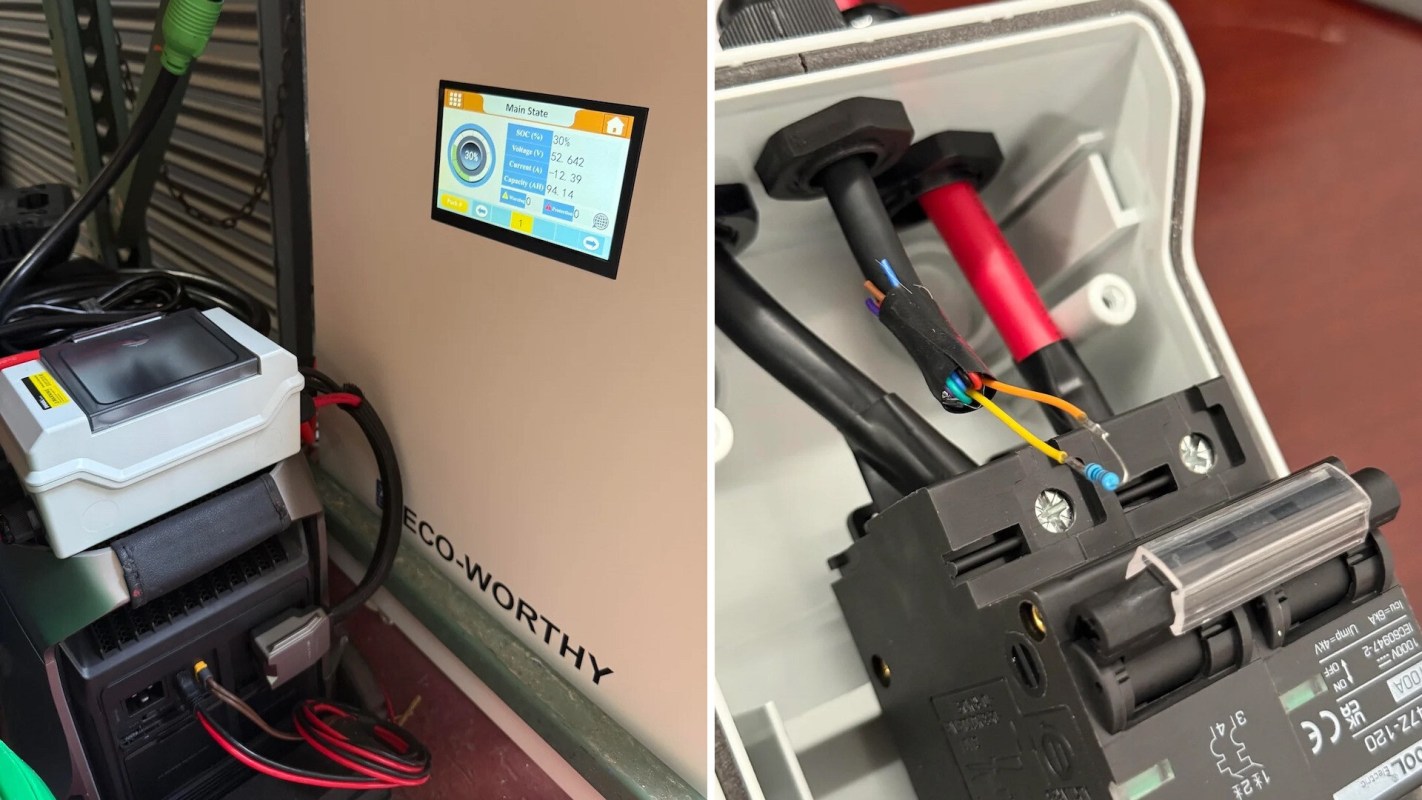
By using less expensive third-party cells, one EcoFlow owner said they expanded a Delta Pro 3 into a 20.116-kilowatt-hour backup setup. That kind of capacity moves a portable power station nearer to whole-home backup use.
That possibility may stand out to budget-minded shoppers, since it suggests a path to much more stored energy without being tied to a single brand's battery lineup.
Here's what to know
On Reddit, the OP said a modified smart-link cable let them attach a 16.07-kWh Ecoworthy battery to an EcoFlow Delta Pro 3 and have the unit recognize the extra capacity. The DIYer said it "Works great!"
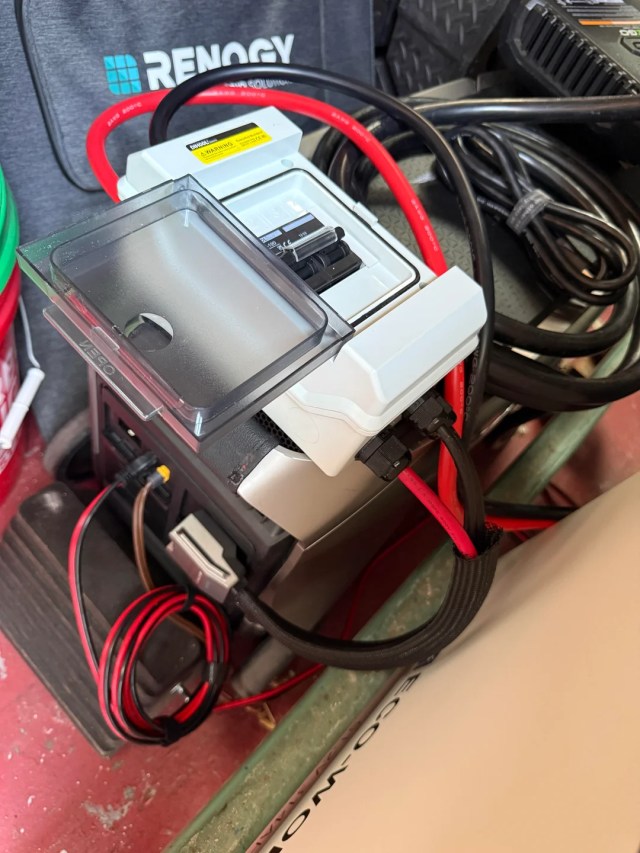
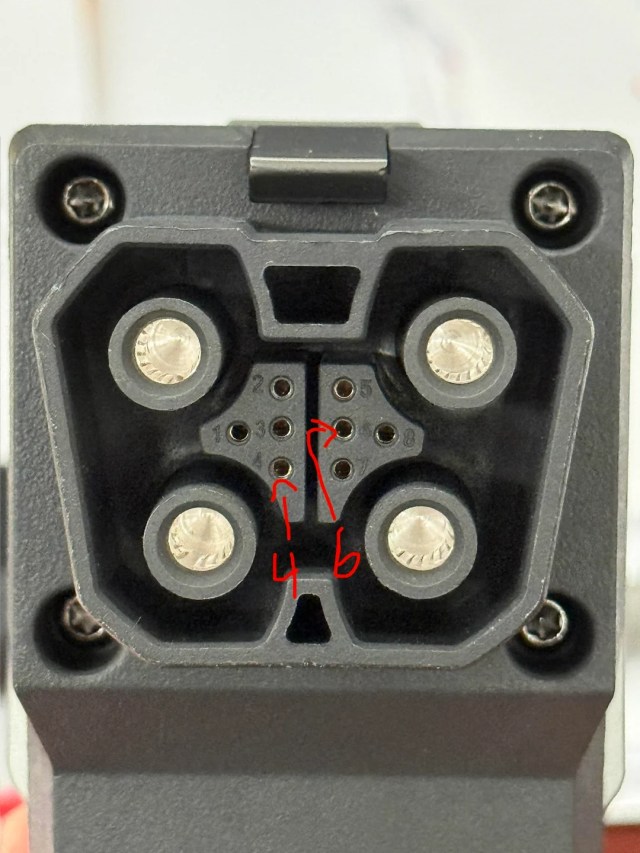
They also said Port 1 was more reliable than Port 2 during testing. According to the post, the modification involved cutting the cable, routing the positive and negative lines through a DC-rated 100-amp breaker, and placing a 1,000-ohm resistor across two communication wires so the Delta Pro 3 would accept the connection.
Adding battery storage can protect your home during outages by keeping key appliances and devices running when the grid goes down. It can also save on energy costs by storing cheaper or self-generated electricity, making going off-grid far more realistic.
If you like the idea of home backup without attempting a complicated electrical modification, it may be worth exploring EnergySage's free tools. Another option is Pila, whose plug-and-play batteries cost a fraction of the price of full systems.
Why does it matter?
The Delta Pro 3 is already a sizable backup unit, and another 16.07 kWh of external battery capacity lifts the total to just over 20.1 kWh, giving owners a much longer runtime during an outage.
Larger battery banks can also help homeowners store rooftop solar production for later use, reducing the amount of power they need to buy from the grid during expensive periods.
Save $10,000 on solar panels without even sharing your phone number Want to go solar but not sure who to trust? EnergySage has your back with free and transparent quotes from fully vetted providers in your area. To get started, just answer a few questions about your home — no phone number required. Within a day or two, EnergySage will email you the best options for your needs, and their expert advisers can help you compare quotes and pick a winner. Solar panels can save you more than $50k over their 25-year lifespan, and EnergySage can help you save as much as $10k on installation. Which begs the question — isn't that worth an email or two? |

Because proprietary expansion batteries can cost more per kilowatt-hour than third-party packs, a workaround like this could lower the price of adding storage, though the OP did not share a full cost breakdown.
There are still obvious tradeoffs. High-amperage DC systems can be dangerous, and mistakes when modifying cables or communications hardware could damage equipment or void warranties.
What can be done?
Some households need only enough backup for essentials, while others want a larger system that can handle HVAC loads, EV charging, or multi-day outages.
A cheaper upfront unit may offer less usable capacity, fewer cycles, or weaker support, while a pricier system may include installation, software, and warranty protections.
Working with high-current DC hardware is very different from plugging in a portable battery.
The OP wrote, "It is imperative that you get a DC rated breaker as normal AC breaker cannot safely break the current once it's flowing fast."

Get TCD's free newsletters for easy tips, smart advice, and a chance to earn $5,000 toward home upgrades. To see more stories like this one, change your Google preferences here.







