


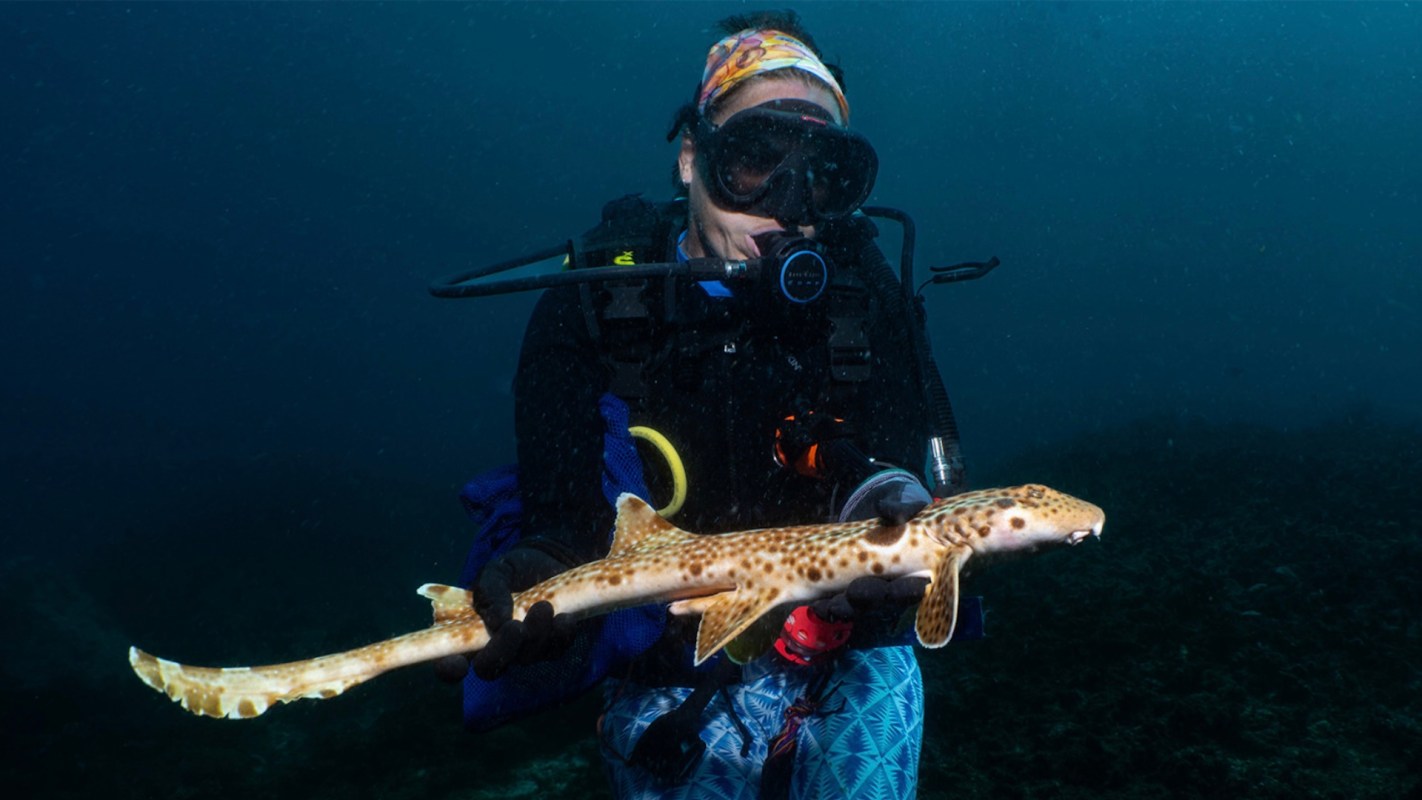
What began as a night study of sharks that can move on land led to a far rarer result.
Later analysis showed that the meter-long walking shark caught by hand by University of the Sunshine Coast researcher Dr. Christine Dudgeon had never been formally identified, as the team laid out in a news release.
What happened?
The animal is now formally named Hemiscyllium dudgeonae, or Dudgeon's Walking Shark, the release noted.
Scientists confirmed it as a distinct species in a collaborative paper in the Journal of the Ocean Science Foundation after Dudgeon caught it by hand during a nighttime field study and carefully brought it back to the boat.
"New shark species don't come along that often, and it's most definitely the first one named after me," Dudgeon said in the release.
Already unusual among sharks, researchers say these nocturnal animals use all four fins almost like limbs to move across shallow reef flats when the tide drops. Their diet consists of invertebrates on the seafloor, and the release indicates they are not considered dangerous to humans.
TCD Picks » Quince Spotlight
💡These best-sellers from Quince deliver affordable, sustainable luxury for all




Scientists believe the species may be limited to a very small area off southeastern Papua New Guinea, a narrow range that could make the find especially important for conservation.
The species was there all along, but humans simply had not documented it before Dudgeon brought it to the boat.
"Straight away I recognised that the colour pattern was different from any of the other species I had worked with before," lead author Jess Blakeway said in the release.
Why does it matter?
Finding a new shark species is uncommon, especially in a group as recognizable as sharks.
The shark was found in a small, isolated patch of reef where biodiversity remains underdocumented even as human activity continues to reshape oceans and coastlines.
Species with tiny ranges can be especially vulnerable. A localized animal has less room to adapt if its habitat is disturbed by warming waters, reef degradation, pollution, or fishing pressure.
Identifying a species is often the first step toward understanding whether it needs protection. In this case, the encounter happened during research, not conflict, and the shark poses little threat to people.
But as humans spend more time in wild spaces and alter them, surprising encounters with animals may become more common.
What's being done?
Researchers have now formally described the shark, giving conservationists and policymakers something concrete to track. A species cannot be assessed, monitored, or protected effectively if it has not been recognized in the scientific record.
"It's exciting because this is the first new species described for the genus since 2013," Blakeway noted in the release.
That formal naming also helps focus attention on a very specific place. If Dudgeon's Walking Shark truly exists only in a tiny slice of reef habitat, future fieldwork can focus on population size, breeding patterns, and environmental threats.
Marine research, reef protection, and science-based conservation all help uncover species before habitat loss outpaces our understanding of them.
"We hope to collect more data on our next research trip in October to help the International Union for Conservation of Nature Red List assess the species as vulnerable or endangered with extinction," Blakeway revealed in the release.

Get TCD's free newsletters for easy tips, smart advice, and a chance to earn $5,000 toward home upgrades. To see more stories like this one, change your Google preferences here.






