


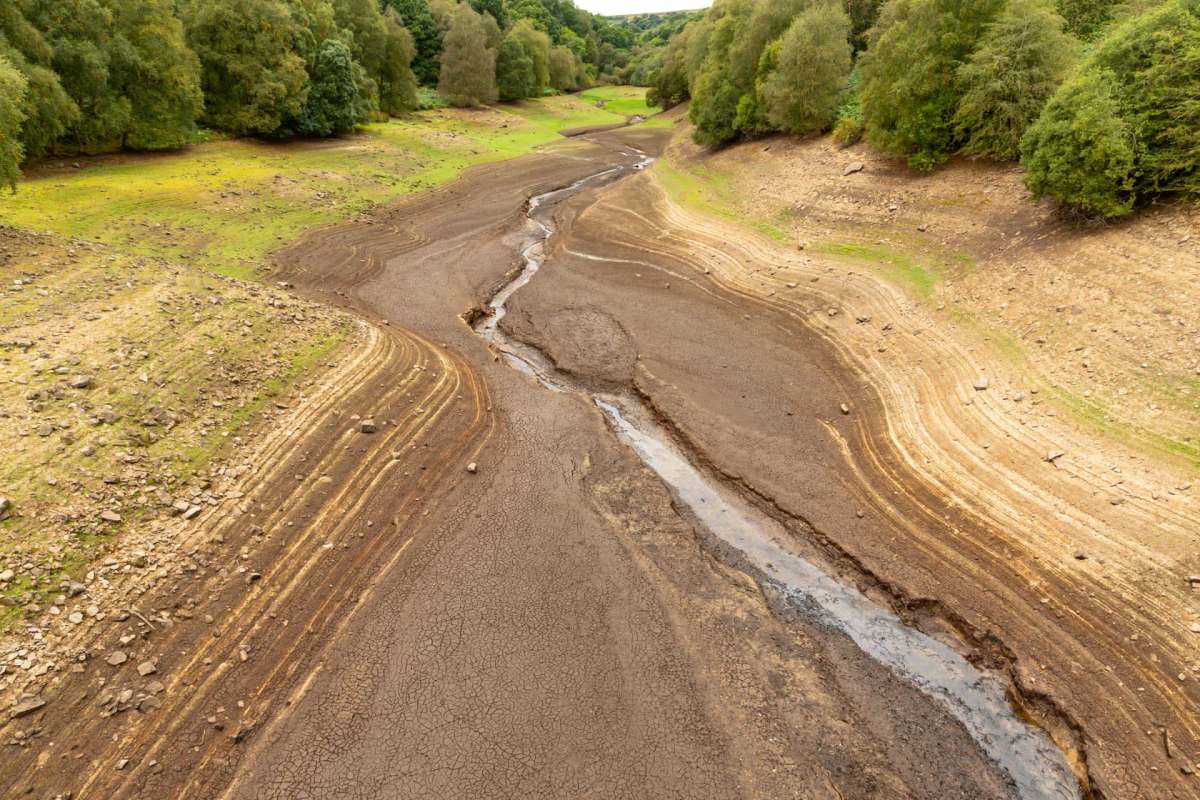
Drought is often framed as a water shortage problem, but scientists say it can also become a disease problem — and in some cases, a serious one.
New research suggests that as landscapes dry out, infections such as cholera, West Nile virus, and dengue may be more likely to spread.
Here's what to know
According to Grist, a paper in Trends in Ecology and Evolution analyzed nearly 100 studies involving humans and other animals and described a pattern researchers call the "drought-disease paradox."
Dry conditions can reduce some disease threats as water sources disappear, but those same conditions can also create opportunities for other pathogens to thrive.
The review examined illnesses linked to mosquitoes, contaminated water, and shifting aquatic systems. It found that drought can sometimes coincide with lower cases of schistosomiasis and malaria, even as cholera, West Nile virus, and dengue move in the opposite direction.
Tara Stewart Merrill, an aquatic disease ecologist at the Cary Institute of Ecosystem Studies and co-author of the paper, said the finding may sound surprising at first.
TCD Picks » Quince Spotlight
💡These best-sellers from Quince deliver affordable, sustainable luxury for all




"It's so counterintuitive," she said, per Grist. "We think a water-borne disease should thrive only when there's plenty of water, but in some cases they thrive when there's less water."
The paper is also notable because infectious disease research has historically paid more attention to heat than to drought, even as increasingly dry conditions affect many parts of the world.
More background
Warming air can draw additional moisture from the ground, worsening drought in many places. Citing a United Nations report, Grist said the world had become 77% drier in three decades.
The researchers also highlighted outbreaks and case trends that have tracked with drought.
Somalia's 2017 drought coincided with nearly 80,000 cholera cases. In California, the 2000s drought coincided with thousands of additional cases of valley fever, and the state's 2014 superdrought was associated with its second-highest tally of West Nile virus cases. In Brazil, Grist reported findings that dengue danger can increase in the months following drought.
Drought can also shift when and where mosquito-borne, food-borne, and dust-borne illnesses appear.
Georgia Titcomb, a wildlife disease ecologist and assistant professor at Colorado State University, added that when water becomes scarcer or more unevenly distributed, animals may change their movements and cluster at the remaining sources, creating new hotspots for transmission, Grist reported.
What can be done?
Scientists said better tracking will be a major part of the solution. Improved satellite monitoring could help researchers and officials track shifts in water across landscapes and better anticipate where disease risks may rise.
The study also suggested that water management decisions matter. Building dams, expanding irrigation, or otherwise changing how water moves can sometimes create conditions that help pathogens, parasites, or the organisms that carry them.
Drought planning may need to include disease prevention alongside water conservation. That can mean paying closer attention to changing mosquito activity, water quality concerns, and the health effects of dust after wet periods are followed by dry ones — a pattern researchers call "weather whiplash."
Drought does not always reduce infection risk. In some places, it can instead shift that risk.
As Samantha Sambado, a biologist and postdoctoral researcher at Stanford University who was not involved in the study, put it, according to Grist, "Water touches almost every aspect of life. How do we manage this resource, knowing the future will be warmer?"

Get TCD's free newsletters for easy tips, smart advice, and a chance to earn $5,000 toward home upgrades. To see more stories like this one, change your Google preferences here.






