


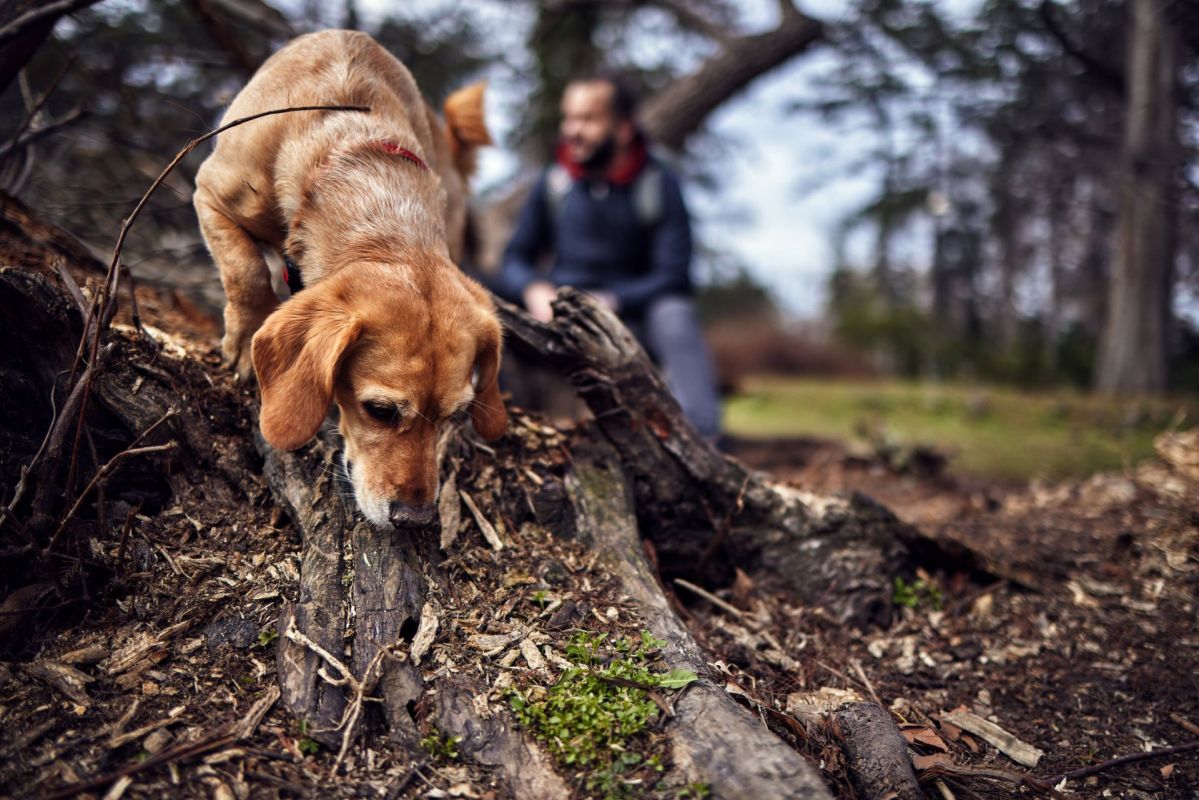
For many dog owners, a pet's habit of hunting for hidden toys or treats is just a fun game.
But a new study suggests that the same skill could also help people spot an invasive insect that threatens farms, vineyards, and forests.
What's happening?
Virginia Tech found that volunteer handlers working with their pet dogs could detect spotted lanternfly egg masses.
The researchers said the study was the first to show that citizen teams achieved results comparable to those of professional conservation detection dogs.
The spotted lanternfly, native to Asia, was first found in Pennsylvania in 2014 and has since spread to 18 states. Its eggs can attach to surfaces such as trees, stone, lumber, cars, and trailers, helping the pest move into new places.
The project drew interest from more than 1,000 dog owners, and 182 teams were selected for training.
TCD Picks » Quince Spotlight
💡These best-sellers from Quince deliver affordable, sustainable luxury for all




After several months, the dogs identified egg masses in 82% of controlled indoor tests and 61% of outdoor field trials. Of the dogs that passed both tests, 92% later found live egg masses with minimal additional training.
"These teams demonstrated that citizen scientists and their dogs can play a meaningful role in protecting agriculture and the environment from invasive species," lead author Sally Dickinson said, per Virginia Tech.
Why does it matter?
Spotted lanternflies are more than just a nuisance. They can damage grapes, fruit trees, and other plants, putting pressure on growers, local ecosystems, and the communities that depend on them.
A major problem is how easily their egg masses blend in with their surroundings.
"They often resemble mud smears or lichens and are tucked into bark crevices, cracks, or hidden undersides," said co-author Mizuho Nita, per Virginia Tech. "Finding them is like searching for a needle in a haystack."
That difficulty makes early detection hard to scale. Professional detection dogs can help, but they are costly and not widely available.
Training more pet dogs could give communities a less expensive way to catch infestations before they spread further.
As participant Bill Wellborn put it, "Any time you can stimulate your dog, it's good for them."
What's being done?
Researchers trained the volunteer teams using devitalized, or non-hatching, egg masses.
Participants practiced at home or in small groups under trainer oversight, demonstrating that this kind of detection work need not be confined to specialized labs or professional facilities.
Virginia Tech also cited separate research from some of the same scientists showing that trained pet dogs identified powdery mildew, a fungal disease affecting grapes and vineyards, with better than 90% accuracy.
Co-author Erica Feuerbacher said the findings highlight a large group of dog owners who may be able to contribute.
"There are thousands of people out there doing scent work with their dogs just for fun," said Feuerbacher. "What Sally's study shows is that this can be more than a hobby — these citizen scientists and their dogs can be a valuable resource for fighting the spread of an invasive pest."
"Being able to do the same thing for the greater good — for citizen science — adds another layer we didn't have before," participant Katie Thomas said.
"With proper training, dog owners can turn their pets into powerful partners for conservation," Dickinson said.

Get TCD's free newsletters for easy tips, smart advice, and a chance to earn $5,000 toward home upgrades. To see more stories like this one, change your Google preferences here.






