


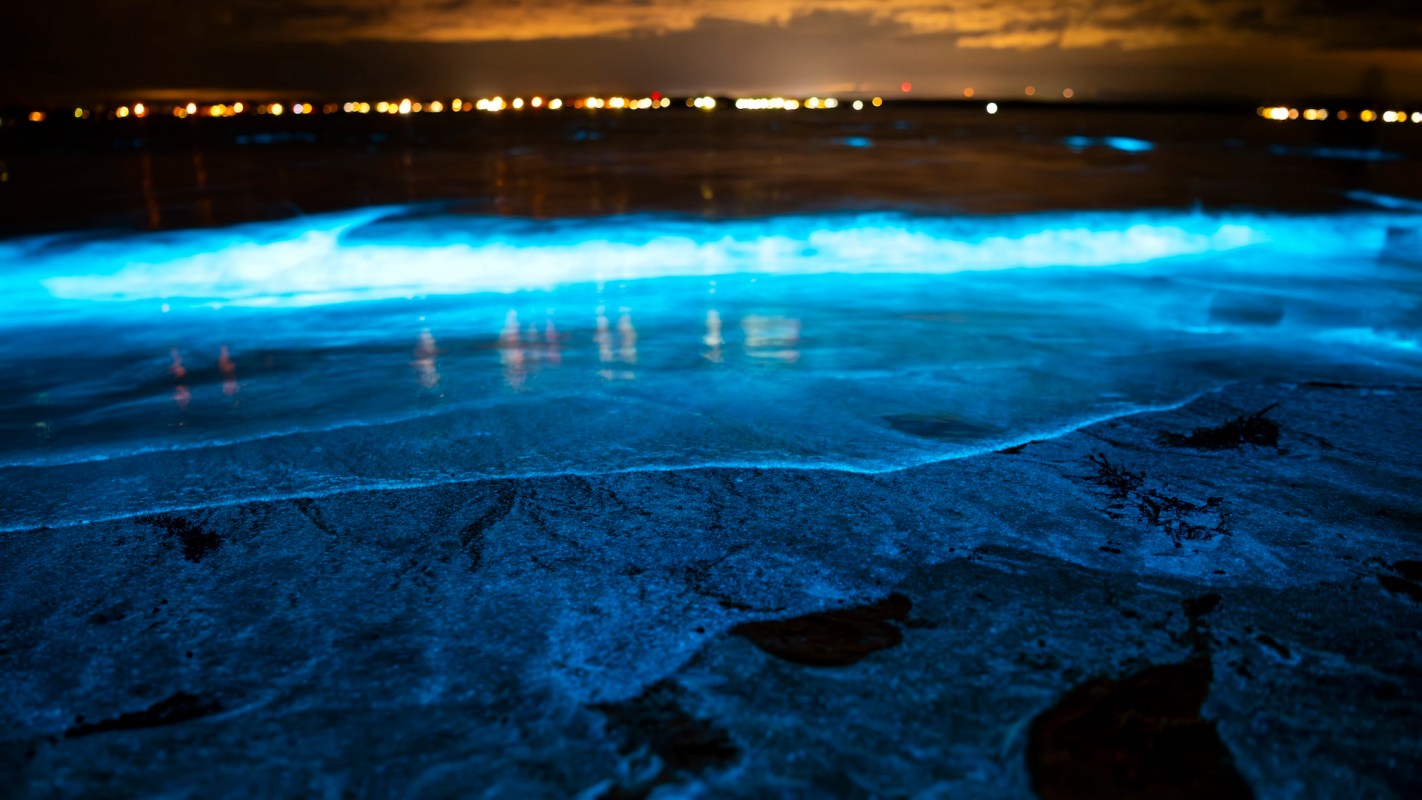
A deep-sea fish may have figured out a smarter way to glow.
New research suggests the bristlemouth Sigmops gracilis may use needle-shaped crystals not just to reflect its bioluminescent light, but also to alter and scatter that glow in more complex ways.
Scientists have long known that many marine animals produce their own light. Roughly three-quarters of marine organisms are bioluminescent and use specialized organs called photophores for purposes including attracting mates and confusing predators.
In a new study recently published in the journal Biointerphases, Hiroshima University researcher Masakazu Iwasaka examined how the deep-sea bristlemouth Sigmops gracilis controls that light.
Surrounding the fish's light organs are clusters of guanine platelets, crystalline structures known to influence how light is shaped in some species. But in this case, the platelets were needle-shaped and clustered around the light organs, changing the way light traveled.
Rather than acting mainly as mirrors, the crystals appeared to scatter and redirect the fish's glow in multiple directions.
TCD Picks » Quince Spotlight
💡These best-sellers from Quince deliver affordable, sustainable luxury for all




The bristlemouth may be using a more sophisticated optical system than researchers had previously understood.
By identifying how these guanine crystals are arranged and how their shape changes the path of light, scientists are laying the foundation for future biomimicry, the practice of borrowing solutions from nature to solve human design problems.
Insights from fish photophores could help engineers design more efficient lighting, imaging tools, sensors, or optical materials that waste less energy.
Nature has a long history of inspiring practical innovations, and bioluminescent organisms remain a rich source of ideas.
The deep sea remains one of Earth's least understood environments, and each new finding helps build a fuller picture of how marine life survives and communicates there.
The study also suggests that not all guanine platelets behave the same way, giving researchers more specific clues about which natural structures might prove useful for developing next-generation optical materials.
"Investigating guanine in various fish species will lead to a treasure trove of biomimetics knowledge," Dr. Iwasaka said.

Get TCD's free newsletters for easy tips, smart advice, and a chance to earn $5,000 toward home upgrades. To see more stories like this one, change your Google preferences here.






