


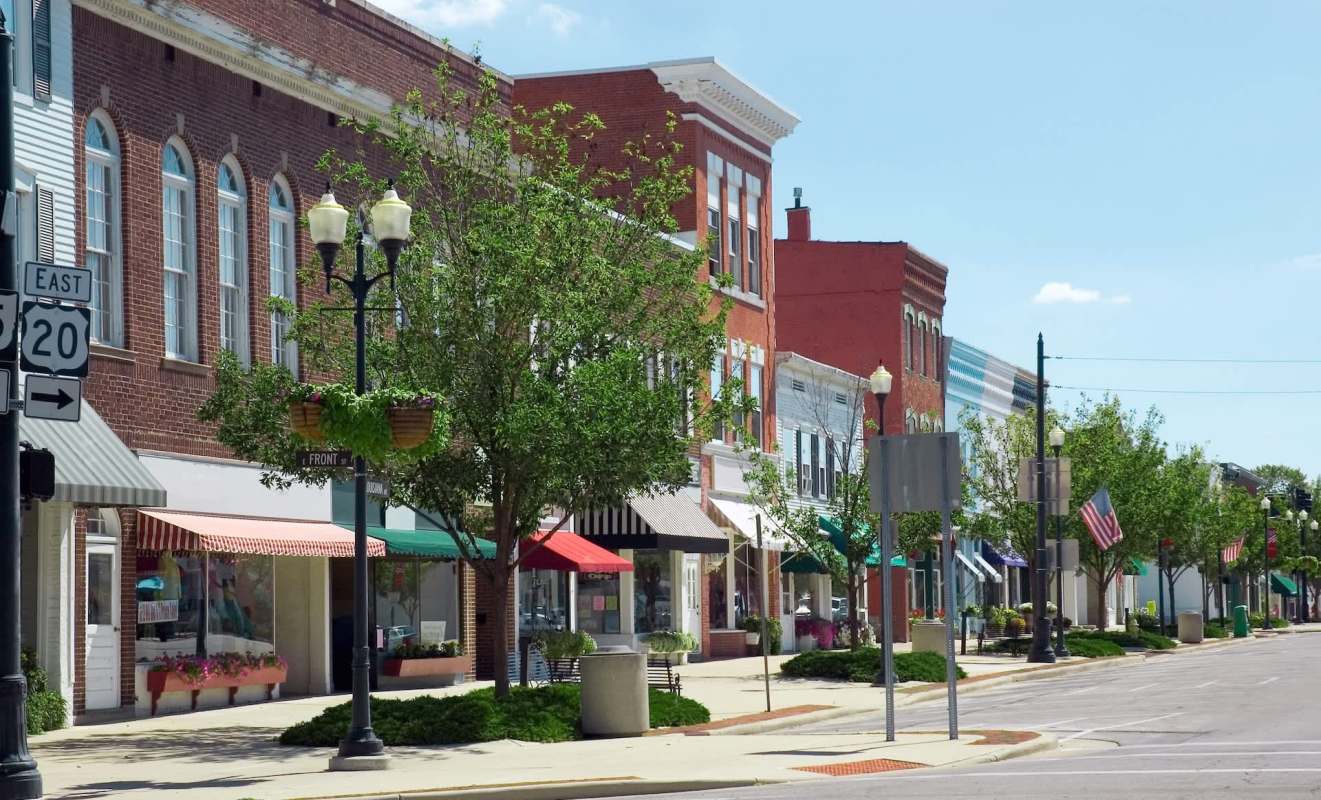
In Harmony, Minnesota, a town of about 1,000 people, a proposed data center is facing resistance from a wide range of residents.
In a place where business disagreements haven't usually turned this heated, people across the political spectrum are finding common ground.
What's happening?
The possible development would sit on 60 acres, and city officials have spent months writing rules to spell out what sort of data center, if any, could go there. Officials plan to unveil a proposed ordinance during a public meeting, the Post Bulletin reported.
Harmony Township resident Aaron Bishop, who opposes the project, said the debate has produced rare political alignment.
"I would say if there was one thing that brought people — conservatives and independents and liberals — together, it was definitely this issue because it seems like many people are opposed to it," Bishop told the Post Bulletin.
Mayor Steve Donney, who supports exploring the idea, said the city is not weighing anything on the scale of the bigger projects already moving ahead in Pine Island and Cannon Falls.
TCD Picks » Quince Spotlight
💡These best-sellers from Quince deliver affordable, sustainable luxury for all




"I don't equate that to what we're looking at in Harmony," Donney said. "It's like comparing a small family farm to a large corporate farm."
Donney's comparison did not erase the worries of resident Robbie Brokken, who pointed to higher utility bills, noise, falling property values, and damage to land and water as potential problems, according to the newspaper. "Is that worth any amount of money if it destroys the integrity and the beauty of our little community?" Brokken said.
Why does it matter?
As tech companies race to add computing capacity, more towns are weighing who gains from a data center and who absorbs the costs.
Artificial intelligence is closely tied to the energy grid because servers powering AI tools draw large amounts of electricity around the clock. Those same tools can help utilities forecast demand and make better use of wind and solar power. That demand can strain local power supplies; raise concerns about water-heavy cooling systems; and introduce risks tied to security, misuse, and broader social costs such as higher energy bills.
In a small town where residents know one another, the people debating the project may also live next to the site.
What's being done?
City leaders say they want limits in place before any agreement advances.
Donney said one proposed safeguard would ban cooling systems that use water, a measure meant to protect the local aquifer. The ordinance would also limit how much a facility could grow and how it could operate, per the outlet.
Donney said residents' concerns have shaped the process. The city has already held numerous public meetings.
"We're hoping to receive several proposals, and then the city of Harmony would get to choose which fits," Donney said. "They would have to agree to our ordinance and follow those rules."

Get TCD's free newsletters for easy tips, smart advice, and a chance to earn $5,000 toward home upgrades. To see more stories like this one, change your Google preferences here.






