


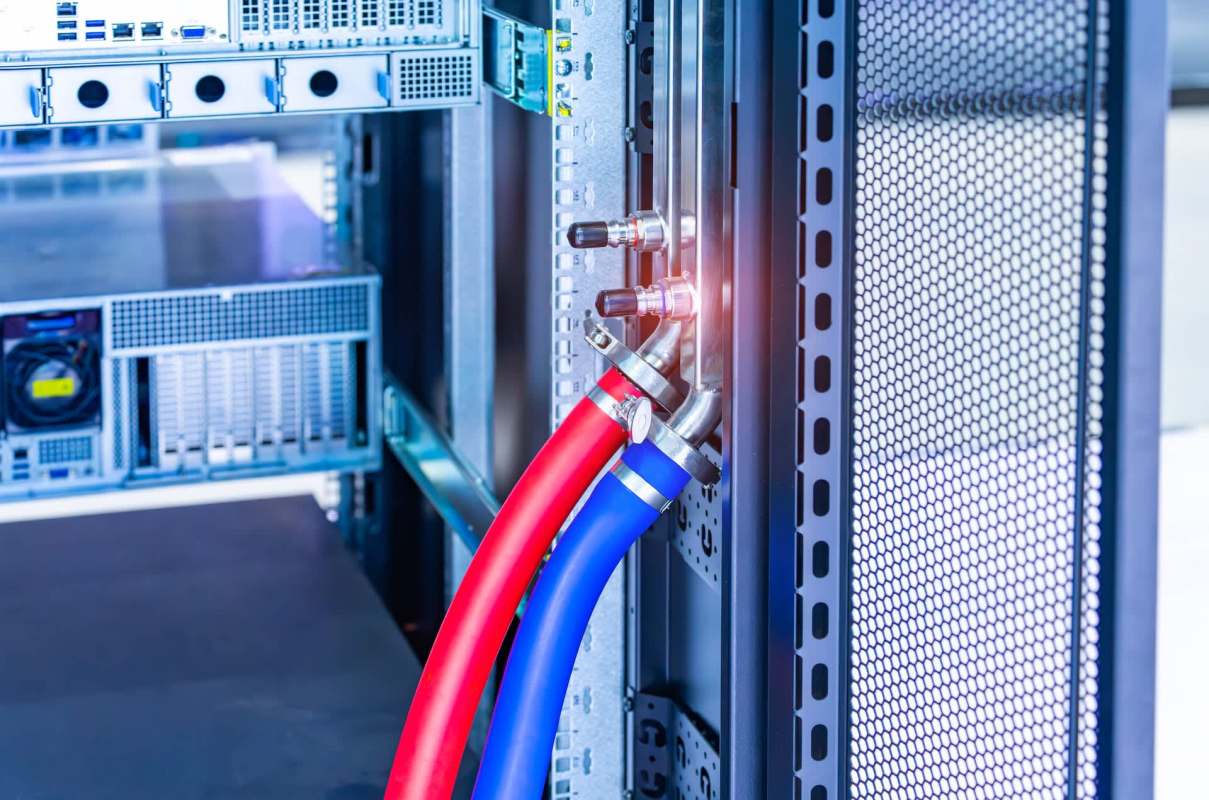
Michigan's data center boom has hit a roadblock, running into a basic reality: Even in a state eager to attract artificial intelligence and tech investment, communities still have to decide who will supply the water, who will provide the power, and who will absorb the costs.
In some places, those questions are contentious.
What's happening?
A surge of proposals has put Michigan squarely in the middle of the data center buildout, according to The Conversation. More than 30 projects have been pitched in the state over the past two years, during a period when Gov. Gretchen Whitmer has openly courted technology investment.
But local resistance is reportedly rising alongside that expansion.
One prominent flashpoint emerged in Ypsilanti, where the Ypsilanti Community Utilities Authority said it would not provide cooling water to a proposed data center tied to the University of Michigan and Los Alamos National Laboratory.
That decision prompted the university to propose a different site in Superior Township. That township manages its own water but buys the supply from both the YCUA and Ann Arbor Charter Township.
TCD Picks » Quince Spotlight
💡These best-sellers from Quince deliver affordable, sustainable luxury for all




Power demand is also under scrutiny. The Conversation reported that in Van Buren Township, Google's planned data center could require "2.7 gigawatts of electricity — a massive amount of power equivalent to the demand of about 2 million homes," according to a local news report.
Why does it matter?
The dispute goes well beyond a single development battle.
AI tools may optimize renewable energy systems, improve grid forecasting, and make buildings and transportation networks more efficient.
However, for many residents, the benefits and burdens do not line up neatly.
Data centers may add to local property tax collections, but they generally provide far fewer lasting jobs than companies claim. Meanwhile, nearby communities are left to consider noise, land-use changes, water withdrawals, and the risk of higher utility bills.
The rapid expansion of AI infrastructure also raises serious concerns about cybersecurity risks, the misuse of powerful systems, and other unintended consequences.
Utilities, for their part, can have good reasons to welcome projects such as this one.
Power companies often make money by adding infrastructure, such as substations, transformers, power lines, and generating capacity, as The Conversation noted. A large data center can support exactly that kind of expansion, but customers may end up bearing the cost.
What's being done?
Supporters argue that the state must remain competitive for investment tied to the next phase of digital infrastructure. Some leaders are working to make data centers easier to build.
Michigan lawmakers have approved exemptions that spare data center operators from some sales and use taxes, and DTE Energy told state lawmakers that the proposed data center in Van Buren Township would not increase customers' power rates.
At the same time, opposition at the local level makes it clear that approval is problematic. The YCUA's refusal illustrates how decisive water providers can be, while public hearings, zoning reviews, and ordinance changes continue to serve as major battlegrounds.
Backlash has already had political consequences elsewhere. In June, Utah voters removed longtime state Senate President Stuart Adams after he helped secure approval for a huge data center in the state's northwest, The Conversation reported.

Get TCD's free newsletters for easy tips, smart advice, and a chance to earn $5,000 toward home upgrades. To see more stories like this one, change your Google preferences here.






