


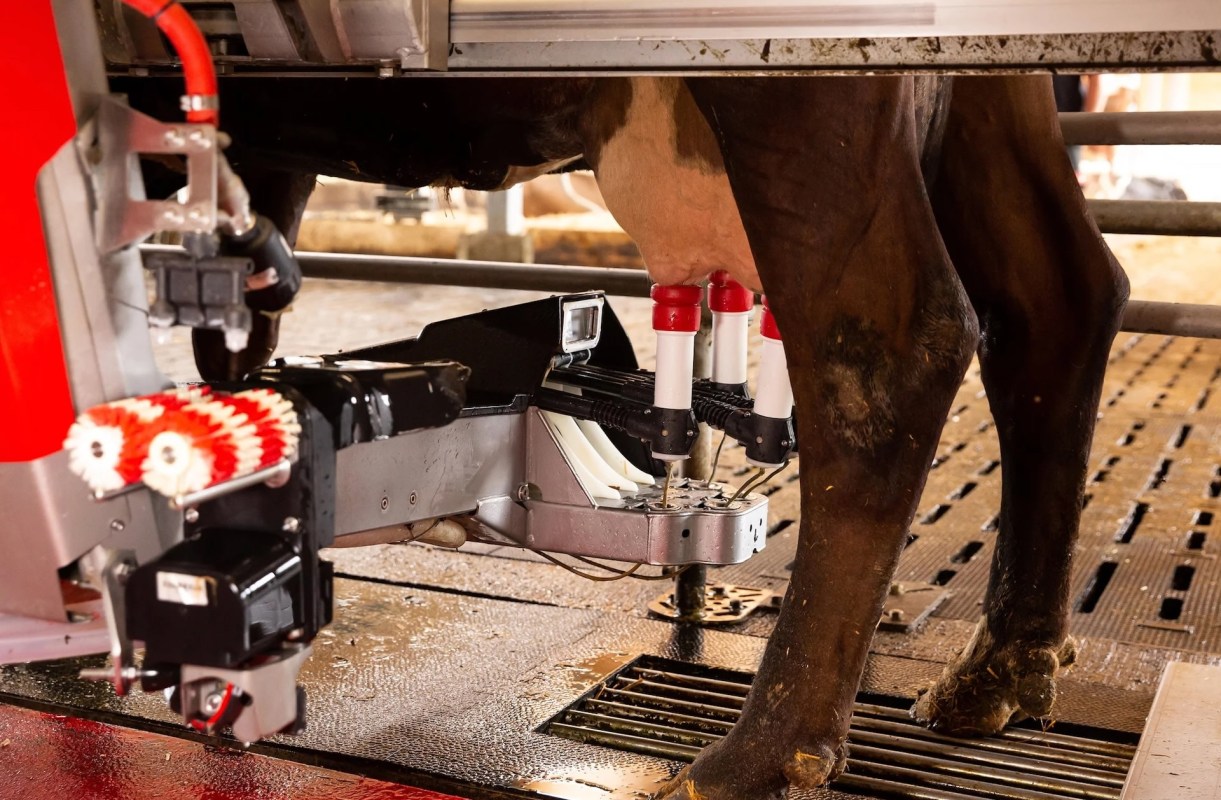
It's fair to say there are easier ways to make a living than dairy farming, so the appeal of using robots is understandable. Interestingly, the benefits of automating routine tasks don't just benefit the farmers themselves.
An article from IEEE Spectrum noted that when dairy farms make use of robots, everybody wins — especially the cows. Naturally, milking the cows is the principal task of a dairy farm, and an experienced worker using modern machines can finish the task in just a few minutes. The problem is that the work is tedious, and each cow needs to be milked at least twice daily. Even a moderately sized herd requires hours of labor every day, and that's not to mention the plethora of other boring but necessary jobs, such as feeding and mucking out barns.
Dutch farming machinery firm Lely has developed a range of robot devices to automate monotonous tasks. Over 135,000 machines are deployed on farms worldwide, per IEEE Spectrum.
Another gruesome but necessary job ripe for automation is cleaning up after them. A dairy cow produces up to 150 pounds of manure every day. Suffice to say, people aren't exactly lining up around the block to take that job, especially now when the agricultural industry is short about 155,000 workers.
The biggest surprise is that it becomes a much better experience for the cows, too. Automated stations mean they can be milked as often as they wish, their barns are kept clean, they have constant access to food, and they can come and go as they please. Happier cows mean better yields.
As a dairy farmer in Iowa noted, per IEEE Spectrum: "We've noticed a tremendous change in our cows' demeanor. They're more calm and relaxed, just doing their thing in the barn. They're much more comfortable when they can choose what to do."
There's no denying that modern agriculture, particularly dairy farming, has a significant environmental footprint, but technological innovations can help mitigate this negative impact. For example, Cornell University is spearheading research to create food additives that neutralize harmful methane pollution. Similarly, cow-less dairy products may soon become a reality at scale, and farmers in Michigan are experimenting with agrivoltaics.
Ultimately, there's a lot that can and should be done to make all forms of farming more sustainable, and there are individual and collective actions we can take to support this. One is backing the brands that employ eco-friendly practices while being wary of greenwashing by others. Other ways include growing your own food and eating less meat.
For dairy farmers using robots for unpleasant tasks, it means they can focus more on the enjoyable aspects of the job, such as raising calves. Jan Jacobs, a designer at Lely, described this as "my utopia, and we're working in the right direction."
|
Should we be employing robots to do jobs that humans can't? Click your choice to see results and speak your mind. |
 Definitely 👍
Join our free newsletter for weekly updates on the latest innovations improving our lives and shaping our future, and don't miss this cool list of easy ways to help yourself while helping the planet.
TCD Picks » Quince Spotlight
💡These best-sellers from Quince deliver affordable, sustainable luxury for all




Cool Picks





