


For many people, a data center is an invisible part of the internet economy. For some Michigan residents, though, it has become impossible to ignore.
What's happening?
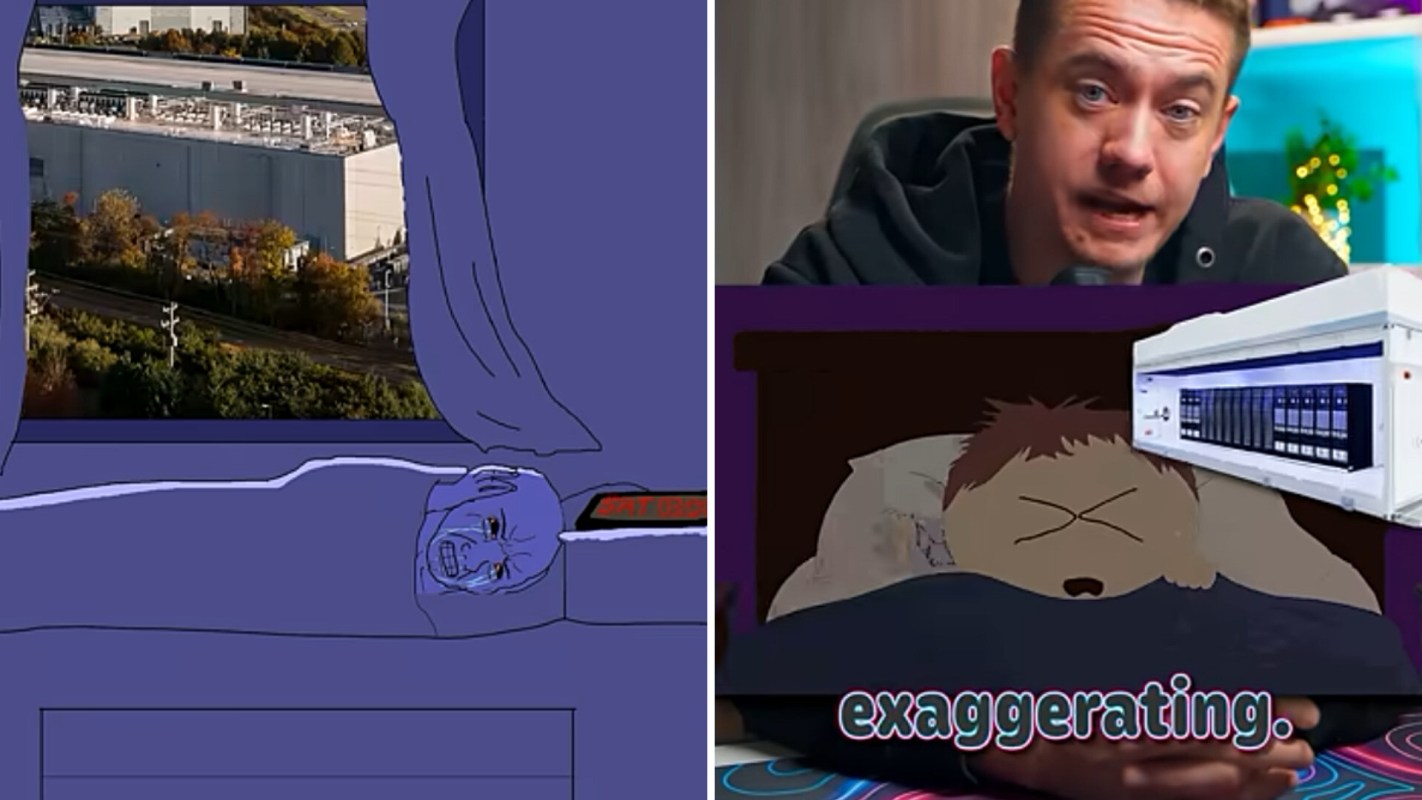
UFD Tech (@UFDTech) posted a YouTube Short that opens with a blaring hum, and the narrator interjects, stating, "No, we're not exaggerating. Data centers really sound like that."
According to Tom's Hardware, the town in question is Dowagiac, Michigan. Hyperscale Data owns the data center, and the company is happy to buy houses from people who hate the noise.
Rather than a brief or occasional disturbance, the UFD Tech video shows that the sound is a continuous industrial hum.
Nearby resident Billy Finn told Tom's Hardware, "You've seen movies and stuff where they have somebody in a cell torturing them with sound. And that's basically what it is."
"And while there have been recent regulations on decibel levels in the area, Hyperscale Data, the company behind the obnoxious sounds, just kind of pays the fines and goes on about their business," the narrator states in UFD Tech's video.
TCD Picks » Quince Spotlight
💡These best-sellers from Quince deliver affordable, sustainable luxury for all




Communities are becoming increasingly frustrated and angry with proposed and existing data centers near their homes.
"'Punishable by a fine' is the equivalent of 'legal for a price,'" one viewer commented.
"It's wild how much these people are just obliviously alienating us all," added another.
Why is this concerning?
Constant noise is more than an annoyance. When it continues 24 hours a day, it can disrupt sleep and raise stress levels. Even a steady low-frequency hum can become exhausting.
AI may support cleaner, smarter energy systems, but unchecked expansion can also put pressure on local power supplies and increase operating costs. People are also worried about possible security breaches and misuse.
What's being done?
Across the country, complaints about large computing sites have pushed local leaders to take a closer look at zoning, permitting, and noise standards. Clearer rules around placement and sound mitigation can make a major difference.
Better acoustic barriers and redesigns can also reduce noise before it spills into neighborhoods. In some cases, the simplest fix is putting more distance between heavy computing infrastructure and residential areas.
Taking action on the local level can make sure that issues like this stay on legislators' minds. Whether you're filing a complaint or attending a planning meeting, everything helps your lawmakers remember who they need to prioritize in their decisions.

Get TCD's free newsletters for easy tips, smart advice, and a chance to earn $5,000 toward home upgrades. To see more stories like this one, change your Google preferences here.






