


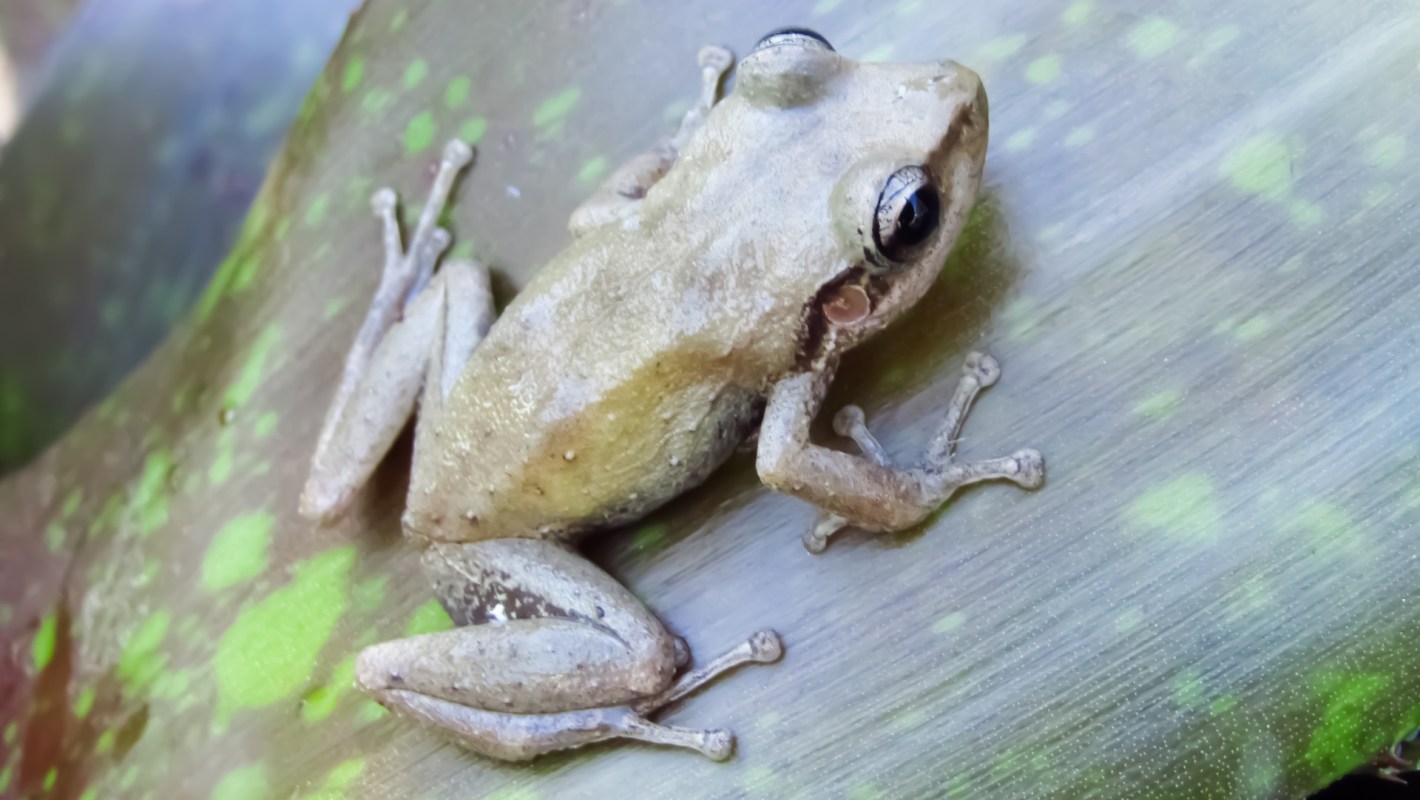
Two coqui frogs in trees beside a Maui home took a surprisingly large effort to remove. Over the course of two nights, a resident used 80 gallons of a citric acid solution before the pair was killed — though while killing is considered a last resort, it's worth noting that the frogs die almost instantly once the acid actually reaches them.
Neighbors say the infestation is growing faster than local response teams can keep up, as Honolulu Civil Beat reports.
What's happening?
Residents in Upper Hog Back, in Haʻikū-Pauwela, say heavy November rains were followed by coqui frogs spreading into the neighborhood, leaving homeowners to do much of the fighting themselves, per Honolulu Civil Beat.
The species is native to Puerto Rico and is believed to have reached Maui more than two decades ago after hitching rides on potted plants from the Big Island, as Hawaii Invasive Species Council wrote.
Today, coqui occupy about 5,000 acres in Haʻikū-Pauwela, and officials estimate there are 37,000 distinct frog populations on Maui, per Honolulu Civil Beat. The Maui Invasive Species Committee has so far kept them out of the island's broader suitable habitat, but residents say maintaining that progress is getting harder, the outlet noted.
Residents say the committee's coqui team is too small and overstretched to remain in neighborhoods for long. The dense, lush terrain there could make a full-scale outbreak nearly impossible to control, and efforts will fall short. Local pest control won't touch the problem, if so.
TCD Picks » Quince Spotlight
💡These best-sellers from Quince deliver affordable, sustainable luxury for all




"Why can't our government be doing this?" Hog Back resident Nalani Clark asked Honolulu Civil Beat. "It's bigger than us."
Why does it matter?
Residents describe the situation as a quality-of-life crisis, per the publication.
Coqui frogs are tiny, but their loud nighttime calls can disrupt sleep and raise concerns about property values and tourism, and females lay about 1,400 eggs per year apiece.
Officials say the frogs could alter the ecological balance in East Maui if they become firmly established there.
Maui's invasive species committee receives millions in grants, but that funding is split among several threats. In 2020, the committee calculated that eradicating coqui frogs would cost $64 million over 10 years, a level of funding it says it has never come close to receiving, per Honolulu Civil Beat.
State invasive species expert Christy Martin offered a more measured view of the situation.
"It's not an insignificant accomplishment that they've been able to keep a lid on it for this long," she told Honolulu Civil Beat.
What's being done?
The Maui Invasive Species Committee is still actively fighting the frogs, with crews working after dark as many as four nights a week. They use citric acid because the frogs absorb it through their skin and die quickly when it makes contact.
Honolulu Civil Beat noted about $150,000 a year goes toward citric acid alone, and the committee donated $45,000 worth to the community last year.
The committee's coqui control coordinator said wiping out outlying groups and newly detected frogs is still "100% possible," especially outside the main infestation zone.
State leaders have reserved $4.25 million for county-level invasive species committees and related research grants in 2025 and 2026, though future funding remains uncertain.
Residents have improvised their own response. Thirteen neighbors pooled money for a $5,000 commercial sprayer they nicknamed "The Silencer," and more than 30 people joined an email list to coordinate treatments, Honolulu Civil Beat reported. But so far, the frogs still spread faster than humans can keep up.
"It's almost futile," Clark warned the outlet. "They are winning."

Get TCD's free newsletters for easy tips, smart advice, and a chance to earn $5,000 toward home upgrades. To see more stories like this one, change your Google preferences here.






