


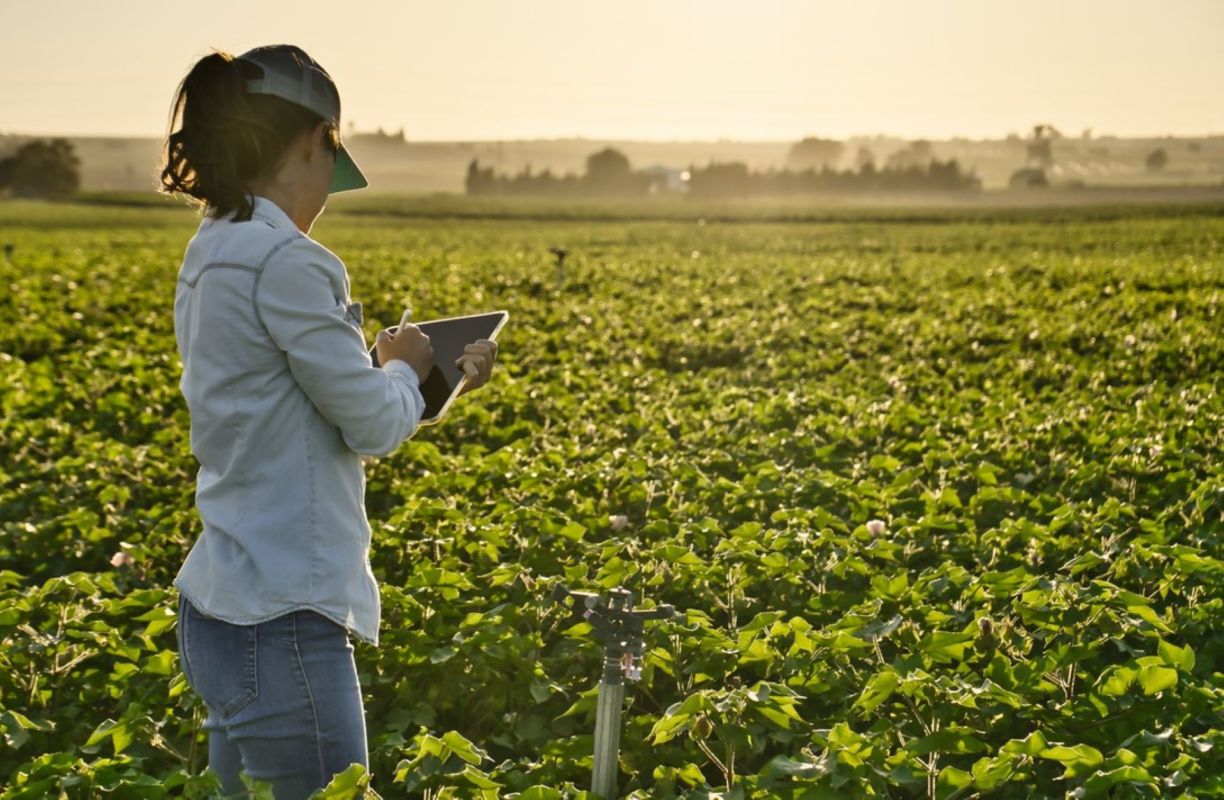
Researchers at the University of Texas at Austin (UT) are using "smart" chemistry to improve farming, increasing production in a way that's better for the environment.
They detailed the progress of their "smart farming" studies in a report for UT News, and the results could be a game-changer for standard agriculture practices regarding fertilizer. That's because the breakthrough copper-based hydrogel being developed captures excess nitrate from fertilizer before it has a chance to harm our waters and soil.
At issue is the overuse of nitrogen-based compounds and some other elements crucial to plant growth that are common in fertilizers. Farmers use them each year to help grow food for the world's population, which UT News reports is expected to expand by about 2 billion people by 2050.
Nationally, there are more than 895 million acres of land used for farming, according to the U.S. Department of Agriculture (USDA). So, when farmers overuse nitrogen to create better yields, the excess elements eventually leach into the soil and groundwater.
"[W]hich can contaminate groundwater and lead to harmful greenhouse gasses," Guihua Yu, a professor of materials science who is involved with the work, said.
The Environmental Protection Agency (EPA) said that "dead zones" can be found underwater. The nitrogen can eventually lead to hypoxia, or oxygen deficiency, causing fish kills and harming other water organisms. The EPA reports that harmful algae blooms are also possible, which can be toxic to people. The impact can eventually reach rivers and oceans, according to experts at the USDA.
Researchers at UT may have a solution that provides abundant crops without the toxic runoff. Their copper-based hydrogel catches excess nitrates and turns them into reusable ammonia before it leaches into the environment. UT News said the intuitive gel being developed "senses nitrogen levels in the soil." At just the right time, it converts the nitrogen, preventing pollution.
What's more, plants seem to be growing better with smart farming.
"We designed this system and showed that it can grow the same or more crops without overusing nitrogen," Yu said in the UT News report.
A photo of wheat and rice plants shared by UT shows that the ones grown using the hydrogel are larger, with bigger leaves.
TCD Picks » Quince Spotlight
💡These best-sellers from Quince deliver affordable, sustainable luxury for all




"We need to feed our growing population, but we also need to protect our water and air," Yu said in the UT News story. "Finding ways to capture and recycle nitrate-heavy wastewater could have tremendous benefits across the board."

Join our free newsletter for weekly updates on the coolest innovations improving our lives and saving our planet.
Cool Picks





