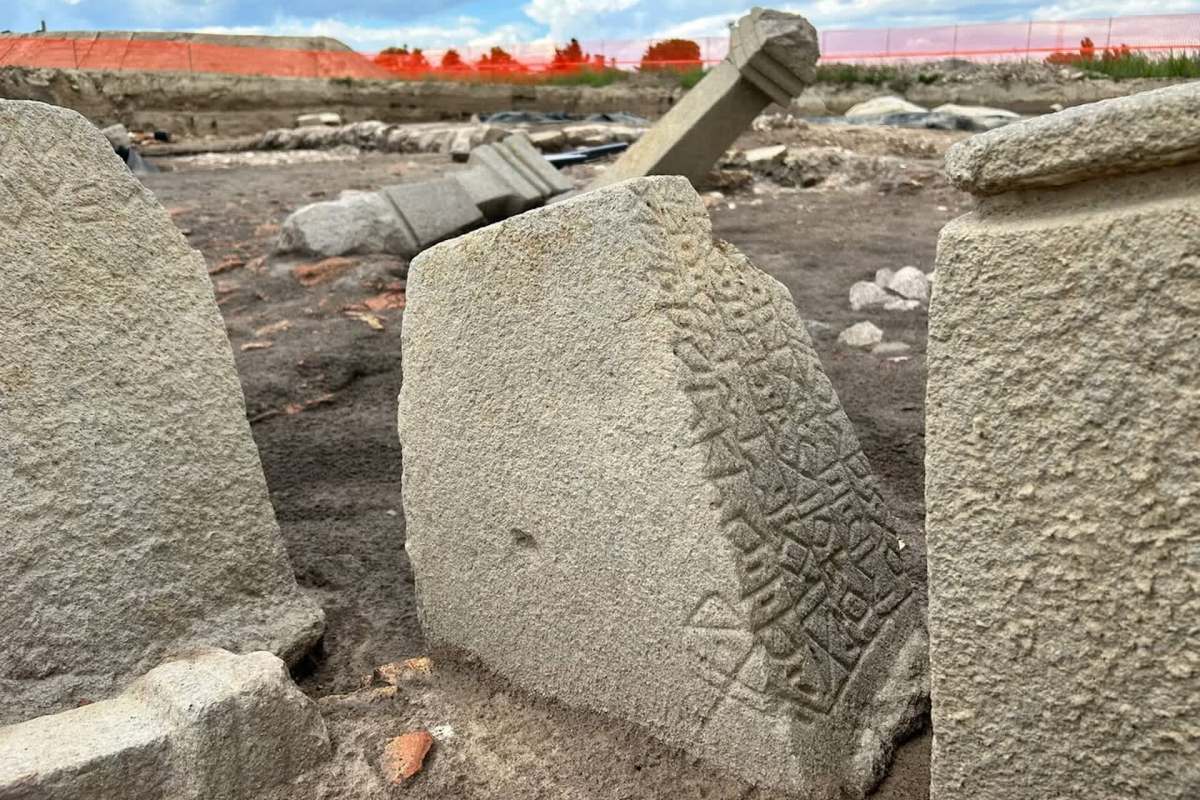
A discovery of a 2,500-year-old pre-Roman sanctuary in northern Italy is showing researchers how local religious traditions persisted even as Roman influence spread through the region.
According to the Greek Reporter, the discovery was made near Ponso, in the province of Padua, during road construction. Workers found the remains while conducting safety inspections for old wartime explosives.
Those surveys revealed inscribed stone objects. Some had Latin words, and others used the Venetic alphabet. The ancient Veneti people used this alphabet before Roman rule.
Several of the stones of the pre-Roman sanctuary have been dated to the fifth and fourth centuries B.C.E. Experts believe people gave them as offerings in sacred spaces, per the Greek Reporter.
Some of the stones were in their original positions, and people likely reused others in a paved surface. One of the buildings may have been a peripteral temple.
Finds like this help historians better understand parts of the past like ancient spirituality.
Save $10,000 on solar panels without even sharing your phone number Want to go solar but not sure who to trust? EnergySage has your back with free and transparent quotes from fully vetted providers that can help you save as much as $10k on installation. To get started, just answer a few questions about your home — no phone number required. Within a day or two, EnergySage will email you the best local options for your needs, and their expert advisers can help you compare quotes and pick a winner. |

The combination of Venetic and Latin inscriptions suggests that people in the area maintained older religious traditions even as Roman language, architecture, and culture became increasingly prominent.
A major flood from the Adige River eventually buried the pre-Roman sanctuary, the Greek Reporter noted. Though the river no longer flows in the area, the layer of silt and gravel it established had sealed the sanctuary until now.
With excavations still underway, they hope to extend the dig toward the ancient river course and uncover additional structures connected to the complex.
Recent archeological digs have also helped people learn more about ancient Nordic cultures in Aurlandsfjellet. While that excavation has been exciting, it is also largely happening because of icemelt in the area. As it brings researchers better understanding of the past, they are also concerned about how the changing climate has led to those findings.
TCD Picks » Quince Spotlight
💡These best-sellers from Quince deliver affordable, sustainable luxury for all





Get TCD's free newsletters for easy tips, smart advice, and a chance to earn $5,000 toward home upgrades. To see more stories like this one, change your Google preferences here.
Cool Picks