


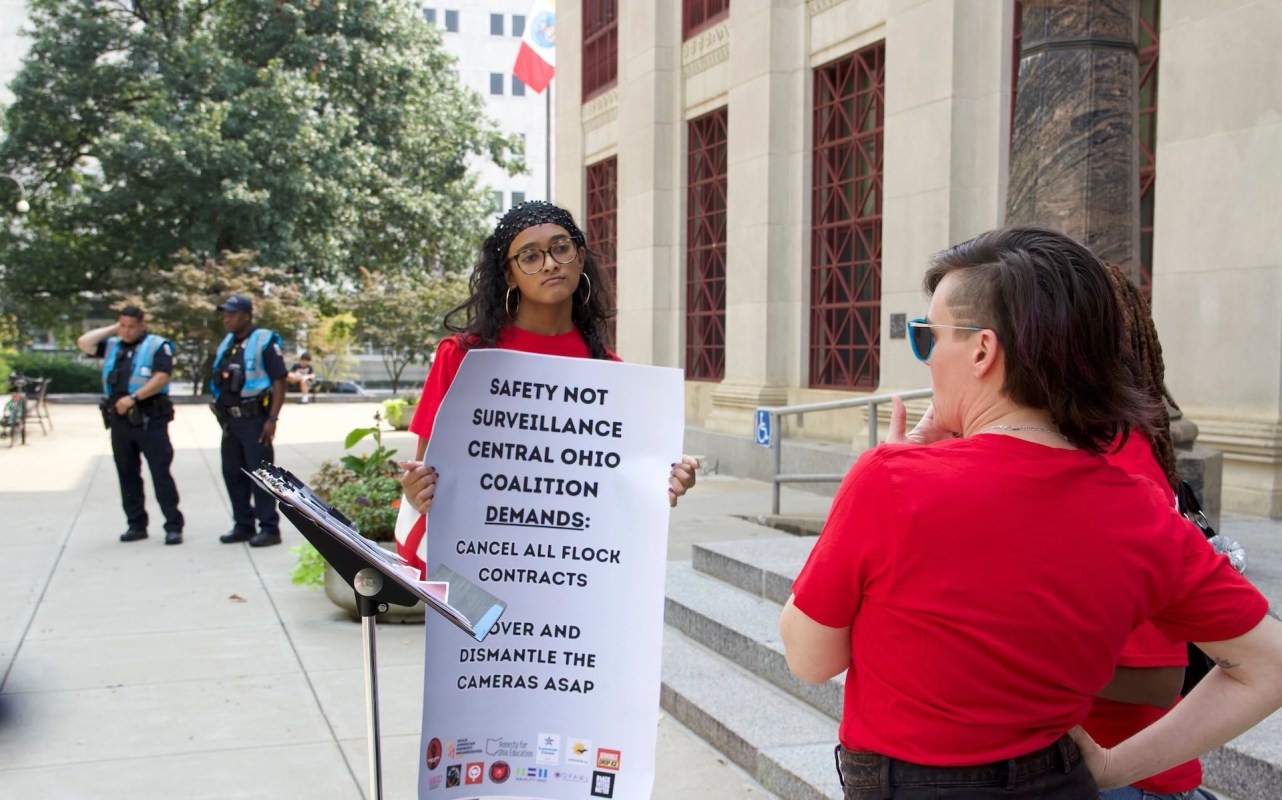
Debate over Flock Safety cameras filled a Columbus City Council hearing Monday, highlighting a deep split over AI-driven surveillance.
The divide stretched from the protest outside City Hall to the testimony inside, where residents, police leaders, and civil liberties advocates argued over whether the cameras improve public safety or amount to constant monitoring, according to The Columbus Dispatch.
What happened?
Columbus officials are weighing whether to keep the city's network of Flock Safety license plate-reading cameras after a tense public hearing marked by heckling from protesters and emotional testimony from crime victims.
The cameras record license plates on passing vehicles along with their makes, models, and features such as dents or bumper stickers and retain that information for 30 days, per the Dispatch.
However, The New York Times noted that the 30-day window is not fixed and data can be retained for longer periods if departments wish to do so.
Columbus began working with Flock under a federally funded 2023 contract, and installation followed in 2024, the Dispatch said.
TCD Picks » Quince Spotlight
💡These best-sellers from Quince deliver affordable, sustainable luxury for all




In July, Columbus released its first audit of the system and found more than 15,000 searches potentially related to immigration enforcement, prompting Mayor Andrew Ginther to scale back data sharing with other police departments.
Councilmember Emmanuel Remy, who chairs the council's public safety committee, defended the system.
"I believe this technology has demonstrated real value as a public safety tool," Remy said, per the Dispatch.
But Councilmember Lourdes Barroso de Padilla raised pointed concerns about access and possible misuse, asking, "At some point we have to say, is it worth it?"
Law enforcement officials credited the cameras with helping solve serious crimes and locate missing people, while opponents, including American Civil Liberties Union of Ohio lobbyist Gary Daniels, urged the city to ban the system.
Why does it matter?
What Columbus decides could resonate beyond the city because the fight centers on a conundrum facing many communities: how much data collection people should accept in exchange for surveillance that may enable faster investigations.
Supporters say automated license plate readers can help identify suspects, recover stolen vehicles, and locate vulnerable people.
Critics argue that the technology could intensify immigration enforcement, stalking, or investigations involving people who have had abortions.
That concern is especially acute because the cameras do not only monitor people suspected of crimes. As Ohio State University professor and historian Viet Trinh said during the hearing, per the Dispatch, "We are all under investigation at all times for all crimes."
Because Flock relies on AI to analyze and search massive amounts of data, the controversy also points to a broader debate around artificial intelligence.
AI can be useful in helping cities manage data, improve traffic flow, and even optimize clean energy systems connected to the grid.
At the same time, AI tools depend on power-hungry computing infrastructure that can drive up electricity demand and water use while raising concerns about misuse, security failures, and unintended costs that may affect households.
The debate also centers upon who controls personal data, how long that information is stored, and the trade-offs cities are willing to make in the name of safety.
What's being done?
City officials said they had already tightened safeguards.
Kate McSweeney-Pishotti, the public safety director, and Police Chief Elaine Bryant said Columbus had restricted data sharing and was working to ensure the system was used properly, the Dispatch reported.
In July, the city left the national Flock-sharing network, though it still shares records directly with hundreds of municipalities.
Vaughn Roland, Flock Safety's director of government relations, said the company offers filters clients can use to avoid immigration- and abortion-related searches along with audit tools meant to catch unusual search activity, according to the newspaper.
Police Deputy Chief Tim Myers said the division is drafting rules based on ACLU recommendations that would bar certain uses of Flock data and other surveillance tools.
Activists, however, say those reforms do not go far enough and are calling for the cameras to be removed.
"There is simply no amount of regulations and restrictions that will get us comfortable with their use as a mass surveillance tool," Daniels said.

Get TCD's free newsletters for easy tips, smart advice, and a chance to earn $5,000 toward home upgrades. To see more stories like this one, change your Google preferences here.






