


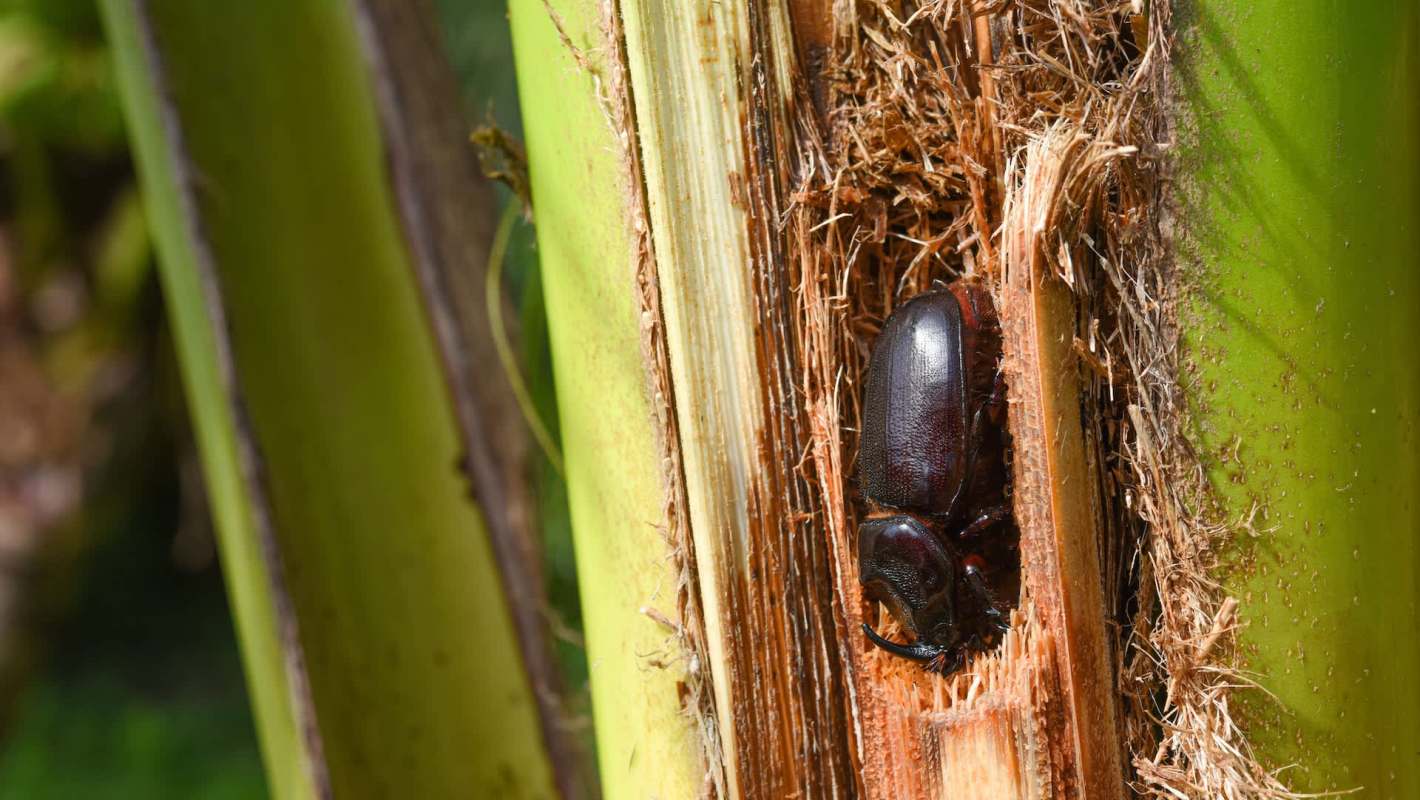
A palm-killing invasive beetle has resurfaced in Hilo, this time at the island's airport, another reminder of how quickly destructive pests can spread between communities and threaten the trees that help define Hawaiʻi's landscapes.
While the latest discovery is small, the response is already ramping up.
What happened?
On July 6, a detection trap at Hilo's airport contained a dead adult female coconut rhinoceros beetle, the Big Island Invasive Species Committee told HawaiʻiNewsNow.
The beetle likely entered the trap sometime after its previous inspection on June 16.
This airport find is Hilo's second detection of the coconut rhinoceros beetle.
The first was last year, when a dead beetle turned up in a retail store beside a mulch display thought to have come from Oʻahu.
TCD Picks » Quince Spotlight
💡These best-sellers from Quince deliver affordable, sustainable luxury for all




The Hawaiʻi Invasive Species Council's Ports of Entry Monitoring program has been checking for the pest at harbors and airports statewide since 2017.
The program is intended to track the beetle's movements, identify potential points of origin, and limit its spread to other areas.
Why does it matter?
For palm trees, even a single infestation can be serious. Coconut rhinoceros beetles bore into palms and can kill them from the inside.
When invasive species spread, communities can be forced to spend more time and money on monitoring, cleanup, and replacing lost trees instead of building healthier, more resilient public spaces.
The concern is especially urgent because the beetle may travel through mulch, compost, soil products, and green waste. That means a single shipment or unnoticed infestation can create new risks for nearby homes, businesses, and public facilities.
What's being done?
Officials are increasing follow-up monitoring in the area and adding more detection traps nearby.
Hawaiʻi County and partner agencies plan to use detection dogs to inspect nearby mulch and green waste.
The Big Island Invasive Species Committee is also urging people to turn compost piles and look for possible larvae, then seal any suspicious finds in a container, photograph them, and report them immediately.
The group is advising people to be careful when buying or moving mulch, compost, and soil products, especially when bags are torn or punctured.
It is also telling residents to watch palms for feeding damage, noting that signs on fronds may take several months to appear.

Get TCD's free newsletters for easy tips, smart advice, and a chance to earn $5,000 toward home upgrades. To see more stories like this one, change your Google preferences here.






