


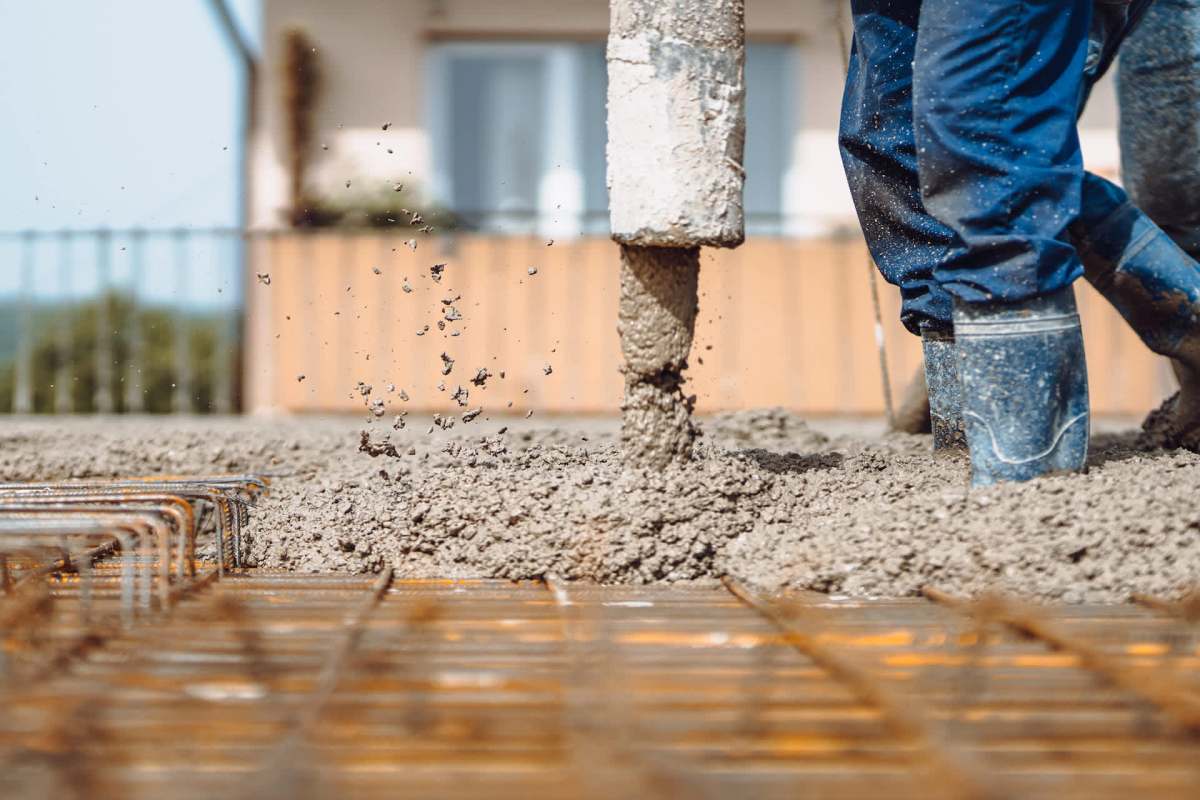
A team of researchers from Australia is trying to form a cleaner concrete industry with an unlikely ally: clay.
Specifically, the RMIT University team aims to lower the substantial pollution burden from cement production, reported by Princeton to generate 8% of global heat-trapping air pollution, largely from kilns and chemical reactions. It's also the world's most common building material, the Royal Society of Chemistry added.
Clay is a cleaner solution, but the high-grade kaolinite kind that's best for a cement supplement is in high demand for paper, paints, ceramics, and other products. As a result, the substance's market is expected to hit $6 billion by 2032.
RMIT has identified illite clay as a suitable type that can be mixed with a low-grade kaolinite, while still making "stronger concrete." If the team can prove its worth, it could create a market boom for illite clay, according to a news release.
To make concrete, the two clays are mixed in equal amounts and heated to 1,112 degrees Fahrenheit. Combining the two and heating them together unlocked illite's ability to bind with water and cement. It's part of a streamlined process that's cleaner and more energy efficient, per the release.
"Based on this approach, we are able to replace 20% of cement usage using low-grade illite and kaolin combinations, while achieving even better performance of the yield product," RMIT project lead Chamila Gunasekara said.
The team reported other key metrics in the mix's favor that should provide for improved durability, as well. Porosity was reduced by 41%, and compressive strength increased by 15%.
"Changes in the way iron compounds formed help create a tighter and more compact internal structure," Gunasekara said in the release.
The experts also touted a computational tool that helped them analyze the clays' performance. They think the advanced software could be applied to other research on building materials, too, reducing laboratory legwork.
"This virtual tool could enable the construction industry to accelerate the adoption of eco-friendly materials, paving the way of greener transformation for a more sustainable future," researcher Yuguo Yu said in the release.
TCD Picks » Quince Spotlight
💡These best-sellers from Quince deliver affordable, sustainable luxury for all




|
Do you think America does a good job of protecting its natural beauty? Click your choice to see results and speak your mind. |
 Definitely 👍
 Study lead author Roshan Jayathilakage added about the process's efficiency: "This makes the method not only technically sound, but also economically and environmentally scalable."
Also Down Under, experts at Flinders University are studying a concrete alternative that uses blast furnace slag, fly ash, and some other materials to make a cleaner mix. Other RMIT research involved using old coffee grounds in concrete to reinforce the building material astoundingly.
Cleaner concrete innovations can help to reduce a portion of the sector's air pollution burden. NASA links the heat-trapping gases to greater risks for extreme weather that's impacting insurance coverages and costs.
Staying informed about how our industries can harm the planet is an important way to help. Investing in planet-friendlier projects — by upgrading to a green 401(k), for example — earns yields similar to traditional investments, but supports companies that have cleaner goals.
At RMIT, the clay testing includes real-world conditions with different soil types as the team searches for the best dirt to use, per the university.
"By predicting how different clay compositions affect concrete behavior, engineers are able to better design energy-efficient mixtures tailored for local clay types and specific environmental conditions," Yu said.

Join our free newsletter for weekly updates on the latest innovations improving our lives and shaping our future, and don't miss this cool list of easy ways to help yourself while helping the planet.
Cool Picks





