China has launched a new experiment to see how the earliest stages of human development might unfold in space.
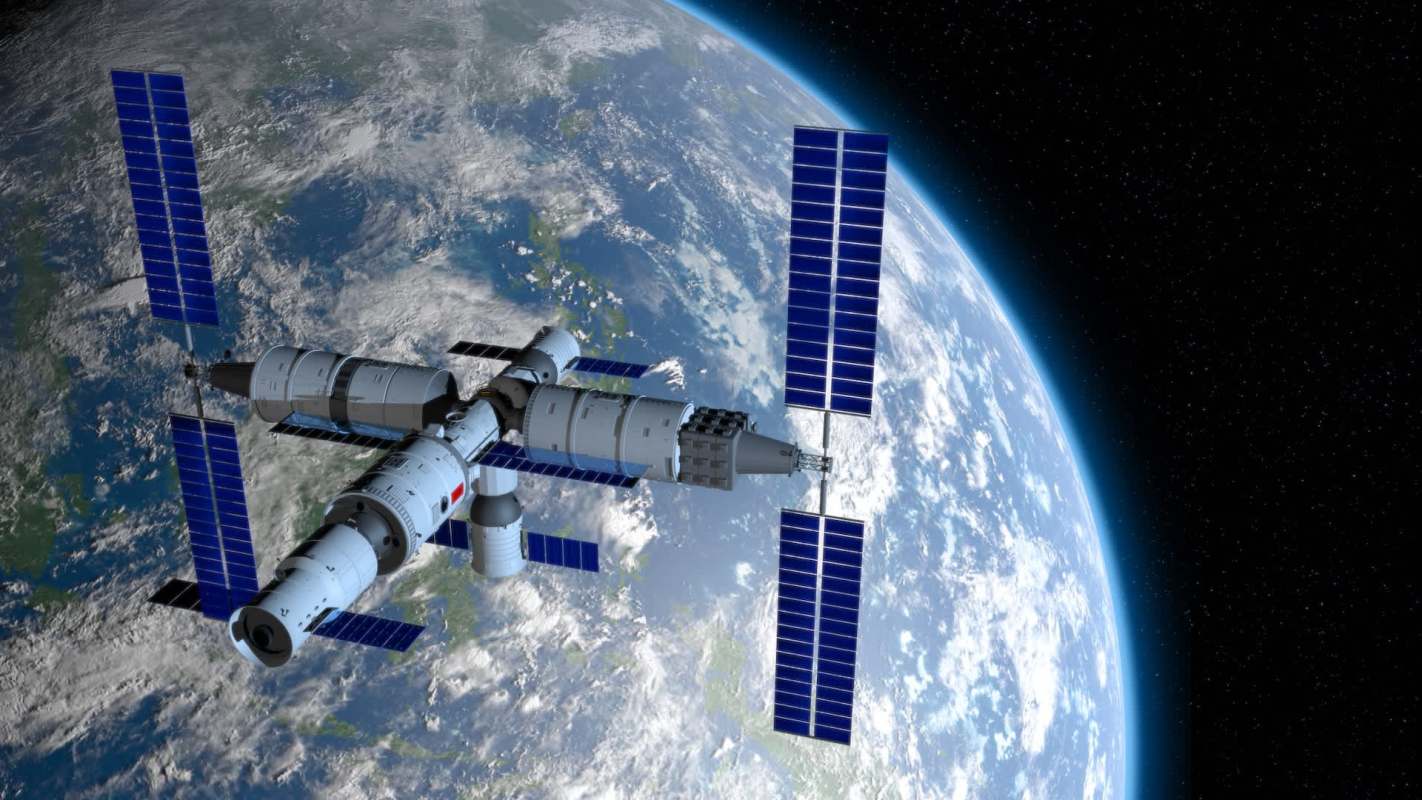
According to Futurism, the country recently sent synthetic human embryos to its Tiangong space station in an effort to determine whether life could one day begin beyond Earth.
The samples reportedly arrived aboard the Tianzhou-10 resupply mission earlier in May and were placed inside Tiangong's experimental module. Derived from human stem cells, these embryos mimic very early embryos but are not capable of developing into fetuses.
According to Live Science, the artificial embryos are being studied in two different models that simulate different stages of development. One "mimics the critical phase where an embryo attaches itself to the uterine wall," and the other "replicates the point in early development when a single layer of cells reorganizes into distinct layers that will eventually form different tissues and organs."
Project leader Yu Leqian of the Chinese Academy of Sciences' Institute of Zoology said in an academy news release that the work is "going very well," but results won't be evaluated until after frozen samples are returned to Earth and compared with a control group.
A central question for researchers pondering the potential for lengthy space missions and future settlements on planets such as Mars is whether humans will be able to safely reproduce away from Earth. Research into embryonic development amid conditions such as space radiation could be helpful in answering this question, though current investigations involve only artificial models.
Save $10,000 on solar panels without even sharing your phone number Want to go solar but not sure who to trust? EnergySage has your back with free and transparent quotes from fully vetted providers that can help you save as much as $10k on installation. To get started, just answer a few questions about your home — no phone number required. Within a day or two, EnergySage will email you the best local options for your needs, and their expert advisers can help you compare quotes and pick a winner. |

The experiment also builds on earlier research, according to Futurism. In 2016, Chinese scientists found that mouse embryos grown in space could reach the blastocyst stage. In 2023, Japanese scientists observed that mouse embryos in microgravity reached that stage about 24% of the time — roughly half the rate seen on Earth.
"We hope that by comparing the development of space and ground samples, we can identify the factors affecting early human embryonic growth in the space environment and address the risks and challenges humans may face during long-term space habitation," Yu said in the news release.

Get TCD's free newsletters for easy tips, smart advice, and a chance to earn $5,000 toward home upgrades. To see more stories like this one, change your Google preferences here.
Cool Picks